Key Point
This is a summary of key recommendations from the literature on the investigation of patients suspected to have gastro-oesophageal reflux disease including those being considered for anti-reflux surgery. Recommendations have been taken from AUGIS 2016, NICE CG184, the Lyon 2018 Consensus, ACG 2020 and BSG 2019 guidelines (1-5).
This is a controlled document. If you are using a printed copy, check it against the version on the guidelines platform to ensure you are using the latest edition.
Abbreviations
Definition
GORD describes symptoms or mucosal damage resulting from reflux of gastric content into the oesophagus. GORD is a major contributing factor to the rise in incidence of oesophageal cancer and one of the commonest health problems in the developed world. A systematic review published in GUT 2005 and updated in 2013 (6,7) estimates the prevalence of symptomatic GORD to be up to 28% in the Western World and demonstrates an increase in prevalence between 2005 and 2013. Prevalence in Asia remains lower (10%).
Recommendations
Investigations
Upper GI endoscopy
-
All patients worked up for LARS MUST have an OGD performed by an UGI surgeon
-
Eosinophilic oesophagitis can mimic GORD, if suspected a mid-oesophageal biopsy can rule this out prior to investing in oesophageal physiology (4).
-
Over 60% of patients with GORD symptoms have a negative endoscopy (Non Erosive Reflux Disease - NERD) (8). A therapeutic trial of high dose twice daily PPI should be the next step if not already performed prior to any further investigation (4).
Oesophageal physiology
Assessment of oesophageal motility
-
Manometry should be performed to rule out Achalasia prior to anti-reflux surgery (3,4,5) GRADE Moderate Recommendation STRONG (3,4,5) MODERATE/STRONG.
-
Those who cannot tolerate HRM probe for manometry should have barium swallow to rule out Achalasia as part of the work up for LARS pH and Impedance monitoring
-
All patients being considered for anti-reflux surgery ONLY
should have acid reflux monitoring via catheter based pH testing (4) MODERATE/STRONG.
-
Patients unable to have catheter based oesophageal reflux monitoring due to intolerance to the probe should undergo Wireless pH monitoring (BRAVO) instead (3,4,5) MODERATE/STRONG.
-
Patients with typical symptoms refractory to therapeutic PPI should have both pH and impedance monitoring (4).
-
Patients with atypical symptoms refractory to PPI but still suspected to have GORD should have pH and impedance instead of pH alone (4).
-
Patients with equivocal pH test results (AET 4-6%) still suspected to have GORD should have Impedance studies (5).
Interpretation and case selection
ACG/Lyon/BSG guidelines recommend the correlation of Acid Exposure Time (AET), Reflux Symptom Association (RSA) consisting of Symptoms Association Probability and Symptom Index (SAP and SI), endoscopic findings and a clinical history to guide case selection of LARS (3,4,5, 9).
Oeosophageal hypersensitivity and Functional Heartburn have a poor response to surgery – patients with these conditions should be referred to Gastroenterology to consider SSRI prescription and not be offered surgery.
Table 1 - Interpretation of OGD and pH/impedance results in correlation to response to LARS.
NERD and GERD respond best to LARS with a strong positive correlation between RSA, AET and satisfaction post operatively (3,4,10).
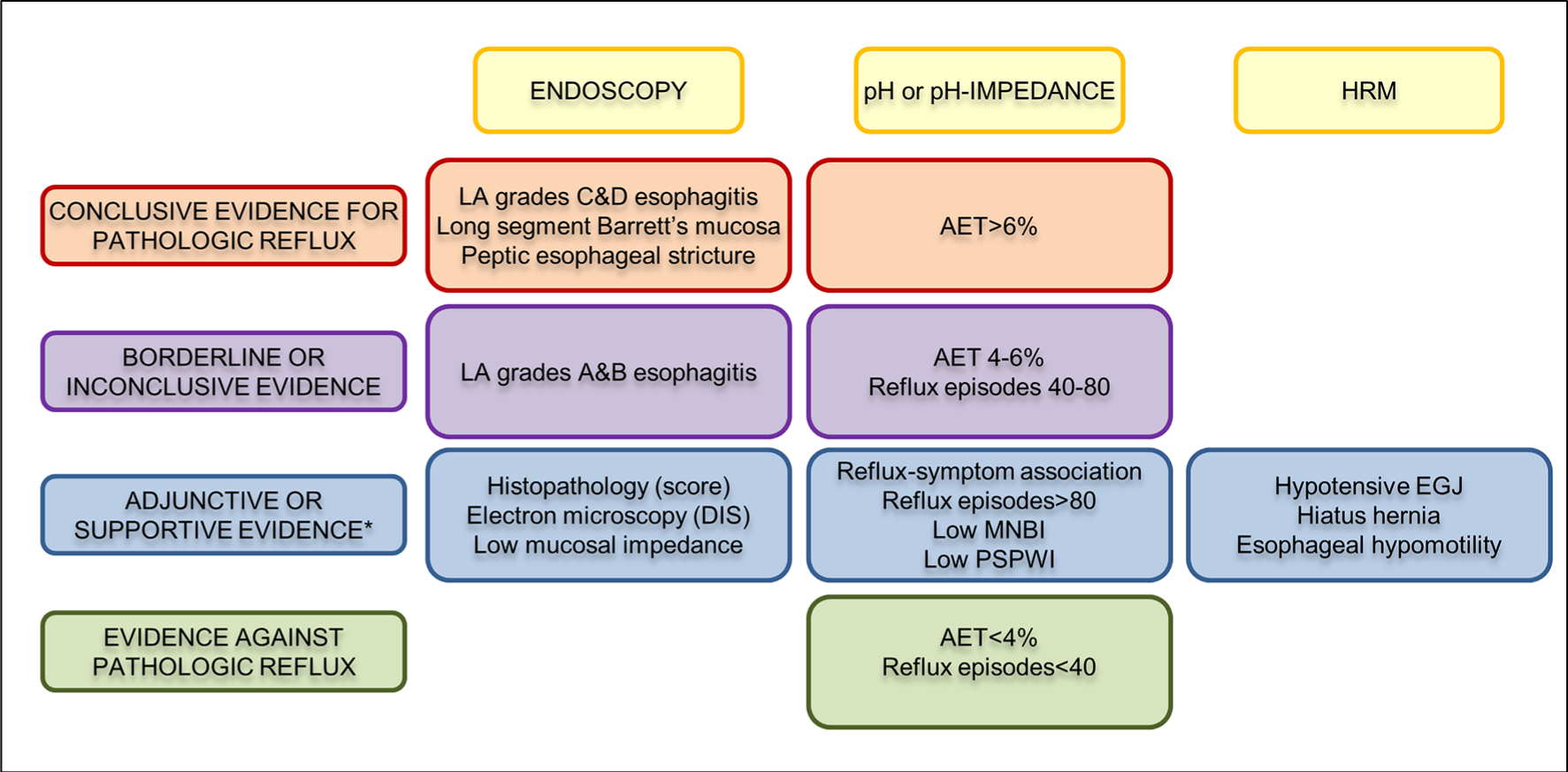
Figure 1 - Interpretation of oesophageal test results in the context of GERD.
Any one conclusive finding provides strong evidence for the presence of GERD. While a normal EGD does not exclude GERD on its own, this provides strong evidence against GERD when combined with AET <4% and <40 reflux episodes on pH-impedance monitoring off proton pump inhibitor therapy.
When evidence is inconclusive or borderline, adjunctive or supportive findings can add confidence to the presence or absence of GERD. Histopathology as an adjunctive measure requires a dedicated scoring system (incorporating papillary elongation, basal cell hyperplasia, DIS, intraepithelial inflammatory cells, necrosis and erosions) or evidence of DIS on electron microscopy.
However, adjunctive findings, particularly histopathology and motor findings in isolation, are not enough to diagnose GERD. AET, acid exposure time; DIS, dilated intercellular spaces; MNBI, mean nocturnal baseline impedance; HRM, high-resolution manometry; PSPWI index, post-reflux swallow-induced peristaltic wave index; EGJ, oesophago-gastric junction.
*Factors that increase confidence for presence of pathological reflux when evidence is otherwise borderline or inconclusive (5).
Obese patient with reflux
A recent systematic review and meta-analysis demonstrated that the rate of recurrence of reflux is significantly higher in obese compared to non-obese patients (10). It is recommended these patients are given lifestyle advice to lose weight prior to considering anti-reflux surgery. If they meet NICE criteria for weight loss services, consider referring to a Bariatric unit for consideration of a Roux En Y Gastric Bypass instead.
Post-treatment assessment
The use of validated outcome measures is necessary to objectively evaluate symptom improvement after treatment and a good data tool for research. The Lyon consensus mentions a few examples including Likert scales but the list is not exhaustive (5).
Recurrence of symptoms after surgery
Repeat investigations as indicated in this guidance for patients with symptom recurrence. Contrast study or CT should be included when wrap herniation is suspected.
Patients with recurrence in whom revisional surgery is planned must be discussed in a Complex Benign UGI MDT.
Giant Hiatus hernias
Should all be discussed in the context of an UGI MDT if surgery is being considered. Consider developing a streamlined pathway for cardiac and respiratory investigations for those referred with extra-oesophageal symptoms.
Consent
The unit should agree on a standardised approach to consenting patients for Anti-Reflux surgery, such as a standardised form signed given to patients in clinic to read through and return on the day of surgery, where they sign the standard yellow consent form.
Full version control record
This guideline has been registered with the trust. However, clinical guidelines are guidelines only. The interpretation and application of clinical guidelines will remain the responsibility of the individual clinician. If in doubt contact a senior colleague or expert. Caution is advised when using guidelines after the review date. This guideline is for use in Frimley Health Trust hospitals only. Any use outside this location will not be supported by the Trust and will be at the risk of the individual using it.
Version Control Sheet