Key Points
-
TB Contact tracing and examination are usually undertaken to find associated active TB cases, to detect people infected but without evidence of disease (latent infection) and to identify those not infected and for whom BCG vaccination may be appropriate
-
Where recent infection has occurred (e.g. clinical disease in children), contact tracing is done to find a source of infection and any co-primary cases.
-
In people with latent tuberculosis, BCG vaccination does not prevent its development into active disease
This is a controlled document. If you are using a printed copy, check it against the guidelines site to ensure you are using the latest edition. Print copies must be destroyed after use.
Abbreviations
Summary
This guideline will simplify the process of:-
-
TB contact screening of children under 2 years who have been in contact with a case of infectious TB.
-
TB contact screening of children under 2 years who have been in contact with a case of non-infectious TB.
-
TB contact Screening for persons over 2-years-old.
Overview
Contact tracing and examination have traditionally been undertaken to find associated active TB cases, to detect people infected but without evidence of disease (latent infection), and to identify those not infected and for whom BCG vaccination may be appropriate. Where recent infection has occurred (e.g. clinical disease in children), contact tracing is done to find a source of infection and any co-primary cases. In people with latent tuberculosis, BCG vaccination does not prevent its development into active disease.
When to assess or screen
-
Asymptomatic children exposed to an index case with sputum smear positive TB should be screened and assessed by a TB nurse within 1 week of identification.
-
Any child who is unwell with symptoms highly suggestive of possible TB, or in whom a chest X-ray is highly suggestive of TB should be clinically assessed by a paediatrician and discussed with a named TB Consultant within one working day.
-
All adults exposed to an index case with sputum smear positive TB should be screened and assessed by a TB nurse as soon as possible or within 1 week of identification.
The following patients will be reviewed in the TB clinic/paediatric clinic for consideration of screening:
-
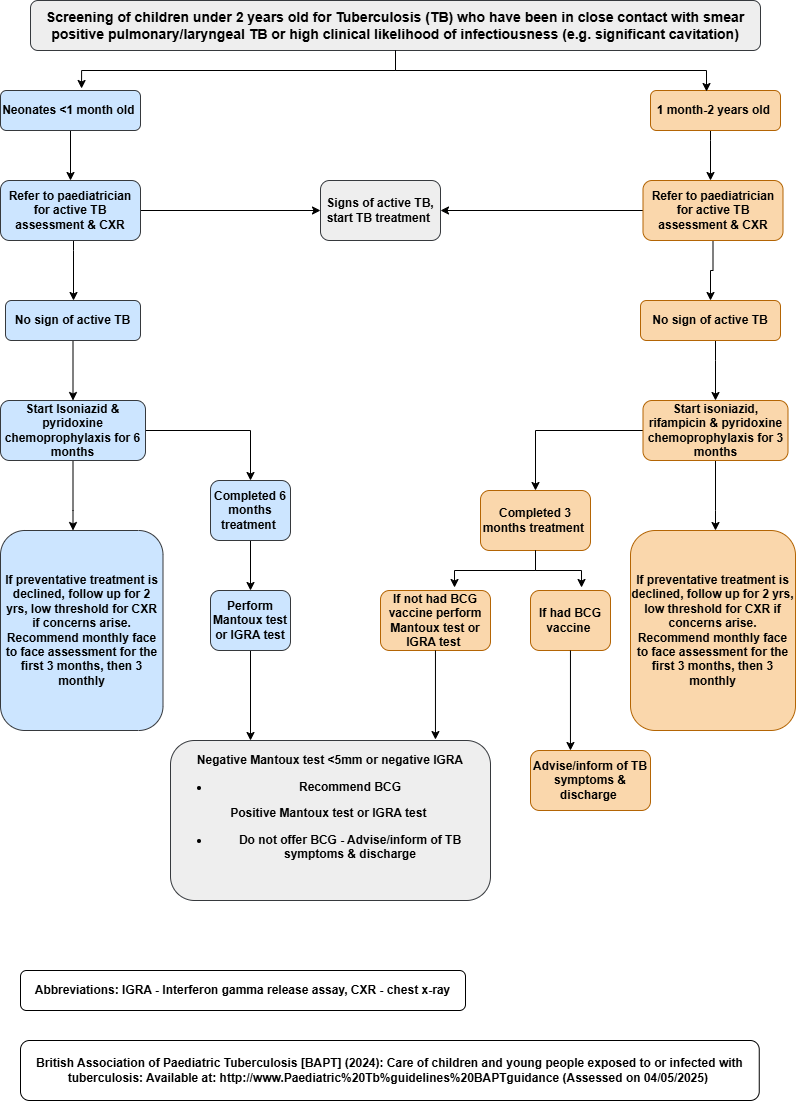
If a newborn (<1 month old) is exposed to a person with infectious TB, a paediatrician should assess the newborn for active TB with a full clinical examination and a chest x-ray. If there is no evidence of active TB disease in the infant, tuberculosis preventive treatment (TPT) should be started (Appendix 1).
-
Children under 2 years who have been exposed to infectious TB should have a clinical assessment for active TB and a chest x-ray. Tuberculosis preventive treatment (TPT) should be offered to all children without clinical or radiological evidence of active TB disease. (Appendix 1)
-
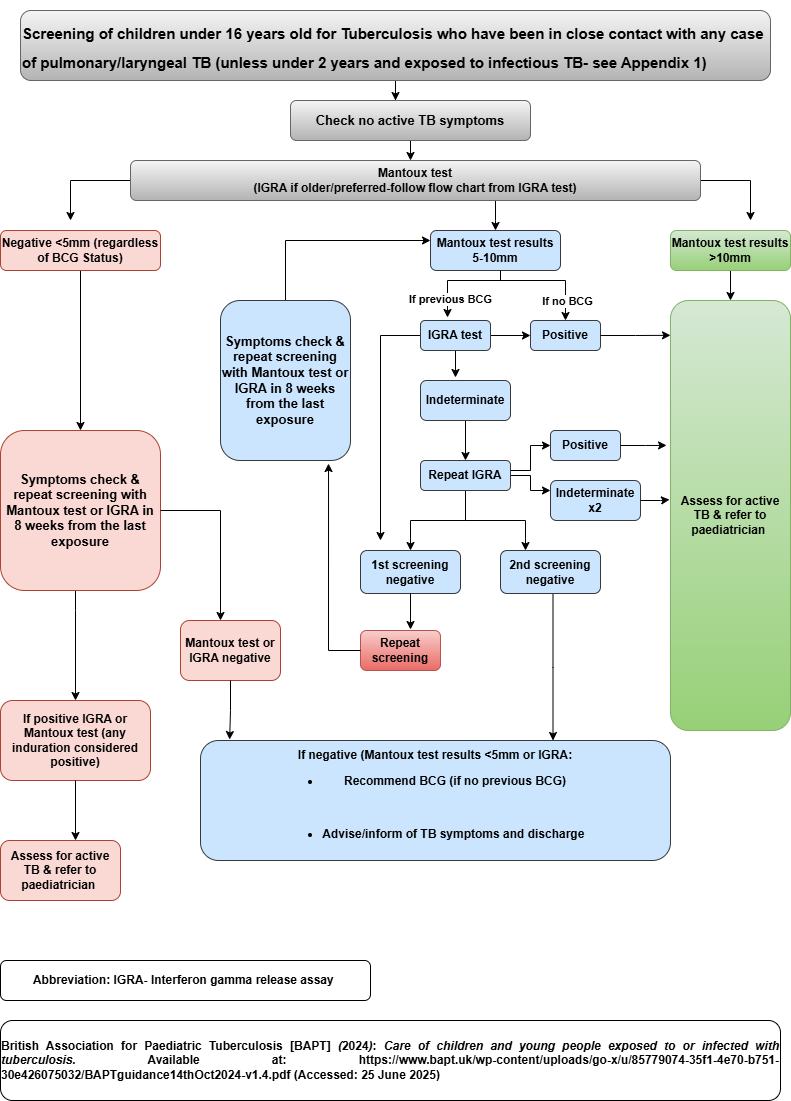
Children under 16 years who have been exposed to any case of pulmonary/laryngeal TB should have a symptom check for active TB symptoms and TB screening with Mantoux/IGRA (Pathway in Appendix 2) (unless they are under 2 years and exposed to infectious TB- see above/Appendix 1).
-
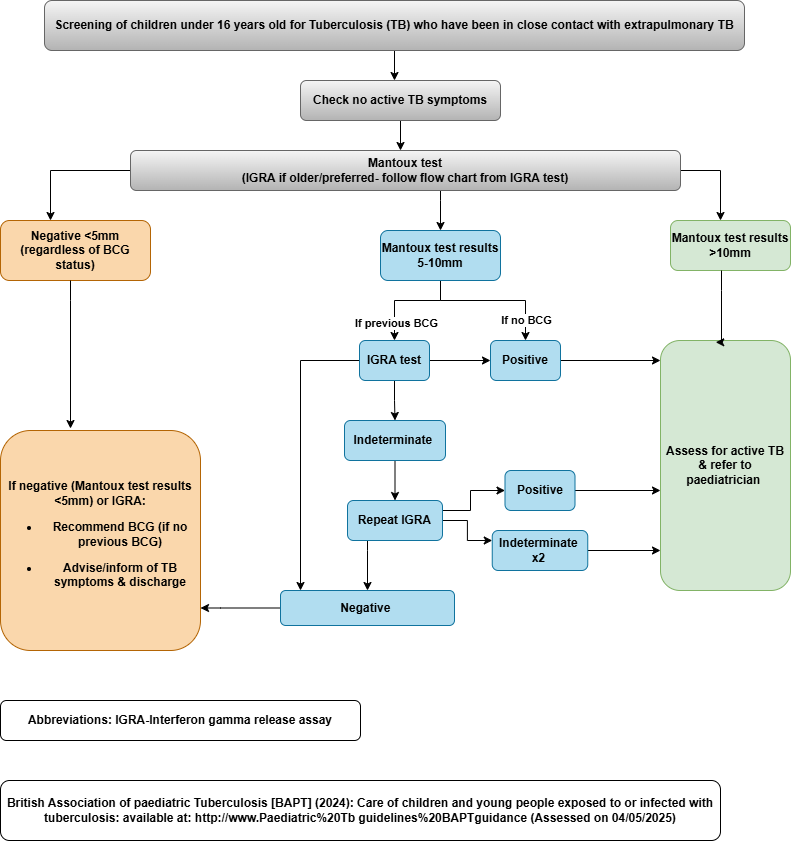
Children under 16 years who have been exposed to extrapulmonary TB should have a symptom check for active TB symptoms and TB screening with Mantoux/IGRA (Appendix 3). This pathway should then be followed.
-
People over 16 years old who have been exposed to infectious TB should have a symptom check for active TB symptoms and TB screening with Mantoux/IGRA or a chest x-ray (depending on their age) (Appendix 4).
-
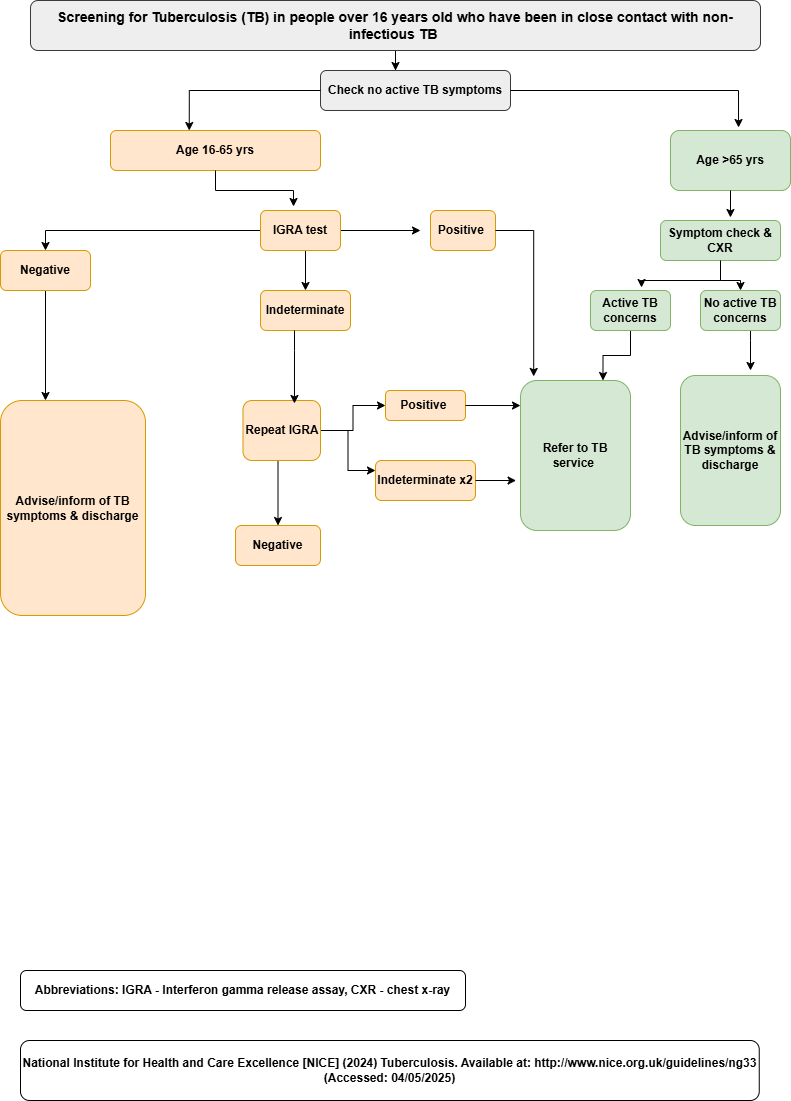
People over 16 years old who have been exposed to non-infectious TB should have a symptom check for active TB symptoms and TB screening with Mantoux/IGRA or a chest x-ray (depending on their age) (Appendix 5). This pathway should then be followed.
Assessing for active TB
It is imperative to assess the patient for active TB and organise the necessary investigations if symptoms are present. Active TB symptoms to exclude are: loss of appetite, weight loss, fevers, drenching night sweats, cough >3 weeks, lymph node or soft tissue swelling, other persistent site-specific symptoms (e.g. spinal/abdominal symptoms).
Nurses assessing patients for active TB should refer patients to the Paediatric/Medical TB clinic if they are symptomatic or have an abnormal chest x-ray with changes suspicious for TB infection. If they have a productive cough then 3 sputum samples (gastric lavage in children) should be sent for AFB smear and AFB culture and 1 for TB PCR (for PCR please email the microbiology team on to ask for this to be processed, giving the clinical information).
If patients have a past history of tuberculosis infection or latent TB treatment, then screening for active TB infection with a CXR is only required; an IGRA is often unhelpful as it can remain positive.
When there is no evidence of active TB and latent TB is diagnosed
Offer TB chemoprophylaxis with either:-
-
3 months Rifampicin & Isoniazid (if over 1 month old)
-
6 months Isoniazid (if <1 month old or if patient is on drugs that interact with Rifampicin e.g. protease inhibitors, oral contraceptive pill)
-
4 months Rifampicin
(Check FBC, U&E & LFT and hepatitis B, C and HIV tests pre-treatment).
Monthly follow-up contact is organized with TB specialist nurses to check compliance. Checks of LFT are also arranged in some patients when clinically indicated.
When there is evidence of active TB
Send samples for TB culture whenever possible and start anti tuberculosis treatment with
Rifampicin, Isoniazid, Pyrazinamide, Ethambutol & Pyridoxine (children & adult) following a discussion with the TB team
(Check FBC, U&E & LFT and hepatitis B, C and HIV tests pre-treatment).
Appendix: 1 Screening of children under 2 years old for Tuberculosis who have been in close contact with smear positive pulmonary/laryngeal TB or high clinical likelihood of infectiousness (e.g. significant cavitation)
Appendix:2 Screening of children under 16 years old for Tuberculosis who have been in close contact with any case of pulmonary/laryngeal TB (unless under 2 years and exposed to infectious TB- see Appendix 1)
Appendix: 4 Screening for Tuberculosis in people over 16 years old who have been in close contact with smear positive pulmonary/laryngeal TB
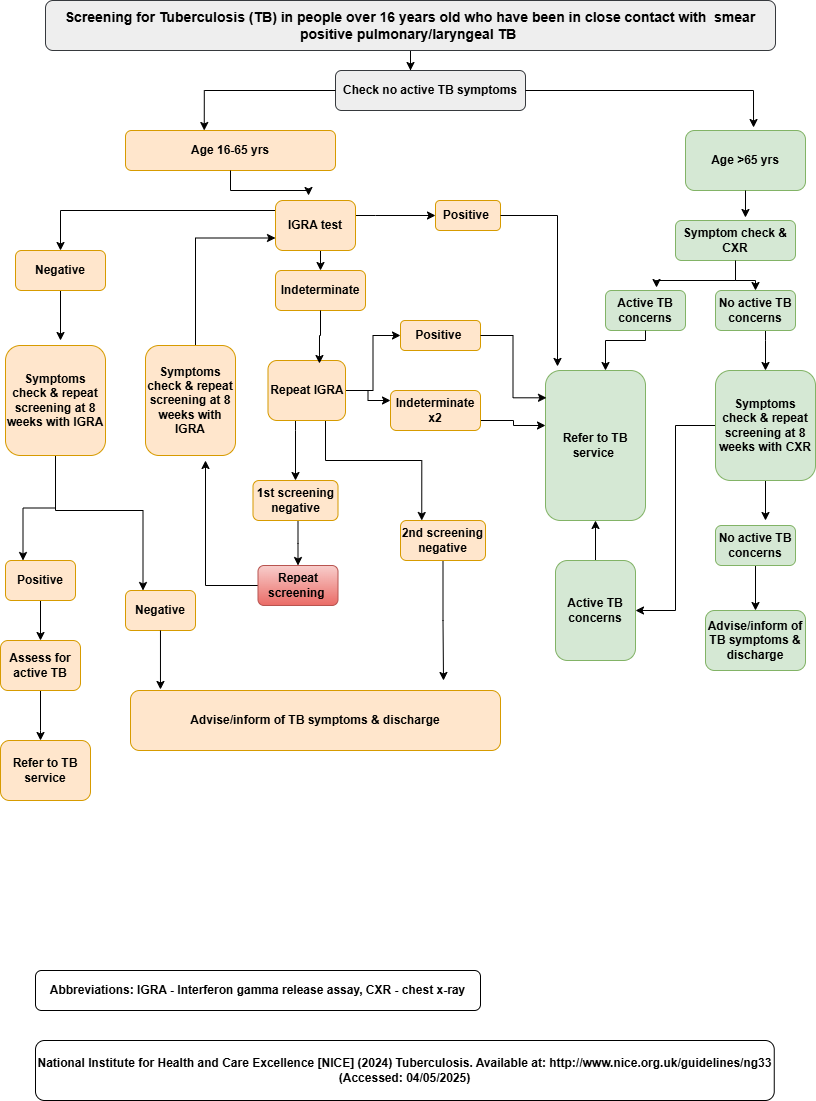
Appendix: 5 Screening for Tuberculosis in people over 16 years old who have been in close contact with non-infectious TB