Children and young people have unique needs in terms of pain management requiring consideration of anatomical, physiological and psychological factors alongside their pain perception, pain experiences and biological responses.
Frimley Health NHS Foundation Trust acknowledges that access to appropriate pain control is an important part of individualised care for each child and aim to ensure that the service is fair and accessible to all.
- All doses should be confirmed with the BNFC
- Use multimodal analgesia and give it regularly -‘by the clock’- ensuring additional PRN analgesia is also available
- Contact Paediatrician, Anaesthetist, Pharmacist or Inpatient Pain Team for advice and support:
This is a controlled document. If you are using a printed copy, check it against the guidelines site to ensure you are using the latest edition. Print copies must be destroyed after use.
Abbreviations
ED
Emergency Department
FHFT
Frimley Health NHS Foundation Trust
FPH
Frimley Park Hospital
HWP
Heatherwood and Wexham Park Hospitals
IASP
International Association for the Study of Pain
IV
Intravenous
NGT
Nasogastric tube
NNP
Night Nurse Practitioner
PEWs
Paediatric Early Warning Score
SC
Subcutaneous
Summary
To ensure all children have a comfortable journey through our hospitals and that their parents/carers are supported as they support the child.
The purpose of this document is to enable nurses and other healthcare professionals to ensure that pain is assessed and managed effectively with the appropriate analgesic treatment or non-pharmacological strategy for individual children and young people.
Background
“Children are not little adults".
Children are a special patient group for several reasons. Young children, neonates and infants, have significant anatomical, physiological and psychological differences compared with adults. Developmental issues influence all aspects of the child's pain experience, including biological responses, language and communication, comprehension, and choice and effectiveness of pain management techniques. The long-term effects of repeated acute pain and the impact of analgesic drugs on the developing nervous system are issues of considerable concern that must also be considered when developing a pain management strategy for a child. (ANZCA, 2011).
Children and young people have unique needs in terms of pain management: requiring consideration of anatomical, physiological and psychological factors alongside their pain perception, pain experiences and biological responses. (Twycross et al 2014).
Untreated pain can have long-term consequences including- persistent pain, needle phobia, pre-procedural anxiety, hyperalgesia, and avoidance of healthcare, resulting in increased morbidity and mortality. (IASP 2020)
Note: Advice should be sought from the paediatrician, the patient’s own medical team, anaesthetist who performed anaesthetic (if this applies); pain team or on-call anaesthetist without delay, if the pain remains problematic despite regular multi modal analgesics and proactive PRN implementation.
Definition of Acute Pain
Pain is multi-dimensional, which can make it difficult to measure objectively, unlike a blood pressure or a pulse. According to the IASP definition of pain (2020), pain is an unpleasant sensory and emotional experience associated with or resembling that associated with actual or potential tissue damage.
According to the National Service Framework for children, young people and maternity Services (DH 2004): ‘Pain is unpleasant, delays recovery and adds to the trauma of illness, injury and clinical procedures. Historically, pain has been underestimated and under treated. There is still evidence that pain is inadequately dealt with for children in hospital, requiring better prevention, assessment and treatment’.
Procedural pain, e.g., surgery, bone marrow and other biopsies, lumbar puncture, radiology procedures, investigations
Acute recurrent pain in cancer pain and burn pain
Treatment-related pain is particularly important in children and must be treated effectively. Poorly managed procedures sensitise children for future procedures so that they are more anxious and pain management more difficult. It is recommended that healthcare professionals and parents use neutral words and avoid language that can increase fear and may falsely reassuring (e.g., “it will be over soon”; “you will be ok”) IASP, 2020.
How do we do all we can to control pain?
Mirror:
Show you are looking for pain by asking the child if they are comfortable
Include the parents/family views in your assessment
Document pain assessment at rest and on movement
Signal:
Show that you care by responding to the child’s pain and any concerns of the parent/family
Seek help if analgesia is inadequate, absent or inappropriate
Manoeuvre:
Provide sensible supportive care
Give analgesia in a timely manner
Observe for effect and side effects
Communicate care given to other staff in the care team and parents/family
Pain Assessment
Assessment refers to a broad endeavour aiming to identify the factors that shape the pain experience including physiological, cognitive, affective, behavioural and contextual, and their dynamic interactions (APA 2012). Assessment of a child’s pain should be undertaken as soon as possible from admission. Pain assessment should become a routinely integral part of every child’s care (McArthur and Cunliffe 1998). Accurate and timely pain assessment is a key factor for improving pain management for children (McGrath 1995). Children often cannot or will not report pain to healthcare professionals (Woodgate & Kristjanson 1996) therefore healthcare professionals must be vigilant for any indications of pain. Pain should be assessed when other observations are undertaken and more frequently if pain is poorly controlled (RCN 2009). Such practices help reduce anticipatory anxiety, which has been shown to adversely affect postoperative pain (Palermo & Drotar 1996). Assessment therefore should be a continuous process from admission through to discharge.
Changes in clinical observations, i.e., increased heart rate, respiratory rate, blood pressure and decrease in oxygen saturations, may indicate the presence of pain. It is therefore vital that regular observations are undertaken and recorded in the appropriate documentation.
Changes in behaviour, i.e., crying, facial expressions, bodily movements and sleep patterns, may also indicate the presence of pain. Any changes in such behaviour should be assessed, discussed with the carer, responded to and documented in the child’s notes.
Pain assessment tools
To assess pain, effective communication should occur between the child whenever feasible, their parents/family or carers, and the professionals in the multi-disciplinary team (APA, 2012). A suitable pain assessment tool should be selected based on the age, development and clinical condition of the child. It is important that continuity is maintained by using the same tool throughout the child’s stay in hospital. Effective communication is therefore required to ensure that all staff involved in the child’s care are aware of the selected tool. The use of a pain tool must be explained to the child, if possible, and the parent / carer.
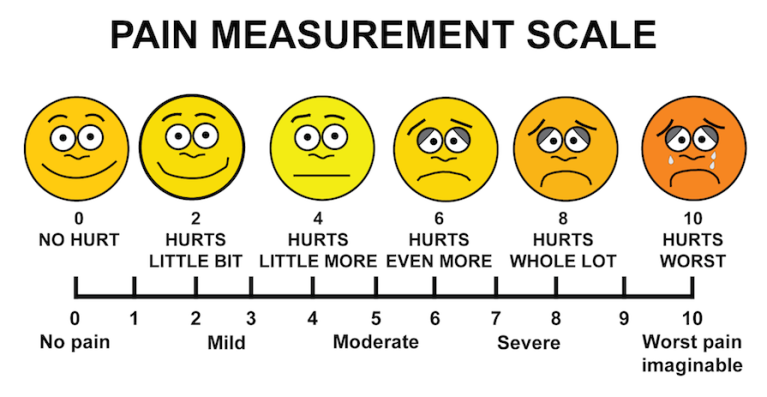
Self-report is usually possible by 4 years of age but will depend on the cognitive and emotional development of the child. At 4 to 5 years of age, children can differentiate ‘more’, ‘less’ or the ‘same’ and can use smiley faces assessment tool.
The Verbal Descriptor Scale (VDS)
Ask the child to pick a word that best describes their pain from: None (0), Mild (1), Moderate (2) or Severe (3). Convert the word to a score and document on observation chart both at rest and on functional movement.
Faces scale is suggested for children 4 years and over; and this, together with a visual analogue scale (VAS) suitable for general use in children able to self-report, can be found below:
(Wong & Baker 1988)
Suggested age for Wong-Baker: 4 years and over.
VAS for use with children who have a good understanding of numbers
FLACC is suitable for children up to 7 years old. Pain should be assessed at rest and on movement. Whatever tool is used it should be converted to a number to correspond to the outcome of the pain assessment tool and recorded on the observation chart:
FLACC
Scoring
Categories
0
1
2
Face
No particular expression or smile
Occasional grimace or frown, withdrawn, disinterested
Frequent to constant frown, quivering chin clenched jaw
Legs
Normal position or relaxed
Uneasy, restless, tense
Kicking or legs drawn up
Activity
Lying quietly, normal position, moves easily
Squirming, shifting back and forth, tense
Arched, rigid, or jerking
Cry
No cry (awake or asleep)
Moans or whimpers; occasional complaint
Crying steadily, screams or sobs, frequent complaints
Consolability
Content, relaxed
Reassured by occasional touching, hugging, or being talked to; distractible
Difficult to console or comfort
Note: Each of the five categories Face (F), Legs (L), Activity (A), Cry (C) and Consolability (C) is scored from 0-2, which results in a total score between 0-10 (Merkel et al 1997).
Equivalence of VDS to FLACC
Verbal Descriptor Score
FLACC
No Pain
0
0
Mild pain
1
1-3
Moderate pain
2
4-6
Severe pain
3
7-10
Children with individual care needs
In children with individual care needs, e.g., neurodivergent, cognitive impairment and / or communication needs, assessment of pain may be difficult and can contribute to inadequate analgesia (Stevens et al 2003). In these cases, clinical observations and changes in behaviour are important along with parent / carer involvement. A FLACC tool can be used but should not be used in isolation but should include information from clinical observations, behaviour and other factors including the cultural origins, previous experience and gender. See Appendix.4 for further reading and support.
Pain management techniques
The choice of pain management technique will depend on the type of pain, its expected duration, the developmental stage of the child, the pain management techniques available and the child's location (home, community or hospital). A combination of bio-behavioural and pharmacological techniques is generally recommended. Play (distraction) is a very important tool in managing children's pain and full use should be made of the play specialist/therapist.
Pharmacological techniques**
Basic elements of analgesic treatment include type of analgesia, dose, timing and routes of delivery. Pain management encompasses the use of different types of drugs including opioids (e.g. morphine) and non-opioids (e.g. paracetamol and nonsteroidal anti-inflammatory drugs such as ibuprofen). The use of non-opioids can reduce the amount of opioid required (Carr,1992).
Note, Codeine is not routinely used in paediatric analgesia due to unpredictable metabolism which poses a risk of life-threatening opioid toxicity or conversely a lack of pain relief.
Before deciding on which medication is appropriate for a given situation, developmental aspects affecting the pharmacodynamics and pharmacokinetics of analgesics must be considered.
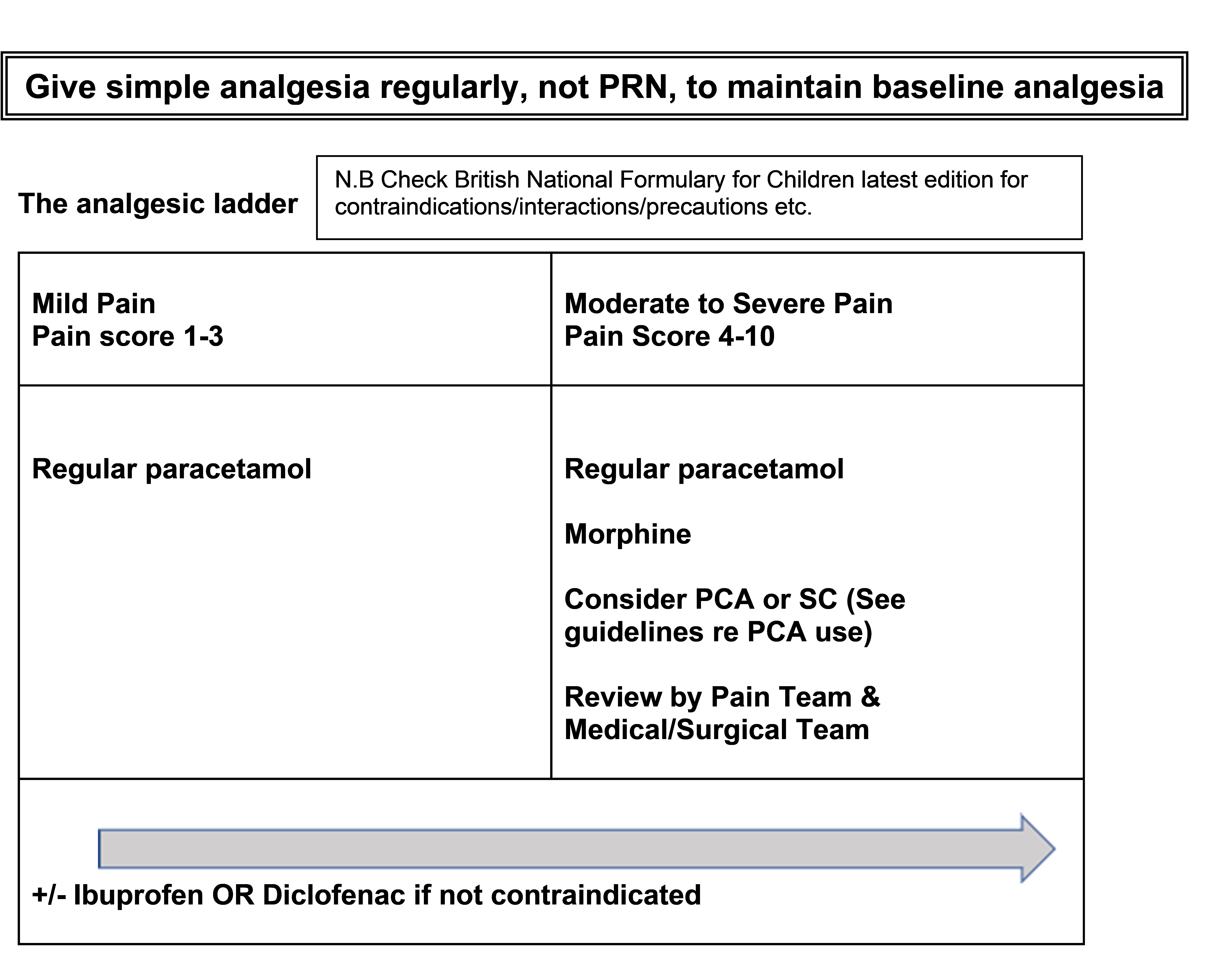
Across Frimley Health we emphasize the use of a modified WHO analgesic ladder for treatment of paediatric pain:
Strong opioid analgesia
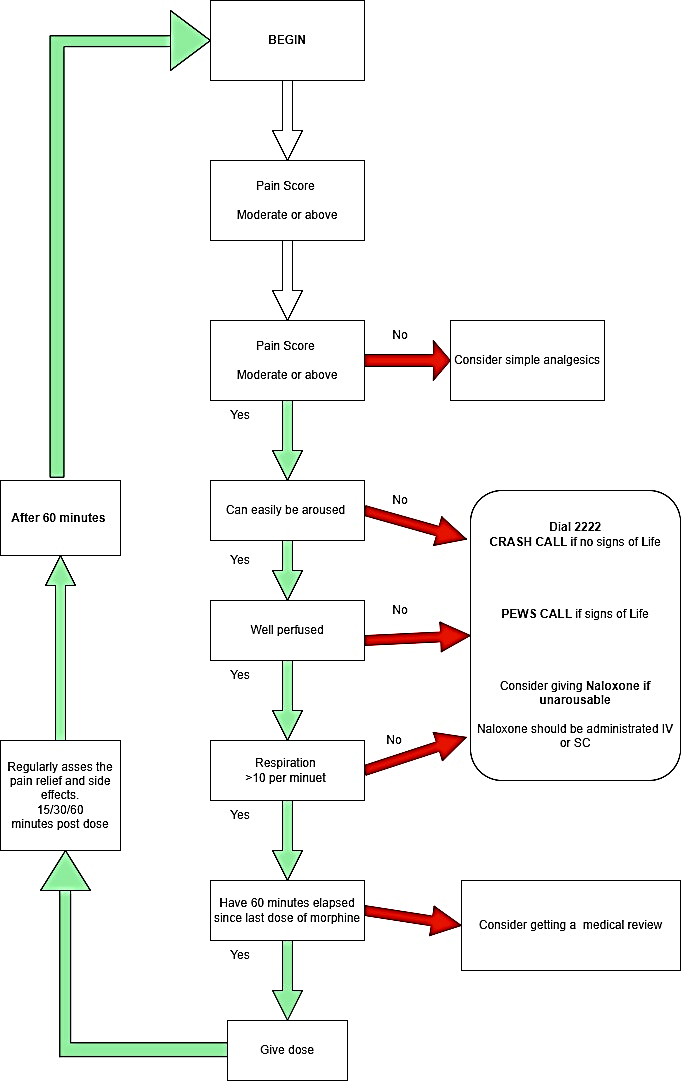
For patients suffering from severe pain, strong opioids may be indicated. Oral morphine can be given to patients as required. The subcutaneous morphine algorithm which can be found in Appendices 2 and 3 can be used. Patient Controlled Analgesia (PCA) for children can be initiated by an anaesthetist or an appropriately trained prescriber. Indications include sickle cell crisis and after major surgery. Please refer to the trust wide guideline for Patient Controlled Analgesia for Children and Young People for further information.
NB where strong opioids are prescribed, naloxone should always be prescribed.
Post-operative analgesia
APA (2012): Paediatric anaesthetists are responsible for initiating postoperative analgesia. They should liaise with patients and their families/carers, surgeons, and other members of the team providing postoperative care to ensure that pain is assessed, and suitable ongoing analgesia is administered. Postoperative analgesia should be appropriate to developmental age, surgical procedure, and clinical setting to provide safe, sufficiently potent, and flexible pain relief with a low incidence of side effects. Combinations of analgesics should be used unless there are specific contraindications, for example, local anaesthetics, opioids, NSAIDs, and paracetamol can be given in conjunction, not exceeding maximum recommended dose. The BNFC has different doses for post operative pain in children and uses a weight-based regime for children aged 0-11 years. See BNFC for details.
Management of medication side effects
Side effects of anaesthesia and analgesia should be expected and actively managed. Antiemetics should be routinely prescribed alongside opioid medication. Ondansetron should be used as a first line choice for child above 6 months (Fedorowicz et al, 2011). Patients at high risk (e.g. tonsillectomies, surgery with a duration of >30 minutes, opioid analgesia administered) of PONV should be prescribed ondansetron and dexamethasone (APA, 2012).
Note: phenothiazines (e.g., prochlorperazine) and metoclopramide can induce acute dystonic reactions such as facial and skeletal muscle spasms and oculogyric crises; children (especially girls, young women, and those under 10kg) are particularly susceptible (BNFC, 2021-2022).
Bio-behavioural techniques
There are a wide variety of techniques available. The play specialist/therapist can be a valuable source of support in the ED and on the paediatric ward. Many pain-relieving techniques/strategies can be performed by children themselves or with coaching from parents or health care professionals and vary from very simple to those based on cognitive-behavioural techniques requiring formal training. Psychological preparation of the child and education of the child's parent or carer can enhance the use of these techniques and potentially reduce the amount of pharmacological treatment necessary.
Techniques employed by staff/carers qualified to do this include
- blowing bubbles
- progressive relaxation
- reading stories
- meditation
- listening to favourite music
- guided imagery
- deep breathing
- hypnosis
Sucrose
Oral sucrose may be part of the procedural management plan for infants (up to 18 months of age) having a range of procedures. It should only be used for procedural pain and for short term management of distress when other comfort measures have failed. Please refer to guidelines in paediatric department describing the use of sucrose for procedural pain management in infants. Sucrose Solution as Pain Relief for Neonates
How to contact the Inpatient/acute pain team
For children with pain the first point of call is the child’s paediatrician and own medical team. Contact details for the Inpatient/acute pain team is on the Pain extranet page
Staff Education
The Pain Specialist Nurses welcome any appropriate opportunity to provide informal education about paediatric analgesia. Teaching sessions can be arranged on the ward or other clinical areas in collaboration with the clinical education team.
Any qualified member of staff is welcome to arrange to accompany the pain team on a ward round, by arrangement.
Monitoring of Guideline
This guideline will be monitored through incident reporting and will also be discussed as required at Pain Team Multidisciplinary Team Meetings, Anaesthetic Department meetings and Paediatric Department meetings.
Fedorowicz, Z., Jagannath, V. A. and Carter, B. (2011) ‘Antiemetics for reducing vomiting related to acute gastroenteritis in children and adolescents’, Cochrane Database of Systematic Reviews, 9, CD005506. Available at: https://www.cochranelibrary.com/cdsr/doi/10.1002/14651858.CD005506.pub5/full (Accessed: 13 March 2025).
IASP 2020. Pain in Children: Management - International Association for the Study of Pain (IASP) (Accessed: 30/10/2025).
McArthur, E., Cuncliffe, M. (1998) ‘Pain assessment and documentation - Making a difference’, Journal of Health Care, 2(4), pp. 164-169.
McGrath, P. J. (1995) ‘Annotation: Aspects of Pain in Children and Adolescents’, Journal of Child Psychology, 36(5), pp. 717-730.
Merkel, S. I. et al. (1997) ‘The FLACC: a behavioural scale for scoring postoperative pain in young children’, Pediatric Nursing, 23(3), pp. 293-297. Available at: https://pubmed.ncbi.nlm.nih.gov/9220806/ (Accessed: 14 March 2023).
Moreno-Duarte, I.et al (2024) ‘Integrating tailored approaches in perioperative care strategies for neurodivergent individuals’, EClinicalMedicine 76:102846. Available: Integrating tailored approaches in perioperative care strategies for neurodivergent individuals - PubMed
Palermo, T. M. and Drotar, D. (1996) ’Prediction of children’s postoperative pain: The role of pre-surgical expectations and anticipatory emotions’, Journal of Pediatric Psychology, 21(5), pp. 683-698.
Shann, F. (2017) Drug doses, 17th edn Intensive Care Unit Royal Children’s Hospital, Victoria, Australia. ISBN 9780958743487 (Please note the 18th edition publication date has been delayed due to coronavirus and it is stated that it is safe to continue to keep using the current 17th edition. https://www.drugdoses.com/)
Stevens, B. et al (2003) ‘Procedural pain in newborns at risk of neurologic impairment’, Pain, 105(1-2), pp. 27-35.
Twycross, A., Dowden, S. and Stinson J. (eds) (2014) Managing Pain in Children - a clinical guide for nurses and healthcare professionals. 2nd edn. Oxford: Wiley Blackwell.
US Department of Health and Human Services (1992) ‘Acute Pain Management in Infants, Children and Adolescents’, Operative and Medical Procedures, Clinical practice guideline. Quick reference for clinicians, (1B), pp. 1-22.
Woodgate, R. and Kristjanson, L. J., (1996) “Getting Better From My Hurts”: Toward a Model of the Young Child’s Pain Experience’, Journal of Pediatric Nursing, 11(4), pp. 233-242.
Appendix 1 – Post Operative Paediatric Pain Management
The BNFC has different doses for post operative pain in children and uses a weight-based regime for children aged 0-12 years. Always confirm doses with BNFC. Consider reducing doses in patients who are underweight for age or obese for weight-based doses.
Note: Opioids are contraindicated in children with OSA (Obstructive sleep apnoea), apnoea or breathing problems.
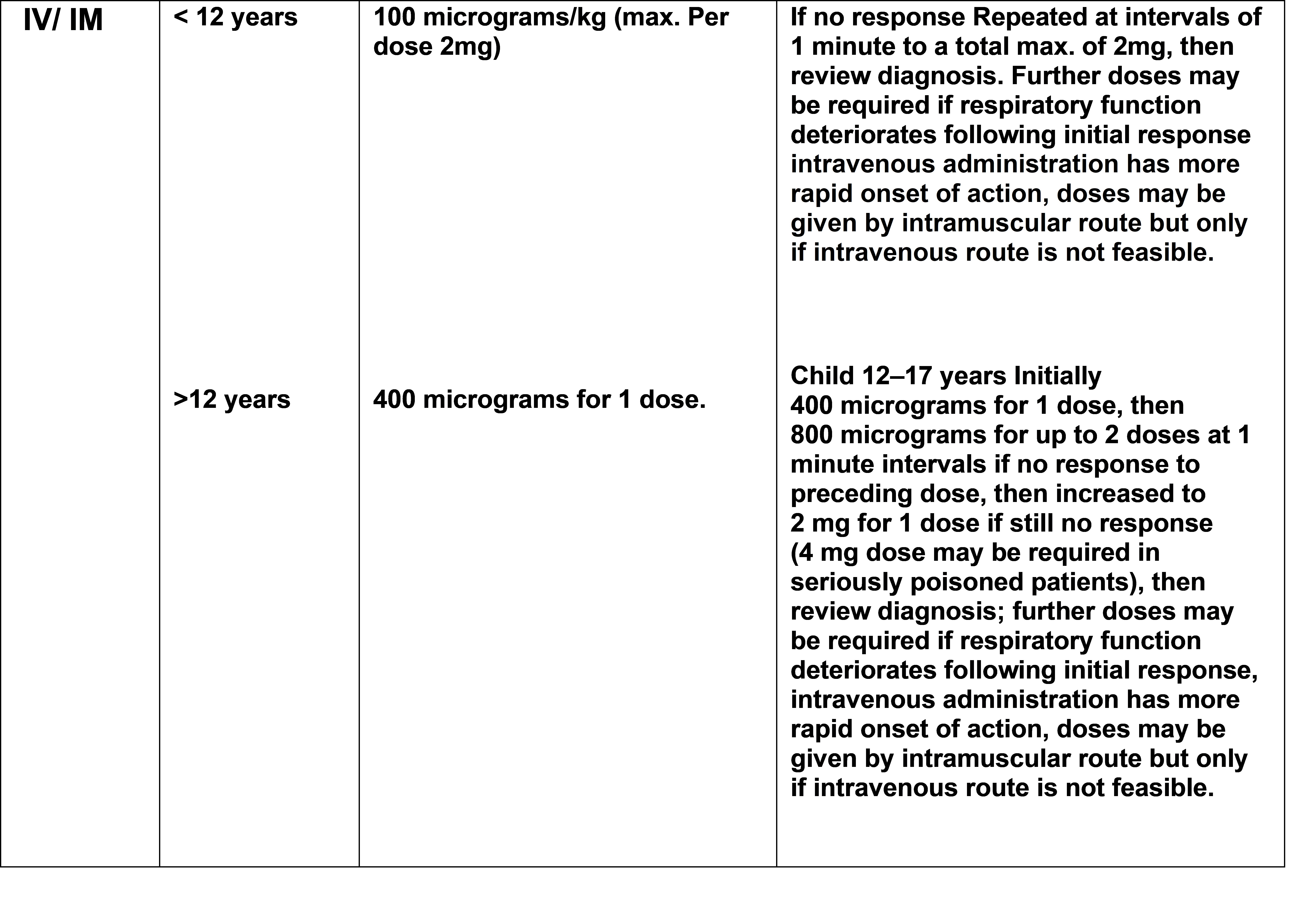
NALOXONE- Doses to be confirmed with eBNFC.
N.B Reversal when a continued therapeutic effect is required (e.g. post operative care) is starting dose 1-10mcg/kg and repeated.
(reversal of potentially life-threatening effects)
Note: Caution as Naloxone is short acting in significant overdose.
Appendix 2: Procedure for Insertion of a Subcutaneous Cannula and the administration of Morphine by Registered Nurses
Introduction
Where possible the procedure will be discussed with the child and family prior to theatre and the cannula sited by the anaesthetist, nurse or theatre technician, whilst under anaesthetic. In some cases, it may be necessary or appropriate to site the cannula on the ward, or in the Emergency Department. In these cases, the doctor or the nurse may site the cannula.
Equipment
2% chlorhexidine skin cleansing solution
Appropriate cannula for size of child
Opsite dressing
1ml Syringe
Topical local anaesthetic cream
Cannula Insertion procedure:
Explain procedure to child and parents.
If siting the cannula while the patient is conscious, then apply local anaesthetic cream to the chosen site, usually the anterior abdominal wall or the anterior upper arm, cover with occlusive dressing and leave in situ for 45 minutes.
Pinch up a fold of skin, having first cleaned it with 2% chlorhexidine
Insert the cannula at approximately 45 degrees and then release the fold of skin
Remove the needle
Apply the Opsite to the cannula and any additional dressing necessary. Date the dressing. Cannula must be changed every 72 hours.
Remove the valved injection port from the side arm and aspirate to ensure cannula is not sited intravenously. If it is (blood obtained on aspirating), then remove and repeat procedure from step 3.
Replace the valved injection port to the side arm
Apply a ‘Morphine’ sticker to side arm
Flush the cannula with 0.5ml 0.9% sodium chloride
Ensure the white injection port is secured in place
Administration of subcutaneous morphine:
The cannula can be flushed following the delivery of any boluses with 0.5mls 0.9% sodium chloride. (The dead space of the cannula is negligible at 0.1ml.) The subcutaneous morphine algorithm must be followed and child closely observed:
Explain the procedure to the child and parent.
Draw up the prescribed dose of morphine in a 1ml syringe, using a solution of 10mg/ml. Check the prescribed dose is appropriate to the weight of the patient.
Identify the subcutaneous cannula (morphine only).
Inject the drug through the valved injection port over 1-2 minutes. This helps prevent discomfort. Ensure flush given slowly after morphine bolus.
Ensure the valved injection port is secured.
Observe cannula site for redness, hardness, swelling or leakage.
Monitor pain and evaluate effect of drugs
Seek medical advice if there are any clinical problems
Appendix 3: Subcutaneous morphine algorithm for children in acute pain
Recommended Doses morphine sulfate for injection 10mg in 1ml
To be drawn up in a 1ml syringe and given via a subcutaneous cannula.
Dose (based on 100mcg/kg of morphine)
10kg 1mg
20kg 2mg
30kg 3mg
40kg 4mg Source: Shann (2017)
50kg 5mg
If two consecutive doses are given without analgesic effect, then get a medical review and consider getting specialist help from anaesthetist/pain team
Nausea and vomiting can be treated with antiemetics. If ineffective get a medical review.
Appendix 4: Pain management considerations for children who are neurodiverse.
Effective (postoperative) pain management in neurodivergent individuals necessitates individualised approaches, effective communication, and a supportive environment
This aims to address potential challenges and sensory sensitivities, ultimately improving pain management, patient satisfaction, and recovery outcomes
Key Considerations for Postoperative Pain Management:
Individualized Pain Assessment:
Recognize that pain perception can vary significantly; some individuals may be relatively insensitive to pain, while others might experience intense pain from unique sources
Utilize visual aids such as pain scales or pictorial representations to assist in pain articulation and localization
Communication and Support:
Be aware of potential communication differences and preferences; some individuals may prefer written communication over verbal communication
Incorporate supportive individuals (family, friends, or caregivers) in the care plan to facilitate communication between the patient and healthcare providers
Sensory Considerations:
Minimize unnecessary sensory stimuli by creating a calm and predictable environment
Consider providing weighted blankets or fidget toys to help with sensory needs
Be mindful of potential sensory sensitivities to pain medications and be prepared to adjust strategies if needed
Pain Management Strategies:
Multimodal analgesia: Utilize a combination of medications, such as paracetamol, NSAIDs, and other analgesic options, to effectively manage pain without relying heavily on opioids
Regional analgesia: Consider the use of regional anaesthetic techniques, such as nerve blocks, to provide targeted pain relief
Non-pharmacological approaches: Incorporate strategies like deep breathing exercises, relaxation techniques, or guided imagery to promote relaxation and reduce anxiety
Preoperative Planning:
Screen for potential risk factors for severe acute pain and chronic pain, including pre-existing anxiety or depression
Engage in shared decision-making with the patient and their support system, considering their preferences and concerns
Manage expectations by helping patients understand the typical pain trajectory and the importance of early mobilization
Addressing Potential Challenges:
◦Non-compliance: Be aware of behaviours like emotional outbursts or aggression and develop strategies to de-escalate situation. Behaviour is communication.
Hyperactivity: Provide a safe and structured environment to manage excessive movement or restlessness. Cross reference home medications with connected care/GP/Family/Carer.
Self-stimulatory behaviours: Acknowledge that these can be a coping mechanism and provide alternative strategies if necessary
Version:
3
Guidelines Lead(s):
Karin Cannons, Nurse consultant Pain Management
Contributor(s):
Liz Murphy, Pain Nurse Specialist HWPH Noreen Horne, Pain Specialist Nurse FPH Dr Christopher King, Consultant Anaesthetist and Paediatric Lead WPH Dr Gihan Ganesh, Consultant Anaesthetist and Paediatric Lead FPH.
Lead Director / Chief of Service:
Dr Subodh Tote, Chief of Service
Library check completed:
14/03/2025
Ratified at:
Nursing & Midwifery Quality board on 05/02/26 Drugs & Therapeutics on 11/02/26 Anaesthetic Clinical Governance on 21/01/26
Date Issued:
17/03/2026
Review Date:
01/03/2029
Pharmaceutical dosing advice and formulary compliance checked by:
Rashmi Selli 25th November 2025
This guideline has been registered with the Trust. However, clinical guidelines are guidelines only. The interpretation and application of clinical guidelines will remain the responsibility of the individual clinician. If in doubt, contact a senior colleague or expert. Caution is advised when using guidelines after the review date. This guideline is for use in Frimley Health NHS Foundation Trust hospitals only. Any use outside this location will not be supported by the Trust and will be at the risk of the individual using it.
Version Control Sheet
Version
Date
Guideline Lead(s)
Status
Comment
0.1
Dec 2017
Karin Cannons
Draft
Amalgamation of 2 existing guidelines from HWPH and FPH
1.0
April 2018
Karin Cannons
Final
Approved at CG groups.
1.1
July 2020
Karin Cannons
Interim
Updated bleep numbers and hours of service in sections 3.2, 9.2, 9.3; and correction to typo in flow chart as identified by Paediatrics
2.0
July 2021
Liz Murphy
Final
Updated references within document and reference list.