Key Points
- Actions to consider when average glucose levels are high for paediatric patients with type 1 diabetes.
This is a controlled document. If you are using a printed copy, check it against the guidelines site to ensure you are using the latest edition. Print copies must be destroyed after use.

High HbA1c > 69mmol/mol (8.5%) Management Plan
This plan has been put in place because you or your Childs HbA1c has been confirmed as 69mmol/mol (8.5%) or above. It is very important to maintain a HbA1c value as close to 48 mmol/mol (6.5%) as recommended by NICE (National Institute for Health and Care Excellence) guidelines (without experiencing significant hypoglycaemia). This will minimise the risk of long-term complications of diabetes, improve overall wellbeing and maximize growth potential.
- If HbA1c >69mmol/mol:
Please follow flowchart.
- If HbA1c >86mmol/mol:
Please follow flow chart.
Clinical psychology review in clinic, which may trigger a CAMHS referral.
If supervision is a concern, and their safety is not being maintained at home, or their management is detrimental to their health please involve social care
Set 2 goals for improving glucose levels
If there are any signs of self-harm, please refer to CAMHS with parent and the Child or Young Persons permission.
- If HbA1c >96mmol/mol, in addition:
Please complete all of the actions from point 2.
Consider urgent hospital admission for stabilisation
Admission
A stabilisation admission will be considered if you or your child’s HbA1c does not decrease appropriately. This will be a planned admission for 3-5 weekdays and a parent/carer is expected to be available to stay with their CYP throughout the day. All injections/pump boluses, carbohydrate counting and blood glucose monitoring will be supervised by the ward nursing staff and a food diary will need to be completed daily throughout the admission period.
Expectations of the diabetes team during the admission:
-
Send a letter detailing the admission.
-
Create a care plan for the CYP, parents and ward staff to follow during the admission
-
Carry out education and review blood glucose levels.
-
Identify any barriers to optimising diabetes management and agree a plan of how to overcome these.
-
Creation of a discharge plan identifying everyone’s role in supporting the CYP to achieve optimal diabetes management in the community setting
-
Arrange a follow up telephone call and clinic appointment
Planned outcomes of admission
-
This should be individualised for each CYP.
-
The main outcomes are to improve the CYP and parents knowledge and understanding of diabetes.
-
Identifying any barriers and agree a plan to overcome them
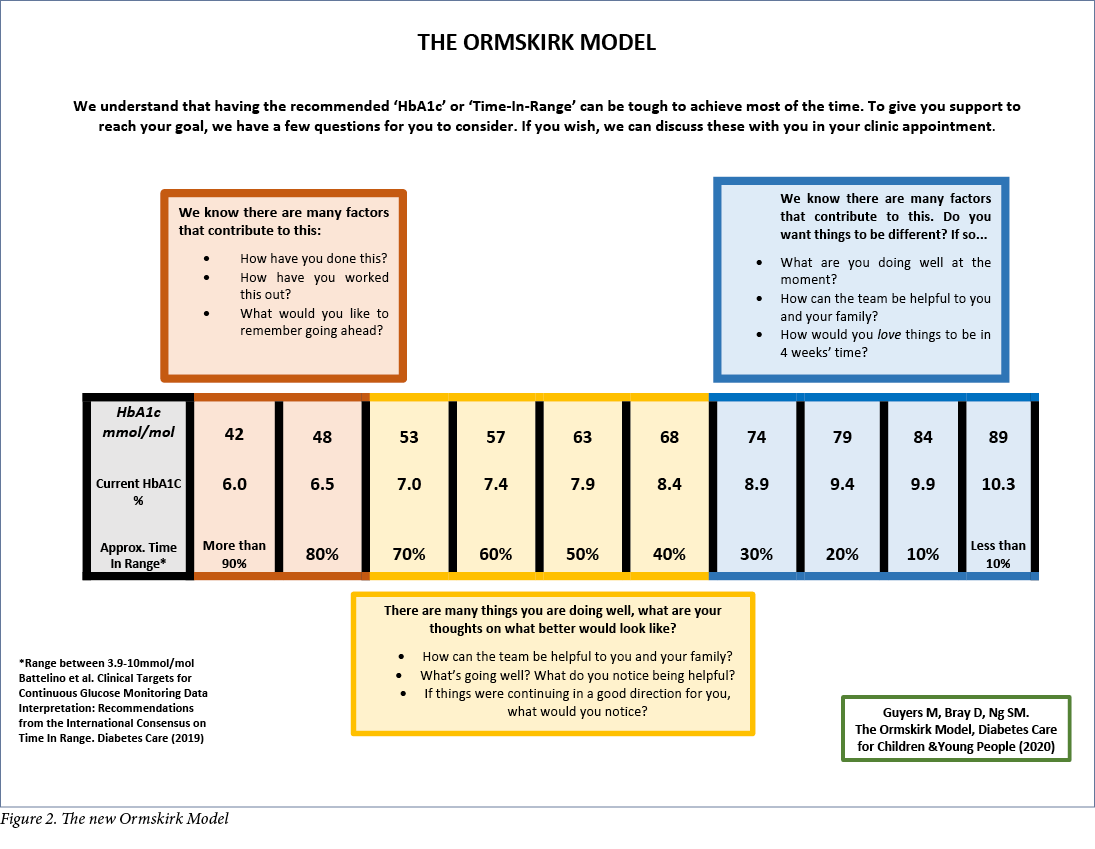
The table below shows the relationship between mean blood glucose levels, HbA1c and risk of complication:
High HbA1c Management Flowchart