Key Points
- Compared with women of a healthy pre-pregnancy BMI, pregnant women with obesity and their infants have increased risks.
- Folic acid and vitamin D: Women with obesity in pregnancy should be advised to take 5 mg folic acid and vitamin D 800-1000 IU supplementation daily antenatally
- Pregnant women with a booking BMI 40 or greater should be referred to an obstetric anaesthetist for consideration of antenatal assessment.
- All women require an antenatal and postnatal VTE assessment taking into account their BMI and other additional risks
Abbreviations
1.0 Introduction
This guideline is based on the RCOG ‘Care of Women with Obesity in Pregnancy’ Green-top Guideline No 72 (Nov 2018)1 and the NICE clinical guideline (CG 189)26.
Obesity is becoming increasingly prevalent in the UK population and has become one of the most commonly occurring risk factors in obstetric practice, with 22.7% of the antenatal population being obese and fewer than one‐half of pregnant women (46.3%) having a body mass index (BMI) within the normal range3.
Obesity in pregnancy is associated with increased risk for both the mother and baby and therefore requires a multi-disciplinary team approach.
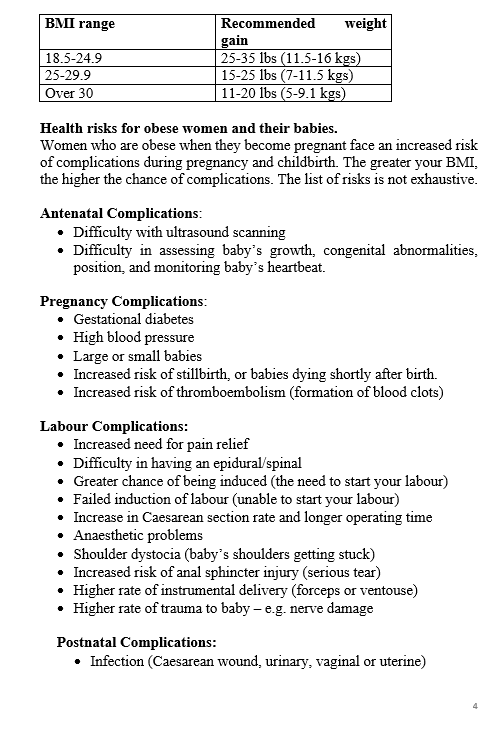
Compared with women of a healthy pre-pregnancy BMI, pregnant women with obesity are at increased risk of:
Miscarriage4, gestational diabetes5, pre‐eclampsia6, venous thromboembolism (VTE)7, induced labour8, dysfunctional or prolonged labour9, caesarean section10, anaesthetic complications13, postpartum haemorrhage (PPH)14, wound infections12 and mortality12.
Women over their ideal weight are less likely to initiate and maintain breastfeeding than women of normal weight13.
Infants of obese mothers are at increased risk of:
congenital anomalies, stillbirth, prematurity, macrosomia, and neonatal death5,14,15. Intrauterine exposure to maternal obesity is also associated with an increased risk of developing obesity and metabolic disorders in childhood.
Women should be supported to lose weight before conception and between pregnancies in line with NICE CG189.
2.0 Pre-pregnancy care
2.1 Primary care services should ensure that all women of childbearing age have the opportunity to optimise their weight before pregnancy. Advice on weight and lifestyle should be given during preconception counselling or contraceptive consultations. Weight and BMI should be measured to encourage women to optimise their weight before pregnancy.
2.2 Women of childbearing age with a BMI 30 or greater should receive information and advice about the risks of obesity during pregnancy and childbirth and be supported to lose weight before conception and between pregnancies in line with NICE clinical guideline (CG) 189.
2.3 Women should be informed that weight loss between pregnancies reduces the risk of stillbirth, hypertensive complications and fetal macrosomia. Weight loss increases the chances of successful vaginal birth after caesarean (VBAC).
2.4 Women with a BMI 30 or greater wishing to become pregnant should be advised to take 5mg folic acid supplementation daily, starting at least 1 month before conception and continuing during the first trimester of pregnancy14.
2.5 Obese women are at high risk of vitamin D deficiency. However, although vitamin D supplementation may ensure that women are vitamin D replete, the evidence on whether routine vitamin D should be given to improve maternal and offspring outcomes remains uncertain15.
2.6 A minimum waiting period of 12–18 months after bariatric surgery is recommended before attempting pregnancy to allow stabilisation of body weight and to allow the correct identification and treatment of any possible nutritional deficiencies that may not be evident during the first months.
3.0 Provision of antenatal care
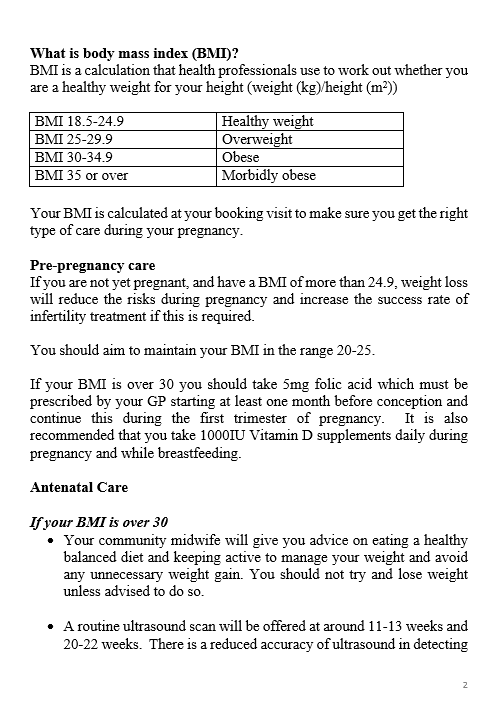
3.1 BMI calculation: All pregnant women should have their weight and height measured using appropriate equipment, and their BMI calculated at the antenatal booking visit. Measurements should be recorded in the electronic patient record system. Consideration should be given to reweighing women during the third trimester to allow appropriate plans to be made for equipment and personnel required during labour and birth.
3.2 Explain risks: Refer all women with a BMI over 35 for consultant-led care. Discuss and document risks of obesity in pregnancy and provide patient information leaflet.
3.3 Weight gain/exercise: There is lack of consensus on optimal gestation weight gain. Until further evidence is available, a focus on healthy diet may be more applicable than prescribed weight gain targets. General dietary advice in the antenatal clinic should be offered to all women with raised BMI and consider dietician referral to those with BMI over 40.
3.4 Folic acid: Women should be advised to take 5mg folic acid supplementation daily.
3.5 Aspirin: Women with more than one moderate risk factor (BMI of 35 or greater, first pregnancy, maternal age of more than 40 years, family history of pre‐eclampsia, inter-pregnancy interval over 10 years and multiple pregnancy) may benefit from taking 150mg aspirin daily at night from 12 weeks of gestation until birth of the baby.
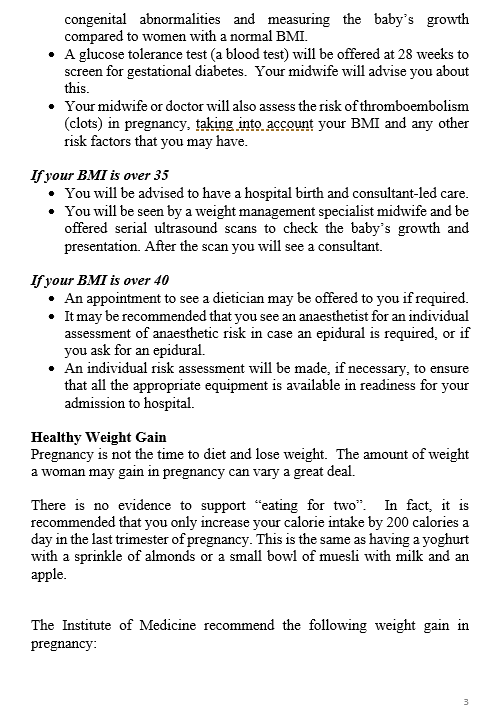
3.6 Antenatal screening: All women should be offered antenatal screening for chromosomal anomalies. Women should be counselled, however, that some forms of screening for chromosomal anomalies are slightly less effective with a raised BMI. Screening and diagnostic tests for structural anomalies, despite their limitations in the obese population, should be offered. However, women should be counselled that all forms of screening for structural anomalies are more limited in obese pregnant women.
3.7 Gestational Diabetes screening: All pregnant women with a booking BMI 30 or greater should be screened for gestational diabetes at 24-27+6 weeks or earlier in women who had previous gestational diabetes.
3.8 Hypertension screening: An appropriate size of cuff should be used for blood pressure measurements taken at the booking visit and all subsequent antenatal consultations. The cuff size used should be documented in the medical records. Ideally, BP should be monitored at 3 weekly intervals between 24 and 32 weeks, and 2 weekly intervals from 32 weeks until birth.
3.9 VTE assessment: Risk assessment should be individually discussed, assessed and documented at the first antenatal visit, during pregnancy (if admitted or develop intercurrent problems), intrapartum and postpartum. Please complete checklist during antenatal appointment and bear in mind that BMI over 40 is counted as 2 moderate risk factors. Antenatal and post-birth thromboprophylaxis should be considered in accordance with the cross-site guideline “Thromboprophylaxis and the treatment of Venous Thromboembolism in Pregnancy and the Puerperium” and the RCOG Green Top Guideline No. 37a. Inform women of hydration and mobility to reduce VTE risk antenatally. Inform women of possible symptoms of VTE. Refer to “Thromboprophylaxis and the treatment of Venous Thromboembolism in Pregnancy and the Puerperium” guideline.
3.10 Mental health: Women with BMI 30 or greater are at increased risk of mental health problems (especially anxiety and depression) and should therefore be screened for these in pregnancy. Appropriate support should be offered if required. There is insufficient evidence to recommend a specific lifestyle intervention to prevent depression and anxiety in obese pregnant women.
3.11 Fetal growth monitoring: All women must have a customised growth chart generated. Fundal height measurements should be performed and plotted on the customised growth chart every 2-3 weeks from 26-28 weeks of gestation until birth. For women having BMI >35, serial growth scans should be offered at 32-, 36- and 38-39-weeks’ gestation. Women undergoing serial growth scans do not need fundal height measurements to be carried out.
3.12 Anaesthetic referral: Please refer to the obstetric anaesthetic guideline regarding site-specific criteria for anaesthetic referral for antenatal assessment. Difficulties with venous access and regional and general anaesthesia should be assessed. In addition, an anaesthetic management plan for labour and birth should be discussed and documented. Multidisciplinary discussion and planning should occur where significant potential difficulties are identified.
3.13 Planning labour and birth: NICE NG201 Recommends that healthcare providers should discuss labour and birth with pregnant women before 36 weeks of gestation. This discussion should include the labour plan, pain management, management of prolonged pregnancy and active management of third stage of labour. Antenatal colostrum collection should be discussed and facilitated from 36 weeks onwards to support initiation and continuation of breastfeeding. When discussing labour with the woman, it is important to consider maternal comorbidities, fetal complications and access to services for emergency birth and neonatal resuscitation if required. This requires a multidisciplinary, individualised approach, with consideration of the woman's and her partner's views, and may involve the obstetrician, midwife and anaesthetist, and early anticipation of potential maternal and fetal complications that may arise during the intrapartum period.
3.13.1. Place of birth: In alignment with Birth Centre criteria, booking BMI >/=18 or 35 in primipara and >/= 40 in multipara should be red (delivery in labour ward recommended). There should be early recourse to labour ward if complications arise in birth centre. However, if there are risk factors other than BMI, decision should be made appropriately and in collaboration with women.
3.13.2 IOL: Elective induction of labour at term in obese women may reduce the chance of caesarean birth (and macrosomia) without increasing the risk of adverse outcomes (no difference in the odds of operative vaginal delivery, birth lacerations, brachial palsy or RDS)18; the option of induction should be discussed with each woman on an individual basis. Offer birth choice clinic appointment with consultant midwife if the woman needs further support.
3.13.3 Fetal macrosomia: Where macrosomia is suspected, induction of labour at term may be considered. Parents should have a discussion about the options of induction of labour and expectant management. A 2016 Cochrane database systematic review of randomised trials for IOL for suspected fetal macrosomia (irrespective of BMI) concluded that elective induction of labour did not reduce the risk of brachial plexus injury. However, IOL results in lower mean birthweight, and fewer fractures and cases of shoulder dystocia. The authors concluded that while further trials are needed to identify the optimal gestation for induction and diagnosis of macrosomia, induction of labour may be considered where macrosomia can be identified confidently and options of induction and expectant management should be discussed19. If suitable, offer ‘Big Baby Trial’ enrolment.
3.13.4 VBAC: Women with a booking BMI 30 or greater should have an individualised decision for VBAC following informed discussion and consideration of all relevant clinical factors. Obesity is a risk factor for unsuccessful VBAC20. Class III (BMI >/= 40) obesity is associated with increased rates of uterine rupture during trial of labour and neonatal injury. Emergency caesarean section in women with obesity is associated with an increased risk of serious maternal morbidity. This should also be taken into account when discussing the risks and benefits of VBAC. Offer birth choice clinic appointment with consultant midwife if the woman needs further support.
3.14 Bariatric surgery: Women with previous bariatric surgery have high‐risk pregnancies and should have consultant‐led antenatal care. Women with previous bariatric surgery should be referred to a dietician regarding their dietary needs. They should have nutritional surveillance and screening for deficiencies during pregnancy.
4.0 Provision of intrapartum care
4.1 Those with booking BMI >/=18 or 35 in primipara and >/= 40 in multipara should be red (delivery in labour ward recommended).
4.2 Women with BMI over 40 who are in established labour should receive continuous midwifery care, with consideration of additional measures to prevent pressure sores and monitor the fetal condition.
4.3 Inform theatre staff and anaesthetist of any women with BMI over 40
4.4 Offer tablet of Omeprazole 40mg 12 hourly to all women with a BMI over 30
4.5 Establish early IV access. In women with a BMI 40, consideration should be given to the siting of a second cannula.
4.6 USS should be performed to confirm presentation (either at start of IOL or during admission in labour)
4.7 Fetal monitoring: Aligning place of delivery criteria to fetal monitoring i.e. intermittent auscultation for birth centre women and continuous fetal monitoring for labour ward women would streamline fetal monitoring process. Fetal heart rate monitoring can be a challenge and close surveillance is required with early recourse to fetal scalp electrode or ultrasound assessment of the fetal heart if necessary.
4.8 Although active management of the third stage of labour is advised for all women, the increased risk of PPH in those with a BMI greater than 30 makes this even more important22
4.9 Caesarean section:
4.9.1 Consider additional assistant if difficulty is anticipated.
4.9.2 Women with BMI 30 or more having a caesarean section are at increased risk of wound infection and should receive prophylactic antibiotics at the time of surgery23.
4.9.3 Consider using abdominal retractors (e.g. Alexis) to ease access
4.9.4 The obstetric consultant should be present for all women with a BMI >50 and consider being present for those with a BMI >4024.
4.9.5 Women undergoing caesarean section who have more than 2cm subcutaneous fat should have suturing of the subcutaneous tissue space in order to reduce the risk of wound infection and wound separation25.
4.9.6 Consider ‘PICO’ wound dressing for women with a BMI 40 or greater or in diabetics when the BMI is 35 or greater or anyone with a fat apron covering the wound. This dressing should remain in-situ for 7 days.
5.0 Provision of postnatal care and follow-up after pregnancy
5.1 VTE prevention: All women require a postnatal VTE assessment taking into account their BMI and other additional risks.
5.2 VTE prevention with morbid obesity: All women with BMI above 40 should be advised to have postnatal thromboprophylaxis in doses appropriate for their weight for at least 10 days (regardless of their mode of delivery) after delivery. Refer to the “Thromboprophylaxis and treatment of Venous Thromboembolism in Pregnancy and Puerperium” guideline.
5.3 Breastfeeding: Obesity is associated with low breastfeeding initiation and maintenance rates. Women with a booking BMI 30 or greater should receive appropriate specialist advice and support antenatally and postnatally regarding the benefits, initiation and maintenance of breastfeeding. However, measures such as early and unrestricted skin to skin will support the newborn to adapt to extra-uterine life and encourage initiation of breastfeeding soon after birth and regular, scheduled contact for breastfeeding support in the early postnatal period have a positive impact on breastfeeding outcomes27.
5.4 Contraception: Postnatal contraception advice should be given according to the Faculty of Sexual and Reproductive Healthcare guidelines 26 which recognise that women with obesity are at increased risk of VTE if they take the combined oral contraceptive pill. Consider immediate post-partum contraception before discharge home.
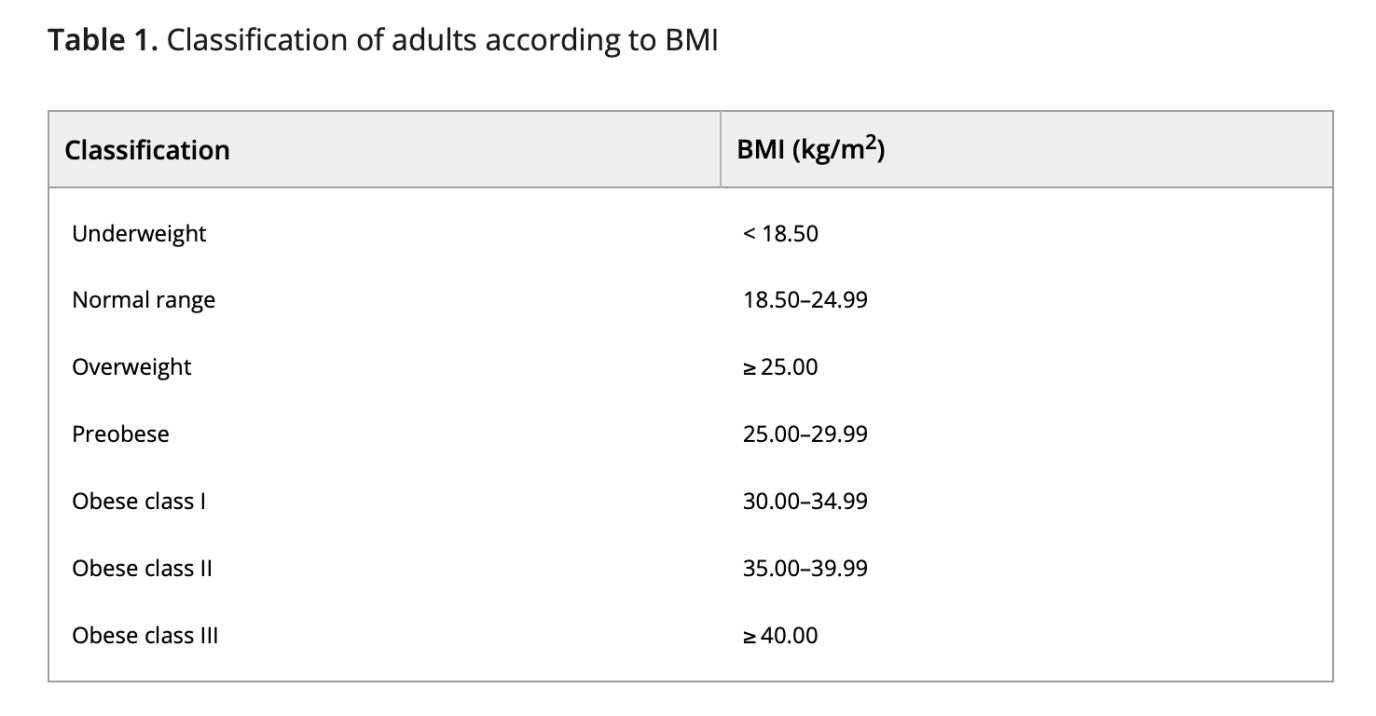
5.5 Dietary and lifestyle advice: Refer to NICE CG189. Women with class I obesity (BMI 30-34.99) or greater at booking should continue to be offered nutritional advice following childbirth from an appropriately trained professional, with a view to weight reduction in line with NICE Public Health guideline 27. Modification of dietary and physical activity behaviours are associated with a significant reduction in body weight compared with no lifestyle intervention28,29.
5.6 Women who have been diagnosed with gestational diabetes should have postnatal follow‐up with a fasting blood sugar level in 6-13 weeks or HbA1C level in 13 weeks post-delivery and yearly thereafter30.
6.0 Equipment
6.1 Consider if specialist equipment may be required for intrapartum or postnatal care, even if the woman is independent in all aspects of mobilising and caring for herself.
6.2 All maternity beds are suitable unless a woman weighs ≥ 250kg, in which case a bariatric bed can be requested via the portering service (at Frimley Park from the equipment store in Rowan House). This service is available 24 hours a day. At Frimley Park further bariatric equipment is also stored in Rowan House, such as chairs, commodes and wheelchairs.
6.3 A hoverjack is available if required, at Frimley Park this is kept on the postnatal ward; slide sheets are also available if required. Additional slings and slide sheets can also be obtained from Rowan House or from the manual handling team.
6.4 Theatres also have a ‘HoverMatt’ mattress which is an air transfer system. This is an aid for performing lateral transfers on patients with raised BMI’s and this is often used in theatre. It is a safe and comfortable way of transferring patients and also reduces skin shearing.
6.5 Note: it is more accurate to get a blood pressure (BP) reading from using a cuff that is too big for the woman than too small. BP cuffs that are too tight can give false readings. A selection of large BP cuffs are available.
7.0 Tissue Viability
Assessing tissue viability and providing pressure area care is important for every woman. Women with a raised BMI, (especially women with BMI’s ≥ 40) often require extra vigilance and care as they are at a higher risk of pressure related trauma.
Check everyone's Waterlow score on admission, whenever their situation changes e.g., when an epidural is sited and again post-delivery/post-operatively.
Depending on their Waterlow score and risk, document skin inspection findings, appropriate repositioning regime, action taken and the care plan. This may be repositioning every 2 hours or 4 hours depending on her Waterlow score, pressure areas, any pressure damage and risk.
If pressure areas are starting to breakdown, and you identify redness, you need to increase repositioning regime and skin inspection, make sure appropriate pressure relieving equipment is in place - keep the woman informed and encourage them to keep moving.
If the woman has anti-embolism stockings (AES) make sure these are removed to check the heels and then re-applied, as this area can get missed if stockings are not removed and re-applied daily. Heels are very high risk if patient has had an epidural and they are not moving their legs. Off-loading of pressure is vital and appropriate pressure relieving equipment should be used. Additionally, if the woman is diabetic, she should have a foot check and also her heels are more vulnerable to being at risk of pressure damage. (Heel protection is available Devon sheets, heal up boots, Halton boots and a pillow if these are not available. The bottom of the bed can also be dropped down to help off load pressure)
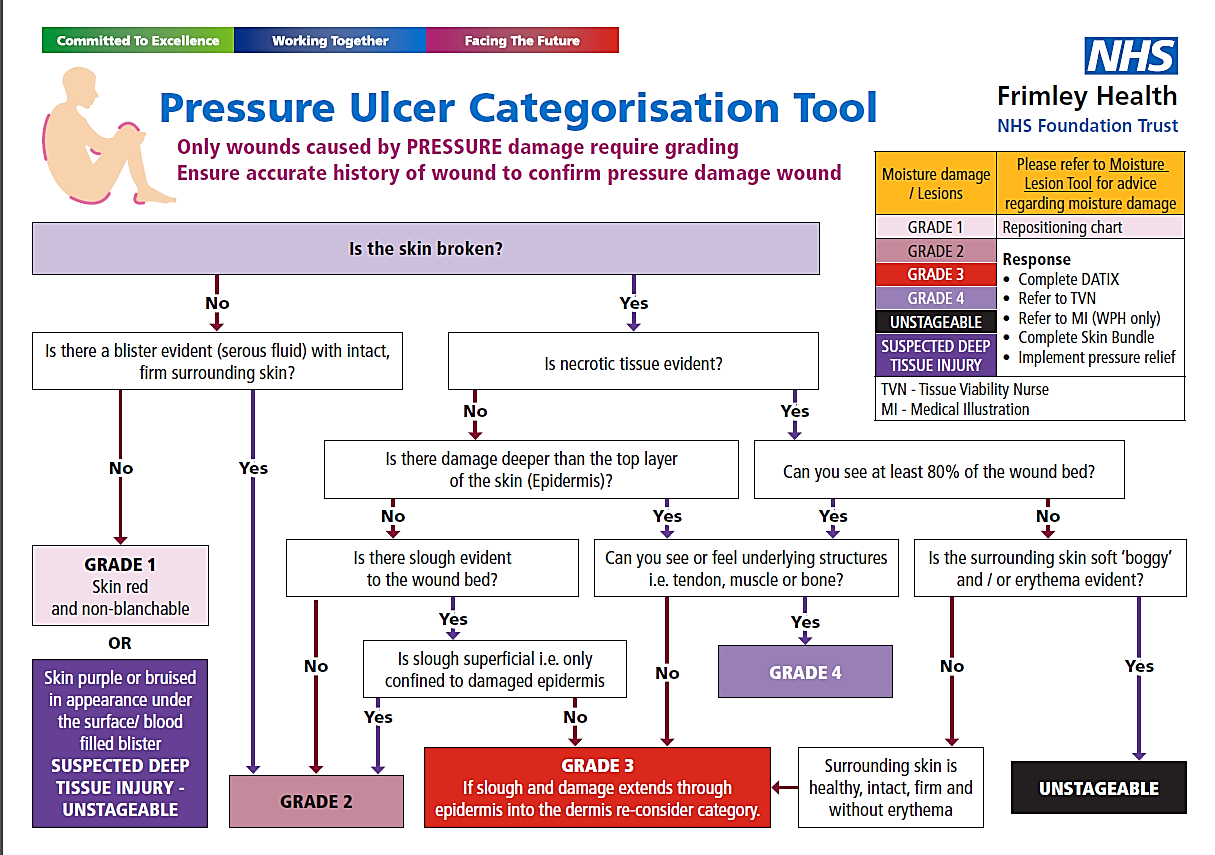
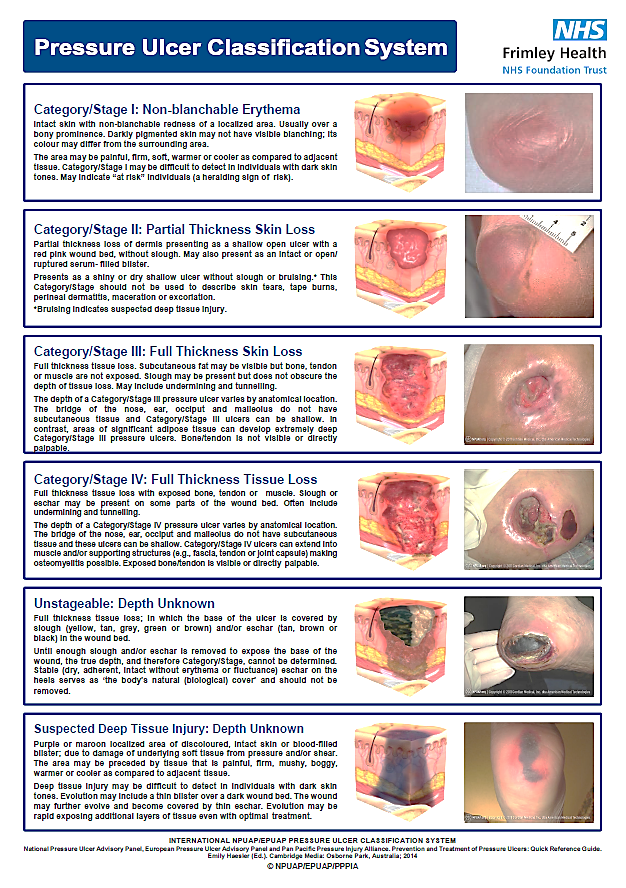
Category 1 and Category 2 pressure ulcers do not need to be referred to Tissue Viability (but can be contacted for advice) as these should be managed at ward level but the ward Manager should be made aware and should review the pressure damage. Medical illustration should be contacted to take photos of pressure damage and an RL completed. However, category 3 & 4, unstageable and deep tissue injury need to be referred to Tissue Viability via the intranet and also patient safety team made aware.
Refer to the Pressure Ulcer Categorisation Tool and Categorisation system to support grading categorisation of pressure damage. See Appendices 1 and 2.
8.0 Auditable standards
8.1 Proportion of women with class I obesity or greater at booking who commenced 5mg folic acid supplementation daily prior to conception (100%).
8.2 Proportion of pregnant women who have a record of maternal height, weight and BMI in their maternity records (100%).
8.3 Proportion of women with class III obesity who had an antenatal anaesthetic review (100%).
8.4 Proportion of women with class I obesity or greater at booking, plus two other risk factors for VTE, as outlined in RCOG GTG No. 37a, who had pharmacological thromboprophylaxis prescribed antenatally (100%).
8.5 Proportion of women with class III obesity at booking who had pharmacological thromboprophylaxis prescribed postnatally (100%).
8.6 Proportion of women with class I obesity or greater at booking who had a glucose tolerance test during pregnancy (100%).
8.7 Proportion of women with class I obesity or greater at booking who had active management of the third stage of labour (100%).
8.8 Proportion of operative vaginal births and caesarean sections in women with class III obesity at booking, which were attended by an obstetrician and anaesthetist at specialty trainee level 6 or above (100%).
9.0 Monitoring compliance
This guideline will be subject to three yearly audit. The audit midwife is responsible for coordinating the audit. Results presented to the department clinical audit meeting. Action plans will be monitored at the department clinical audit meeting.
10.0 Communication
If there are communication issues (e.g., English as a second language, learning difficulties, blindness/partial sightedness, deafness) staff will take appropriate measures to ensure the patient (and her partner, if appropriate) understand the actions and rationale behind them
11.0 Equality and diversity assessment
This guideline has been subject to an Equality Impact assessment.
12 References
-
Royal College of Obstetricians & Gynaecologists. Care of women with obesity in pregnancy (Green-top guideline no. 172). 2018. Available from: Royal College of Obstetricians & Gynaecologists
-
Royal College of Obstetricians & Gynaecologists. Reducing the risk of thrombosis and embolism during pregnancy and the puerperium (Green-top guideline no. 37a). 2015. Available from: Royal College of Obstetricians & Gynaecologists
-
NMPA Project Team. National Maternity and Perinatal Audit: Clinical Report 2021. Based on births in NHS maternity services in England, Scotland and Wales between 1 April 2017 and 31 March 2018. London: RCOG; 2021 Available from: National Maternity and Perinatal Audit
-
Eapen A, Hayes ET, McQueen DB, Beestrum M, Eyck PT, Boots C. Mean differences in maternal body mass index and recurrent pregnancy loss: a systematic review and meta-analysis of observational studies. Fertil Steril. 2021 Nov;116(5):1341-1348. doi: 10.1016/j.fertnstert.2021.06.019. Epub 2021 Aug 17.
-
Scott-Pillai R, Spence D, Cardwell CR, Hunter A, Holmes VA . The impact of body mass index on maternal and neonatal outcomes: a retrospective study in a UK obstetric population, 2004-2011. British Journal of Obstetrics & Gynaecology. 2013. 120 (8) 932-9..
-
Lopez-Jaramillo P, Barajas J, Rueda-Quijano SM, Lopez-Lopez C, Felix C. Obesity and Preeclampsia: Common Pathophysiological Mechanisms. Front Physiol. 2018;9:1838. Published 2018 Dec 19. doi:10.3389/fphys.2018.01838
-
Morgan ES, Wilson E, Watkins T, Gao F, Hunt BJ. Maternal obesity and venous thromboembolism. Int J Obstet Anesth. 2012 Jul;21(3):253-63. doi: 10.1016/j.ijoa.2012.01.002.
-
Ashraf R, Maxwell C, D'Souza R. Induction of labour in pregnant individuals with obesity. Best Pract Res Clin Obstet Gynaecol. 2022 Mar;79:70-80. doi: 10.1016/j.bpobgyn.2021.12.004
-
Carlson NS, Hernandez TL, Hurt KJ. Parturition dysfunction in obesity: time to target the pathobiology. Reprod Biol Endocrinol Published 2015 Dec 18. doi:10.1186/s12958-015-0129-6
-
Marchi J, Berg M, Dencker A, Olander EK, Begley C. Risks associated with obesity in pregnancy, for the mother and baby: a systematic review of reviews. Obes Rev. 2015 Aug;16(8):621-38. doi: 10.1111/obr.12288.
-
Taylor CR, Dominguez JE, Habib AS. Obesity and Obstetric Anaesthesia: Current Insights. Local Regional Anaesthesia Published 2019 Nov 18. doi:10.2147/LRA.S186530.
-
Fyfe EM, Thompson JMD, Anderson NH, Groom KM, McCowan LM. Maternal obesity and postpartum haemorrhage after vaginal and caesarean delivery among nulliparous women at term: a retrospective cohort study. BMC Pregnancy Childbirth Published 2012 Oct 18. doi:10.1186/1471-2393-12-112.
-
Wojcicki JM. Maternal prepregnancy body mass index and initiation and duration of breastfeeding: a review of the literature. J Womens Health (Larchmt). 2011 Mar;20(3):341-7. doi: 10.1089/jwh.2010.2248.
-
Harris BS, Bishop KC, Kemeny HR, Walker JS, Rhee E, Kuller JA. Risk Factors for Birth Defects. Obstet Gynecol Surv. 2017 Feb;72(2):123-135. doi: 10.1097/OGX.0000000000000405.
-
Bone JN, Joseph KS, Mayer C, Platt R, Lisonkova S. The association between pre-pregnancy body mass index and perinatal death and the role of gestational age at delivery. PLoS One. 2022 Mar 23;17(3):e0264565. doi: 10.1371/journal.pone.0264565.
-
Moussa HN, Hosseini Nasab S, Haidar ZA, Blackwell SC, Sibai BM. Folic acid supplementation: what is new? Fetal, obstetric, long‐term benefits and risks. Future Sci OA2016;2:FSO116 Published 2016 Apr 21. doi:10.4155/fsoa-2015-0015.
-
Cooper C, Harvey NC, Bishop NJ, Kennedy S, Papageorghiou AT, Schoenmakers I, et al. Maternal gestational vitamin D supplementation and offspring bone health (MAVIDOS): a multicentre, double‐blind, randomised placebo‐controlled trial. Lancet Diabetes Endocrinol 2016;4:393–402 doi:10.1016/S2213-8587(16)00044-9.
-
Lee VR, Darney BG, Snowden JM, Main EK, Gilbert W, Chung J, et al. Term elective induction of labour and perinatal outcomes in obese women: retrospective cohort study. BJOG2016;123:271–8 doi:10.1111/1471-0528.13807.
-
Boulvain M, Irion O, Dowswell T, Thornton JG. Induction of labour at or near term for suspected fetal macrosomia. Cochrane Database Syst Rev 2016;(5):CD000938 Published 2016 May 22. doi:10.1002/14651858.CD000938.pub2.
-
Denham SH, Humphrey T, deLabrusse C, Dougall N. Mode of birth after caesarean section: individual prediction scores using Scottish population data. BMC Pregnancy Childbirth. 2019 Feb 28;19(1):84. doi: 10.1186/s12884-019-2226-6.
-
National Institute for Health and Care Excellence. Intrapartum care for healthy women and babies. Clinical guideline CG190. Manchester: NICE; 2017 Available from: National Institute for Health and Care Excellence
-
Begley CM, Gyte GM, Devane D, McGuire W, Weeks A, Biesty LM. Active versus expectant management for women in the third stage of labour. Cochrane Database Syst Rev2019;2(2) CD007412 Published 2019 Feb 13. doi:10.1002/14651858.CD007412.pub5.
-
Smaill FM,Grivell RM. Antibiotic prophylaxis versus no prophylaxis for preventing infection after cesarean section. Cochrane Database Syst Rev2014;(10):CD007482 Published 2014 Oct 28. doi:10.1002/14651858.CD007482.pub3.
-
Barber JS, Cunningham S Mountfield J, Yoong W, Morris E. Roles and responsibilities of the consultant providing acute care in obstetrics and gynaecology. RCOG June 2021 (Updated May 2022) Available from: Royal College of Obstetricians & Gynaecologists
-
National Institute for Health and Care Excellence. Caesarean birth. NICE guideline NG192. 2021. Available from: National Institute for Health and Care Excellence National Institute of Health and Care Excellence. Caesarean Section. Clinical Guideline 132. Manchester: NICE; 2011.
-
Faculty of Sexual & Reproductive Healthcare. Contraception After Pregnancy. London: FSRH; Oct 2020. Available from: Faculty of Sexual & Reproductive Healthcare
-
Renfrew MJ, McFadden A, Bastos MH, et al. Midwifery and quality care: findings from a new evidence-informed framework for maternal and newborn care. Lancet. 2014;384(9948):1129-1145. doi:10.1016/S0140-6736(14)60789-3 Renfrew, M. et al (2014) Midwifery and quality care: findings from a new evidence-informed framework for maternal and new born care. The Lancet. 384:9948, p. 1129-1145
-
National Institute for Health and Care Excellence. Obesity: identification, assessment and management. Clinical guideline CG189. NICE;2022 Available from: National Institute for Health and Care Excellence
-
National Institute for Health and Care Excellence. Weight management before, during and after pregnancy. Public health guideline PH27. 2010. Available from: National Institute for Health and Care Excellence
-
National Institute for Health and Care Excellence. Antenatal care. NICE guideline NG201. 2021. Available from: [National Institute for Health and Care Excellence](https://www.nice.org.uk/guidance/ng201National Institute of Health and Care Excellence. Antenatal care for uncomplicated pregnancies. Clinical guideline CG62. NICE; 2019)
Appendix 1: Pressure Ulcer Categorisation Tool
Appendix 2: Pressure Ulcer Classification System
Appendix 3: Frimley Park Hospital main theatres operating tables safe working weight limits
These supine weights are with the patient’s umbilicus over the central column. The patient’s position on the table can also affect the safe weight limits for the tables. All these limits have been obtained from the manufacturers.
Appendix 4: Prompt on EPIC to outline risks and frequency of complications
Risks:
BMI >30 = 10.4/10,000 deliveries, BMI >35 = 14.5/10,000, BMI >40 = 24.8/10,000
-
Heart disease up to 3 times more likely in BMI >30
-
Pre-eclampsia risk in BMI >30 = 2-4 times higher compared with BMI <25
-
Congenital anomalies in BMI >30:
Neural tube defect risk doubles to 2/1000
Spina bifida risk more than doubles (OR 2.24)
Cardiovascular anomalies is 1.3 times more likely
Cleft lip and palate risk 1.2 times more likely
-
Gestational diabetes is 2.5 times more likely in BMI >30
-
Macrosomia risk doubles in BMI >30 to 14% (from 7% in women with BMI 20-30)
-
Extreme preterm delivery risk:
BMI >30 = 1.2 times more likely, BMI >40 = 1.8 times more likely
BMI >50 = 3.5 times more likely
-
Induction of labour 1.7 times more likely in BMI >30, takes longer requiring more PGE2
-
Anaesthetic complications:
Higher rate of neuraxial analgesia failure with 40% longer procedure times
-
Shoulder dystocia in BMI >30: nearly 3 times more likely
-
Emergency caesarean risk in BMI >30: 1.5 - 2 times more likely
-
PPH nearly 1.5 times more likely in BMI >30
-
Wound infection 2.2 times higher in BMI >30
-
Stillbirth and neonatal death risk doubles in BMI >30
Full version control record
This guideline has been registered with the trust. However, clinical guidelines are guidelines only. The interpretation and application of clinical guidelines will remain the responsibility of the individual clinician. If in doubt, contact a senior colleague or expert. Caution is advised when using guidelines after the review date. This guideline is for use in Frimley Health Trust hospitals only. Any use outside this location will not be supported by the Trust and will be at the risk of the individual using it.
Version Control Sheet
Related Documents