Use of Complementary Therapy for Prolonged Pregnancy

Key Points

  • The use of complementary therapies and to provide them as an additional choice for consideration in avoiding induction of labour.

  • Women who are postdates, wish to and are suitable to receive complementary therapy will be referred to the clinic by a midwife or obstetrician.

Version:3.0
Date Issued:29/10/2025
Review Date:01/11/2028
Key words:Complementary therapies, postdates clinic

This is a controlled document. If you are using a printed copy, check it against the guidelines site to ensure you are using the latest edition. Print copies must be destroyed after use.

Abbreviations

APHAntepartum Haemorrhage
IOLInduction of Labour
SFHSymphysis Fundal Hight

Summary

The purpose of this guideline is to outline the use of complementary therapies and to provide them as an additional choice for consideration in avoiding induction of labour.

This document provides guidance for all maternity staff who encounters eligible women who may require induction of labour.

1. Clinic outline

1.1 Location of Clinic

The clinic will be held on the Birth Centre or in a Midwifery Community Hub. Single appointments may also be provided at home by the homebirth team, or another trained midwife, for women planning a homebirth.

1.2 Length of appointment.

The sessions will last 60 minutes.

1.3 The appointment will be booked via Epic snapboard

2. Staffing of the service

Midwives who run the clinic must have attended specific study days run by Expectancy™, or an equivalent accredited specific training provider. The Expectancy training outlines what conditions/medications may not be suitable for providing postdates / complementary treatment. It is the personal responsibility of each practitioner to continuously risk assess their own suitability for delivering this service. If health and/or conditions and/or medications may limit capability on delivering this service, support from manager should be sought.

3. Inclusion criteria

3.1 Women who wish to and are suitable to receive complementary therapy will be referred to the clinic by a midwife or obstetrician.

3.2 Women suitable to receive complementary therapy:

  • Women who are >40 weeks

  • Singleton pregnancy

  • Longitudinal lie

  • Cephalic presentation

  • Placenta not low lying, with no history of bleeding in 3rd trimester

  • Normotensive

  • Amniotic fluid within normal limits (does not need to be confirmed on scan if SFH is with normal limits on customised growth chart)

  • Normal fetal growth

  • No maternal or fetal medical conditions

  • Women who have given informed consent either written or verbal

Women may receive a second complementary therapy appointment if they remain pregnant and remain suitable as per the suitability risk assessment. There must be at least 7 days between these two appointments.

4. Contraindications

4.1 Women NOT suitable for the use of complementary therapies:

  • Epilepsy – absolute contraindication to all complementary therapy (be cautious of using aromatherapy if other people in the room are epileptic)

  • Cardiac disease

  • Renal or Hepatic disease

  • Insulin dependent diabetes mellitus

  • Gestational diabetes

  • Severe asthma or other respiratory conditions

  • Thyroid disorders

  • Thromboembolic disorders or those on anti-coagulants

  • Pathological anaemia 9gdl or below

  • Infectious condition

  • Unexplained pyrexia

  • Transverse, oblique or unstable lie (Breech presentation should be referred to breech clinic for review)

  • Placenta praevia

  • APH

  • Hypertension

  • Poly or oligohydramnios

  • Multiple pregnancy

  • Suspected or confirmed DVT

  • Women that have had prostaglandin within the last 24hrs.

4.2 Other precautions

  • Avoid hypotensive oils if diastolic pressure below 60mmHg, mother is prone to postural hypotension.

  • Caution should be used if mother has sensitive skin, relevant allergies or suffers from hayfever (particularly using flower oils)

  • Maximum 3% blend for facilitating onset of labour.

  • In case of adverse reaction cease use of oils and ventilate room. If severe reaction dial 2222 and collect nearest crash trolley.

  • There is no evidence that aromatherapy oils interfere with medication and it is unlikely that any interactions with will occur particularly with topical use and inhalation. However practitioners should be mindful of any medications that women are taking and seek support if required.

4.3 Some general precautions specific to massage and aromatherapy are outlined here but for full guideline please consult Guidelines for the use of essential oils in midwifery clinical practice: The Use of Essential Oils in Labour

5. The Pathway

Risk assessment for suitability of complementary therapy service prior to commencing each appointment.

On assessment, explain the process of stretch and sweep, induction of labour and complementary therapy treatment. This will involve discussing aromatherapy blends available/recommended, their use to stimulate uterine action as well as to provide relaxing effect, discuss reflex zone therapy and the method of stimulating specific points (see foot map) on the feet to encourage labour and uterine action and the use of generalised relaxing massage of the feet using effleurage and being careful not to stimulate any zones relating to the pelvic organs.

Complete the pre-treatment check on Epic through smart text and indicate contraindications or risk factors to treatment (Smart text named Postdates).

Confirm woman’s gestation and EDD using first trimester dating scan.

If consent obtained, palpate to confirm presentation and position and perform cervical sweep (see Induction of Labour guideline for suitability). Auscultate the fetal heart.

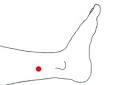
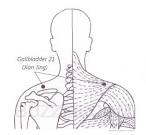
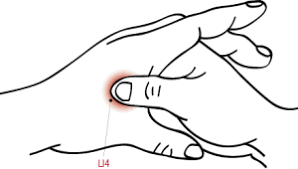
Stimulate (Apply firm even pressure for 4 seconds at 2 second intervals 20-30 times) acupressure points Spleen 6 (Fig.1) Gall Bladder 21 (Fig.2) Large Intestine 4 (Fig.3)

Fig.1Fig.2Fig.3
Diagram Description automatically generatedA drawing of a boat Description automatically generated with low confidenceLI4: Our Great Eliminator - Mend Acupuncture

Perform reflex zone treatment (if completed appropriate training) stimulating pituitary, sacroiliac joint, bladder 60 and relaxation point.

Perform short aromatherapy foot massage using required blend

Confirm date has been made for IOL (See Induction of Labour guideline)

Inform woman of signs of labour and when to attend or contact MAMAs Line (0300 013 2004). Give information leaflet for Postdates clinic if not already received from community midwife.

Following any kind of complementary therapy treatment, it is important to inform the women of the following key points:

  • Stay well hydrated. (Aiming for at least 2 litres of fluid in 24hrs)

  • She may have more energy following a treatment which can improve ability to cope with early signs of labour.

  • Dreams may be more vivid than usual, this is common.

  • She may notice physical symptoms other than those intended, for example headache and/or aching muscles.

Complete audit

6. Oil storage

Unopened oils should be stored in a cool, locked cupboard. When opened, oils should be stored in a fridge. If in a fridge with other things, oils should be stored in a foil-lined airtight container to minimise vapours. When opened, oils should be labelled with dates of opening and expiry. Oil bottles should be dark coloured and glass.

7. Implementation Plan

This guideline will be implemented as follows:

  • Guidelines are approved by the Obstetric Clinical Governance Group (OCGG), the minutes of which are available on the maternity shared drive

  • After approval the guideline will be placed on the intranet informing all staff of the guideline.

8. Process for Monitoring Compliance with this Guideline

8.1 Monthly monitoring of women who have attended and birth outcomes including need for induction through audit and findings presented at maternity meetings.

8.2 Monthly monitoring of women’s evaluations via friends and family and findings reported back at maternity meetings.