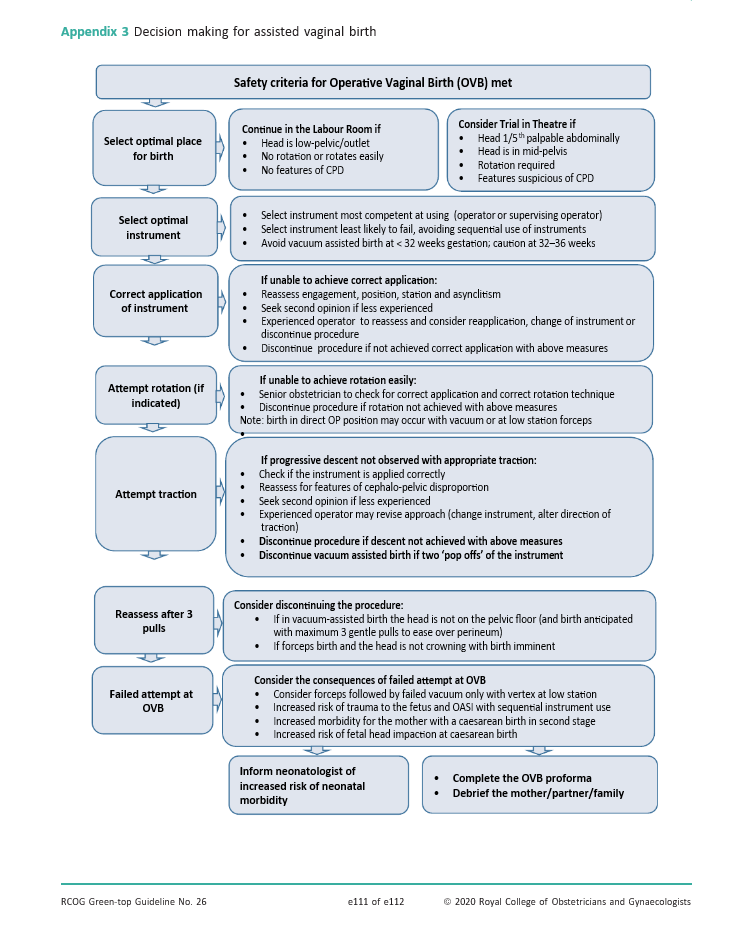
The choice of instrument depends on the skill and experience of the operator and the clinical circumstances.1,4
Vacuum/ventouse birth compared to forceps is:
-
more likely to fail delivery with the selected instrument
-
more likely to be associated with cephalohaematoma
-
more likely to be associated with retinal haemorrhage
-
more likely to be associated with maternal worries about baby
-
less likely to be associated with significant maternal perineal and vaginal trauma (OASI rate vacuum d 4%, OASI rate forceps d10%)
-
no more likely to be associated with delivery by caesarean section
-
no more likely to be associated with low 5-minute Apgar scores
-
no more likely to be associated with the need for phototherapy
Disposable silastic or reusable metal anterior cups are available for occipito anterior deliveries. The silastic cup is more likely to fail but associated with less maternal perineal and fetal scalp trauma.4 Disposable Omnicups (Kiwi) or reusable metal posterior cups are available for occipito transverse, occipito posterior or deflexed deliveries, in addition to use in the occipito anterior position.
Forceps compared to vacuum/ventouse can be used:
-
for a mento anterior face presentation
-
for the after-coming head of a breech
-
prior to 32 weeks gestation
-
with large amounts of caput
-
if the woman is unable to push effectively
Anderson or Neville Barnes forceps are available for occipito anterior deliveries or following manual rotation. Kielland forceps may be available for rotational deliveries if the operator is competent in their use. Any of these can be used for the after-coming head of a breech but Kielland may be preferable as they have no pelvic curve which may aid access. Wrigley forceps are available but their use is limited in operative vaginal delivery as they are not traction forceps.