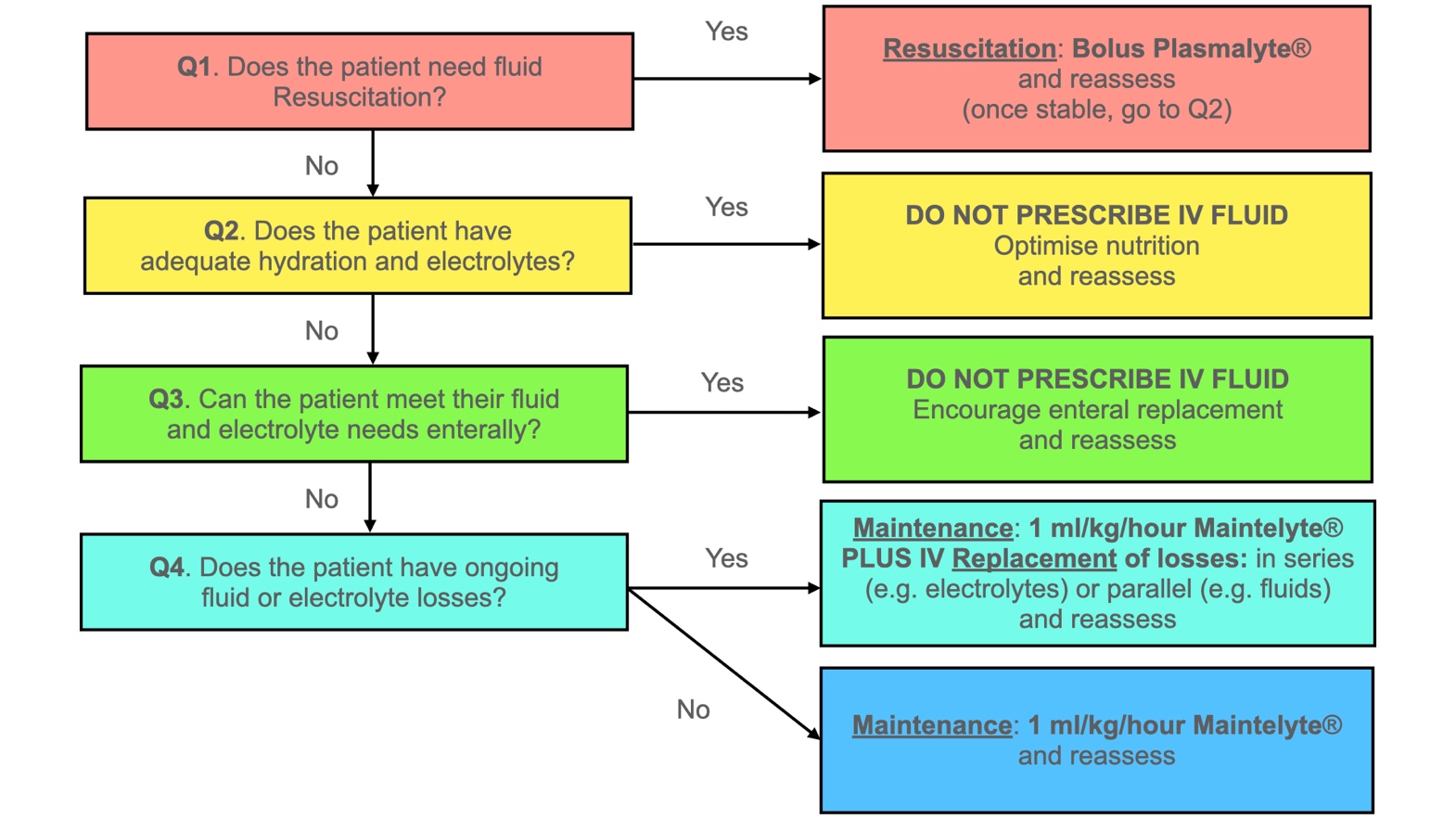
Don’t prescribe intravenous fluid reflexively. Instead, use the four fluid questions described within this guideline and discontinue as soon as possible
Prescribe intravenous fluids like any drug: always consider indications (either fluid resuscitation, replacement or maintenance), dose and adverse effects
For maintenance give Maintelyte® (1ml/kg/hour; maximum 100 mls/hr) to provide patients with no enteral route their optimal water, glucose and electrolyte intake
Don’t confuse Maintelyte® with Plasmalyte® - they are very different fluids. Never use Maintelyte® for fluid resuscitation because this may cause life-threatening hyponatraemia
Version:
1.1
Date Issued:
04/12/2025
Review Date:
01/11/2028
Key words:
IV fluids, Intravenous fluid, resuscitation, replacement maintenance, Maintelyte®, Plasmalyte®
This is a controlled document. If you are using a printed copy, check it against the guidelines site to ensure you are using the latest edition. Print copies must be destroyed after use.
Abbreviations
IV
Intravenous
GI
Gastrointestinal
PLR
Passive leg raise
SV
Stroke volume
Summary
The aim of this guideline is to provide a framework for delivering IV fluid therapy that optimises delivery of water, glucose and electrolytes
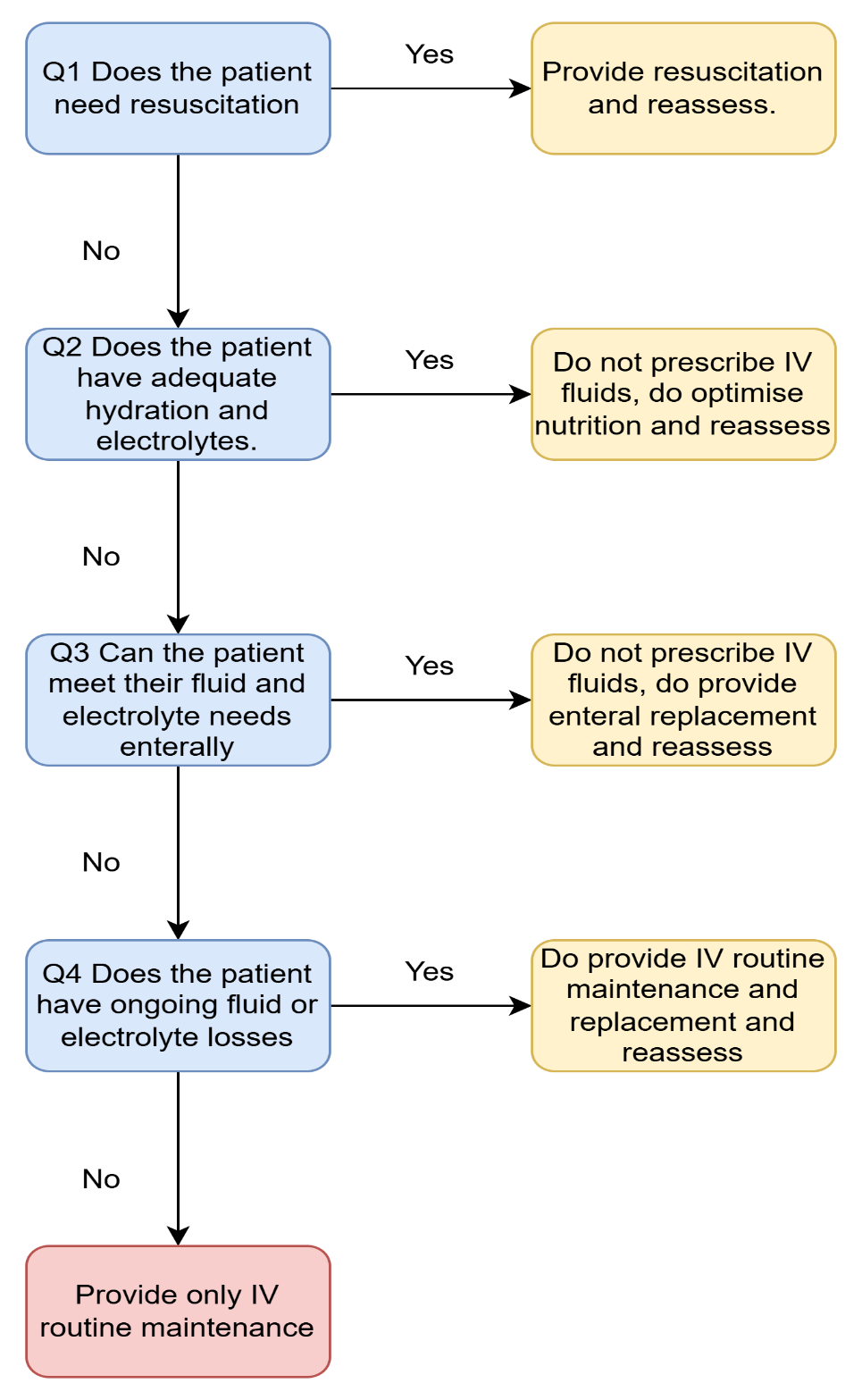
Flowsheet 1: The Four Fluid Questions that aid IV fluid prescribing
1. Introduction
1.1 It is essential that all staff who prescribe and administer IV fluid do so in a safe and evidence-based way.
1.2 “It is likely that as many as 1 in 5 patients on IV fluids and electrolytes, suffer complications or morbidity due to their inappropriate administration” [NICE CG174]1. This guideline seeks to address inappropriate prescribing and administration of IV fluids.
1.3 Improper IV fluid administration may lead to harm in the following ways:
Hypovolaemia (causes hypoperfusion and multiple organ failure; caused by inadequate Resuscitation, Replacement and Maintenance)
Hypervolaemia (causes pulmonary oedema, peripheral oedema, venous congestion and multiple-organ failure; caused by excessive Resuscitation, Replacement and Maintenance)
Hyponatraemia (causes neurological sequelae; caused by excessive Maintenance)
Hypernatraemia (causes neurological sequelae; caused by inadequate Maintenance or excessive Resuscitation with 0.9% sodium chloride)
Hypokalaemia (causes tachyarrhythmia and ileus; caused by inadequate potassium Replacement)
Hyperkalaemia (causes bradyarrhythmia, cardiac arrest; caused by excessive potassium Replacement)
Hyperchloraemia (causes acidaemia, oliguria; caused by excessive Resuscitation with 0.9% sodium chloride)
1.4 IV fluids should be prescribed like any drug, with attention to indications, contraindications, dose, duration and adverse effects2.
1.5 This guideline sets out the framework adopted by Frimley Health NHS Foundation Trust for the delivery of IV fluids to ensure a consistent and structured approach across the whole organisation.
1.6 For specific guidelines on vascular access please follow the IVAS Trust guidelines. This includes guidance for patients who have difficult vascular access.
2. Exclusions:
Age < 16
Burns
Pre-eclampsia
Significant hyponatraemia (<130mmol/l)
Significant hyperkalaemia (<3.0mmol/l)
Variable and fixed rate insulin infusions
Severe sepsis (shock that is refractory to fluid resuscitation)
Severe renal/liver failure
Malnourishment (at-risk of refeeding syndrome)
Cerebral oedema (all crystalloids except 0.9% sodium chloride can cause hyponatraemia and increased brain swelling)
In these situations, please refer to specific Trust guidance and/or seek expert help.
3. Definitions
Resuscitation:
For the purposes of this guideline, this term refers to the restoration of adequate intravascular volume using IV fluid (it should not be confused with the provision of CPR). Resuscitation fluids, such as Plasmalyte® and 0.9% sodium chloride, remain in the intravascular space for a period because they are sodium-containing crystalloids. Blood and blood products are used specifically for haemorrhagic shock. Resuscitation fluid is usually, given as boluses, targeted against one or more haemodynamic parameters (e.g. heart rate, blood pressure and capillary refill time) or markers of perfusion (e.g. urine output, blood lactate and stroke volume). Once intravascular volume is restored, continuous use of resuscitation fluids is potentially harmful (see 1.5).
It is dangerous to use maintenance fluids (typically glucose-containing crystalloids) for resuscitation as they will be ineffective and may cause life-threatening hyponatraemia.
Replacement:
This term refers to the restoration and preservation of adequate intravascular volume and normal serum electrolyte concentrations using IV fluid. Electrolyte deficiencies are caused by losses, usually from the gastrointestinal or renal tracts, and can be life-threatening so they must be treated promptly and effectively. Replacement fluids are typically crystalloids that contain high concentrations of electrolytes (e.g. sodium, chloride, potassium and magnesium). Replacement fluids are usually given as infusions, targeted against specific blood results.
Replacement fluids can be given in series (i.e. one bag after the other; e.g. for electrolyte deficiency) or in parallel (i.e. simultaneously; e.g. for resuscitation and/or ongoing fluid losses) with maintenance fluid. Parallel IV fluid administration requires 2 IV cannulae.
Overzealous Replacement will result in abnormally high serum electrolyte levels. So, patients receiving replacement fluids need daily fluid balance charts, daily U&Es and regular blood gas analysis.
Routine maintenance:
This term refers to the maintenance of basal metabolic requirements of water and electrolytes using IV fluid. Basal requirements are predictable (see below). Maintenance fluids, such as Maintelyte® and 0.18% sodium chloride / glucose 4%, are rapidly taken up into cells, providing energy, free water and electrolytes, because they are mainly glucose-containing crystalloids. For the same reason, they do not contribute to intravascular volume expansion. Maintenance fluids should be given by continuous infusion strictly based on weight (1ml/kg/hour). When resuscitation fluids (particularly 0.9% sodium chloride) are used for maintenance they commonly cause hyperchloraemia and acidosis.
In a 24-hour period, NICE recommends that a patient should receive:
25-30 ml/Kg of water
Approximately 1 mmol/kg each of potassium, sodium and chloride
50-100g of glucose (to prevent starvation ketoacidosis; insufficient for nutrition)
Redistribution:
This term refers to the intravascular volume that is transiently relocated from the arterial side of the circulation into venous capacitance vessels and body tissues and compartments. Vasodilatation from inflammatory states makes the venous capacitance system dilate, causing a sequential reduction in venous return, ventricular preload, stroke volume and blood pressure. In sepsis, IV fluid increases venous return for only 5 minutes, after which it leaves the circulation to produce interstitial oedema. Hypotensive vasodilated patients usually need vasopressors as well as IV fluid.
Reassessment:
This term refers to the regular clinical review (clinical status, physical signs, observations, fluid balance charts and bloods results) of patients receiving IV fluid to determine their efficacy and ongoing needs.
The 5 R’s:
This refers to the Resuscitation, Replacement, Routine maintenance, Redistribution and Reassessment approach to fluid therapy, advocated by NICE.
Stroke volume:
This refers to the volume of blood pumped around the circulation in one heartbeat. It is measured using cardiac output monitoring.
Cardiac output:
This refers to the volume of blood pumped around the circulation in one minute. It is calculated by heart rate multiplied by stroke volume.
Fluid challenge:
This term refers to the rapid administration of an IV fluid bolus with the intention of correcting known or suspected hypovolaemia. The volume varies depending on the clinical situation. 250-500 mls is appropriate in most instances; less may be appropriate in cardiac failure. At maximum rate, volumetric pumps take 25 minutes to deliver 500 mls, so consider giving fluid challenges using a pressure bag.
Fluid responsiveness:
Fluid responsiveness is the physiological state when a patient’s stroke volume increases by 10-15% after a fluid challenge. Fluid responsiveness identifies the subject as being ‘preload-dependant’ (i.e. on the steep section of the ‘Starling curve’), which is physiologically normal. A fluid unresponsive state is physiologically abnormal. Shocked, fluid-responsive patients should receive immediate fluid resuscitation; shocked, fluid unresponsive patients should not3. Continuing to fluid resuscitate patients who are fluid unresponsive is harmful because it leads to venous congestion and organ failure.
Fluid responsiveness can be:
Predicted:
a. Imprecisely by demonstrating improvement in clinical haemodynamic parameters (e.g. heart rate, blood pressure, capillary refill time, urine output and lactate) following a passive leg-raise (PLR)
b. Precisely by observing an increase in SV following a PLR, as determined by echocardiography or cardiac output monitoring
c. Precisely by observing pulse-pressure variation on an arterial line trace during mechanical ventilation
Measured:
a. Imprecisely by demonstrating improvement in clinical haemodynamic parameters (e.g. heart rate, blood pressure, capillary refill time, urine output and lactate) following a fluid challenge
b. Precisely by demonstrating an increase in SV following a fluid challenge, as determined by echocardiography or cardiac output monitoring
For these reasons, an intensive care setting is indicated in complex cases4.
Fluid tolerance:
This term refers to the safety of giving IV fluid to a patient. For instance, a fluid responsive patient will be fluid tolerant; a fluid unresponsive patient will not5. Signs of fluid intolerance include evidence of left ventricular failure (pulmonary oedema) or right ventricular failure (peripheral oedema and venous congestion)
Passive leg-raise:
This term refers to a diagnostic test in which changes in haemodynamic parameters are identified after a patient is moved from a 45o semi-recumbent to the supine position with their legs at 45o to the trunk/bed (causing an auto-transfusion of approximately 300mls). PLRs are helpful because the volume load administered to the circulation is completely reversible, which is not the case with a fluid challenge.
Venous congestion:
This term refers to distension of the venous system caused by mechanical obstruction, elevated right heart pressures or fluid overload. Elevated venous pressure contributes to organ hypoperfusion and injury, even in the absence of low cardiac output. As central venous pressure rises, venous return falls and sensitive organs, such as the liver and kidneys, can become compromised.
Fluid overload:
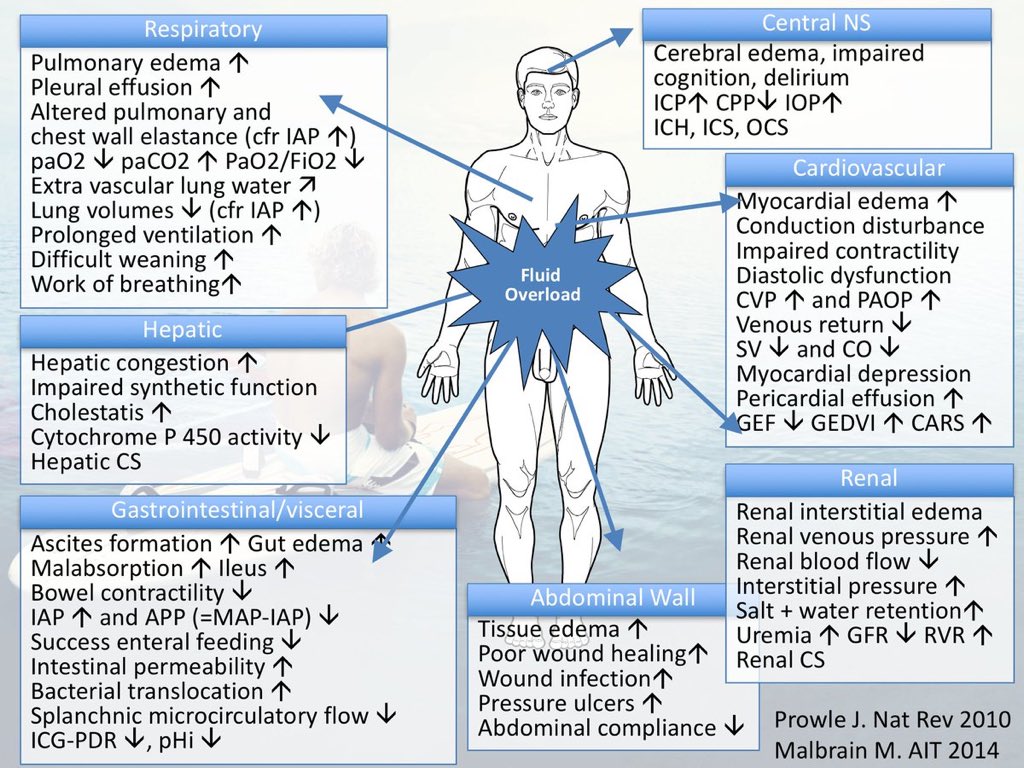
This term refers to fluid accumulation of more than 10% of the patient’s body weight, which is associated with poor outcomes6 (See Figure 1). This can be calculated by dividing the patient’s cumulative fluid balance (in litres) by their baseline body weight (in kilogrammes) and multiplying this figure by 100%.
Figure 1: Diagram demonstrating how fluid overload causes harm
4.1. Never prescribe IV fluid reflexively - always look at the patient and consider why it is indicated.
4.1.1 Indications for IV fluid include:
Hypovolaemia with organ hypoperfusion (these patients need Resuscitation);
Severe electrolyte deficiency, abnormal fluid distribution, or ongoing losses from the gastrointestinal tract, renal tract or skin that can’t be managed enterally (these patients need Replacement);
Inadequate oral fluid or electrolyte intake because they are Nil By Mouth or have gastrointestinal or neuro-cognitive impairment (these patients need Maintenance);
4.1.2 All other patients should receive enteral hydration and electrolyte replacement. The enteral route is safer, more effective, and usually more comfortable for patients.
4.2 Before you prescribe IV fluid, ask yourself the following four fluid questions:
4.3 Q1 Does the patient need fluid Resuscitation?
4.3.1 Patients with circulatory failure need immediate treatment; IV fluid is often, but not always, indicated in the first instance.
4.3.2 Sepsis does not cause hypovolaemia. Instead, it causes vasodilatation whereby intravascular volume pools in the venous circulation. Hypotensive, vasodilated patients usually need some IV fluid (about 2L), then vasopressors.
4.3.3 Hypovolaemia and septic shock both cause low cardiac preload (underfilling of the cardiac chambers). They are often clinically indistinguishable and can co-exist. So, the clinical history is critically important to making the correct diagnosis.
4.3.4 While bleeding, gastrointestinal/renal losses and burns all cause hypovolaemia, these conditions are rare compared to sepsis.
4.3.5 Intensive care involvement may be required for patients who don’t respond to Resuscitation.
4.3.6 According to NICE, signs of a potentially fluid-responsive patient include:
Systolic blood pressure < 100 mmHg
Postural hypotension
Heart rate > 90 beats/min
Capillary refill time > 2 seconds or cold peripheries
Respiratory rate > 20 breaths/min
NEWS 5 or more
Positive response to a PLR
4.4 How to provide resuscitation
4.4.1 Resuscitation fluids include:
Plasmalyte® (1st line for all patients without suspected raised intra-cranial pressure)3
0.9% sodium chloride (1st line for patients with suspected raised intra-cranial pressure)
5% human albumin solution (2nd line for patients with septic shock)
4.4.2 Administer a 500 ml bolus over 15 minutes (250ml if the patient has left ventricular impairment). Remember that a volumetric pump set at maximum rate (1200 ml/hour) will take 25 minutes to deliver 500 ml, so consider using a pressure bag instead.
4.4.3 Rapid, high-volume administration of 0.9% sodium chloride will cause hyperchloraemia and acidosis (See Table 1). These are far less likely to occur with Plasmalyte® because this contains less chloride7,8.
4.4.4 Never use Maintelyte® for Resuscitation as this will be ineffective and cause life-threatening hyponatraemia.
4.4.5 Consider serial blood gas analysis to monitor serum lactate, pH, base excess and chloride levels.
4.4.6 After each fluid bolus, clinically reassess:
If there are signs of improvement, repeat the boluses until the patient becomes physiologically stable
If there are no signs of improvement, repeat the bolus once. And if there is still no improvement, seek senior help
4.4.7 NICE recommends giving 2 litres of Resuscitation fluid before seeking expert help. It may be advisable to do so sooner than this.
Table 1. Composition of the different IV fluids used in Frimley Health
Compared to the NICE daily recommendations for a 70 kg patient [all values are quoted for a total of 2 litres to facilitate easy comparison with NICE daily water requirements]
Na+
K+
Ca2+
Mg2+
Cl-
Acetate
Lactate
Gluconate
Glucose
Water
Mmol
g
mL
0.9% Sodium Chloride
308
-
-
-
308
-
-
-
-
2L
Hartmann’s Solution
262
10
4
-
222
-
58
-
-
2L
Plasmalyte® 148
280
10
-
3
196
54
-
46
-
2L
0.18% sodium chloride/Glucose 4%
62
-
-
-
62
-
-
-
80
2L
Maintelyte®
80
40
-
3
80
46
-
-
100
2L
NICE daily requirements
70
70
-
-
70
-
-
-
50-100
1750-2100
4.5 Q2 Does the patient have adequate hydration and electrolytes?
4.5.1 Take a clinical history, seeking information on:
4.5.2 Perform a clinical examination, looking for:
Signs of a potentially fluid-responsive patient (see 5.3)
Dry mucous membranes
Pulmonary or peripheral oedema
Raised jugular venous pressure
4.5.3 Examine the medical record, looking for trends in:
NEWS
Urine output
Fluid balance
Weight
4.5.4 Examine the bloods results, looking for trends in:
Urea and creatinine
Electrolytes
4.6 Q3 Can the patient meet their fluid and electrolyte needs enterally?
4.6.1 The ideal route for hydration and nutrition is enteral. This will usually be oral, but some patients may require a feeding tube (nasogastric, nasojejunal, percutaneous gastrostomy or jejunostomy).
4.6.2 If an un-shocked patient can eat and drink adequately, IV fluid is not required.
4.7 Q4 Does the patient have ongoing fluid or electrolyte losses?
4.7.1 Fluid and electrolytes can be lost from the body in the following ways:
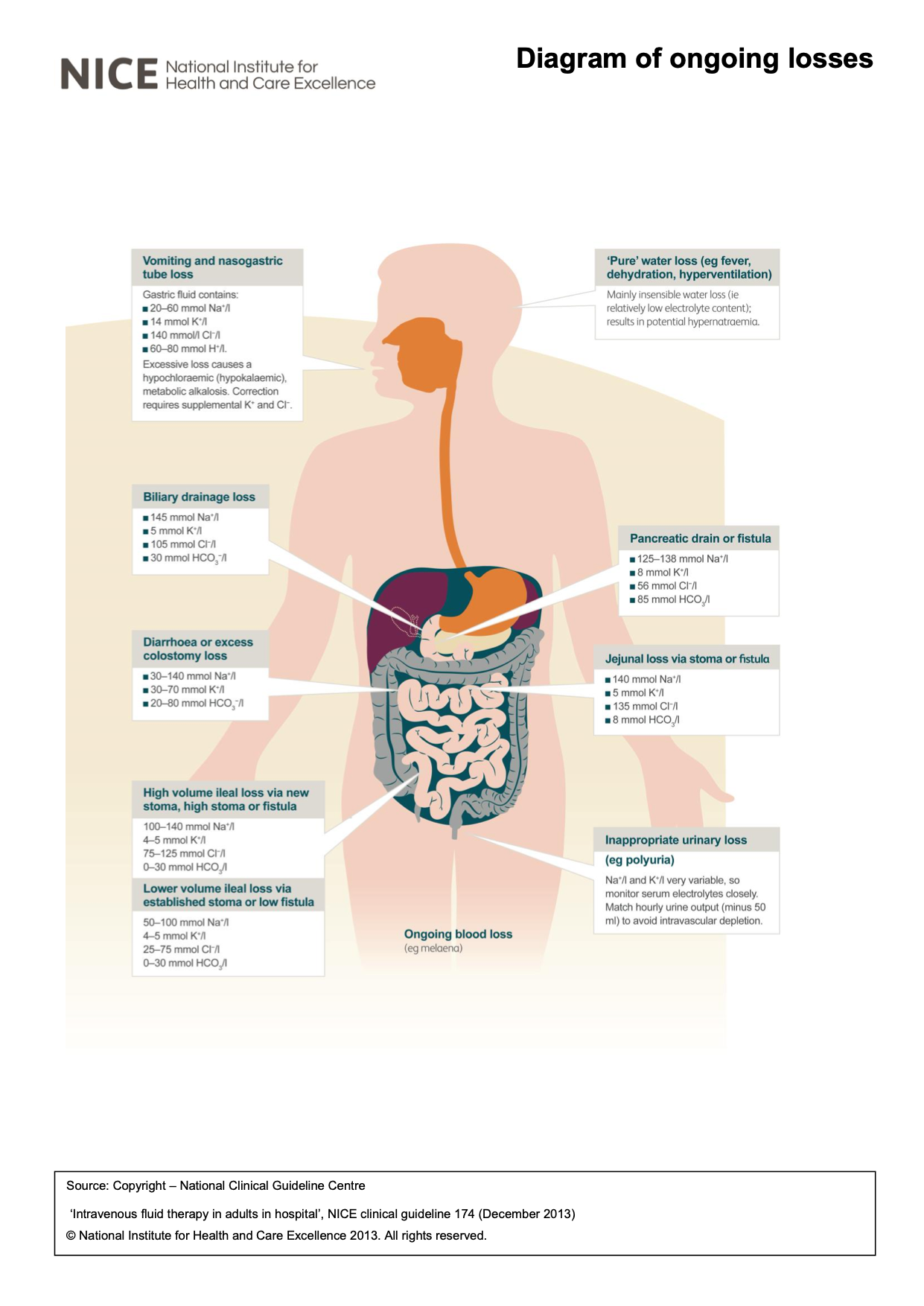
Gastrointestinal (e.g. vomiting or nasogastric tube, biliary drainage, pancreatic drainage, diarrhoea or high-output ileostomy, colostomy or fistula, GI bleeding) [See Figure 2];
4.8.1 Identify and quantify any ongoing fluid losses from the gastrointestinal tract, renal tract or skin. And replace this volume with Plasmalyte®, 0.9% sodium chloride or 0.9% sodium chloride with potassium, depending on the anticipated sodium, chloride and potassium losses (See Figure 2).
4.8.2 Adjust the prescription to account for existing electrolyte abnormalities (treating the most serious first). Most often this will be potassium and magnesium replacement.
4.8.3 Follow Trust guidance for hyponatraemia and hypokalaemia.
4.8.4 Acute hypernatraemia can be caused by inadequate maintenance or excessive resuscitation using IV fluids with a high sodium content; these can usually be distinguished by assessment
4.8.5 Seek expert help in the following situations:
Severe peripheral oedema
Severe sepsis
Post-operative fluid retention and/or vasodilatation (e.g. post spinal anaesthetic)
Renal, liver or cardiac impairment
Malnourishment
Head injury or suspected cerebral oedema (due to risk of hyponatraemia)
4.8.6 In patients receiving Maintelyte® for maintenance, Resuscitation and Replacement fluids can be given in series (e.g. electrolyte deficiency) or in parallel (e.g. hypovolaemia and/or ongoing fluid losses).
4.8.7 In complex cases involving significant losses, IV fluid may be best delivered in a high-dependency setting.
4.9 How to provide Routine maintenance
4.9.1 Maintenance fluids include:
Maintelyte® (1st line for all patients with [Na+] > 132 mmol/L)
4.9.2 Prescribe Maintelyte® (or 0.18% sodium chloride / glucose 4%) at 1 ml/kg/hr using ideal body weight (usual actual weight if less than ideal body weight) and do not exceed 100 ml/hr as this will cause hyponatraemia.
4.9.3 In NBM patients with [Na+] < 132 mmol/L, prescribe Plasmalyte® 1 ml/kg/hr using ideal body weight (usual actual weight if less than ideal body weight). Higher rates of Plasmalyte® may also be safely administered.
4.9.4 Daily requirement for water in a 70 Kg patient may be as little as 1.75 litres per day.
4.9.5 In NBM patients, additional IV fluid is likely to be administered as a consequence of IV medication, so consider reducing Maintenance hourly administration rates in patients with:
High-volume IV medication
Chronic cardiac, liver or kidney disease
4.9.6 Check U&E daily; if a patient is stable on long term IV Maintenance, U&Es should be checked at least every 48 hours.
4.10 How to perform Reassessment
4.10.1 Review the patient’s fluid status at least once daily, including:
Clinical assessment (symptoms, signs)
Fluid balance charts
Blood results (Daily urea, creatinine, electrolytes until physiologically stable)
Body weight (at least twice / week)
4.10.2 Document a fluid plan during daytime hours, so that this task does not fall to the on-call team.
4.10.3 Consider daily venous blood gas analysis on patients receiving regular 0.9% sodium chloride.
4.10.4 Continue optimisation until normal physiological targets are reached.
4.10.5 Once the patient has stabilised physiologically, adopt a restrictive approach to IV fluid therapy using Maintelyte®, as patients will usually have salt and water overload at this point.
4.10.6 In haemodynamically stable patients with oedema, target removal of excess sodium and water. If spontaneous diuresis is insufficient to achieve a negative fluid balance, consider drug-induced diuresis (or ultrafiltration, if appropriate)8.
4.11 Discontinuing Intravenous fluid
4.11.1 IV fluid should be discontinued as soon as the patient demonstrates cardiovascular stability and an adequate enteral route.
4.11.2 Complications of venous access should be managed as outlined in the Trust IVAS guidelines.
4.12 Plasmalyte®
Plasmalyte® is primarily a resuscitation fluid (see 3.1 and Table 1). But it can also be used for Replacement.
Plasmalyte® may also be used as a maintenance fluid, but only in patients with plasma sodium concentration of <132 mmol/L.
Plasmalyte® is a sodium-containing crystalloid, balanced with acetate, which enables its chloride content to be closer to physiological levels.
Plasmalyte® causes significantly less hyperchloraemia (and acidaemia) than 0.9% sodium chloride.
1 litre of Plasmalyte® contains only 5 mmols/L of potassium chloride, and its favourable acid-base profile means that even high-volume Resuscitation with Plasmalyte® does not cause hyperkalaemia.
4.13 Maintelyte®
Maintelyte® should only be used as a maintenance fluid (See 3.3 and Table 1).
Maintelyte® is a glucose-containing crystalloid, balanced with acetate.
As seen in Table 1, the composition of Maintelyte® is closest to the NICE daily recommendations for water, glucose and electrolyte intake.
Maintelyte® contains significantly more potassium and less chloride than most other IV fluids, which makes it superior for routine Maintenance.
At 1 ml/kg/hr, Maintelyte® delivers optimal maintenance in the context of coexistent IV medication.
Maintelyte® must not be given faster than 100 ml/hr as this will cause hyponatraemia.
National Institute for Health and Care Excellence. Intravenous Therapy In Adults in Hospital. [Internet]. London: NICE; 2013 [cited 2025 February 14]. [CG174]. Available from: https://www.nice.org.uk/guidance/cg174 last accessed on 29rd October 2024
Hawkins WA, Smith SE, Newsome AS, Carr JR, Bland CM, Branan TN. Fluid stewardship during critical illness: a call to action. Journal of Pharmacy Practice. 2020 Dec;33(6):863-73.
Kattan E, Ospina-Tascón GA, Teboul JL, Castro R, Cecconi M, Ferri G, Bakker J, Hernández G. Systematic assessment of fluid responsiveness during early septic shock resuscitation: secondary analysis of the ANDROMEDA-SHOCK trial. Critical Care. 2020 Dec;24(1):1-9.
Navarro LH, Bloomstone JA, Auler JO, Cannesson M, Rocca GD, Gan TJ, Kinsky M, Magder S, Miller TE, Mythen M, Perel A. Perioperative fluid therapy: a statement from the international Fluid Optimization Group. Perioperative medicine. 2015 Dec;4(1):1-20.
Kattan E, Castro R, Miralles-Aguiar F, Hernández G, Rola P. The emerging concept of fluid tolerance: A position paper. Journal of Critical Care. 2022 Oct 1;71:154070.
Malbrain ML, Van Regenmortel N, Saugel B, De Tavernier B, Van Gaal PJ, Joannes-Boyau O, Teboul JL, Rice TW, Mythen M, Monnet X. Principles of fluid management and stewardship in septic shock: it is time to consider the four D’s and the four phases of fluid therapy. Annals of intensive care. 2018 Dec;8(1):1-6.
Astapenko D, Navratil P, Pouska J, Cerny V. Clinical physiology aspects of chloremia in fluid therapy: a systematic review. Perioperative Medicine. 2020 Dec;9(1):1-8.
Hammond DA, Lam SW, Rech MA, Smith MN, Westrick J, Trivedi AP, Balk RA. Balanced crystalloids versus saline in critically ill adults: a systematic review and meta-analysis. Annals of Pharmacotherapy. 2020 Jan;54(1):5-13.
Version:
1.1
Guidelines Leads:
Stephen Lewis Consultant in Critical Care and Anaesthesia
Contributors:
Laura Johnson (Critical Care Pharmacist)
Lead Director / Chief of Service:
Subodh Tote Chief of Service Anaesthetics and ITU
Library check completed:
14/02/2025
Ratified at:
Medicine Clinical Governance 19/06/2025 Drug and Therapeutics Committee 10/07/2025 Surgical Clinical Governance 21/10/2025
Date Issued:
29/10/2025
Review Date:
01/11/2028
Pharmaceutical dosing advice and formulary compliance checked by:
Laura Johnson (Critical Care Pharmacist) 18/02/2025
Key words:
IV fluids, Intravenous fluid, resuscitation, replacement maintenance, Maintelyte®, Plasmalyte®
This guideline has been registered with the Trust. However, clinical guidelines are guidelines only. The interpretation and application of clinical guidelines will remain the responsibility of the individual clinician. If in doubt, contact a senior colleague or expert. Caution is advised when using guidelines after the review date. This guideline is for use in Frimley Health NHS Foundation Trust hospitals only. Any use outside this location will not be supported by the Trust and will be at the risk of the individual using it.
Version Control Sheet
Version
Date
Guideline Lead(s)
Status
Comment
0.1
09/11/22
M. Peck; R Klopotowska-Arszulowicz
Draft
Previous version never published
1
October 2025
Stephen Lewis Consultant in Critical Care and Anaesthesia
Final
Trust wide guideline
1.1
December 2025
Stephen Lewis Consultant in Critical Care and Anaesthesia