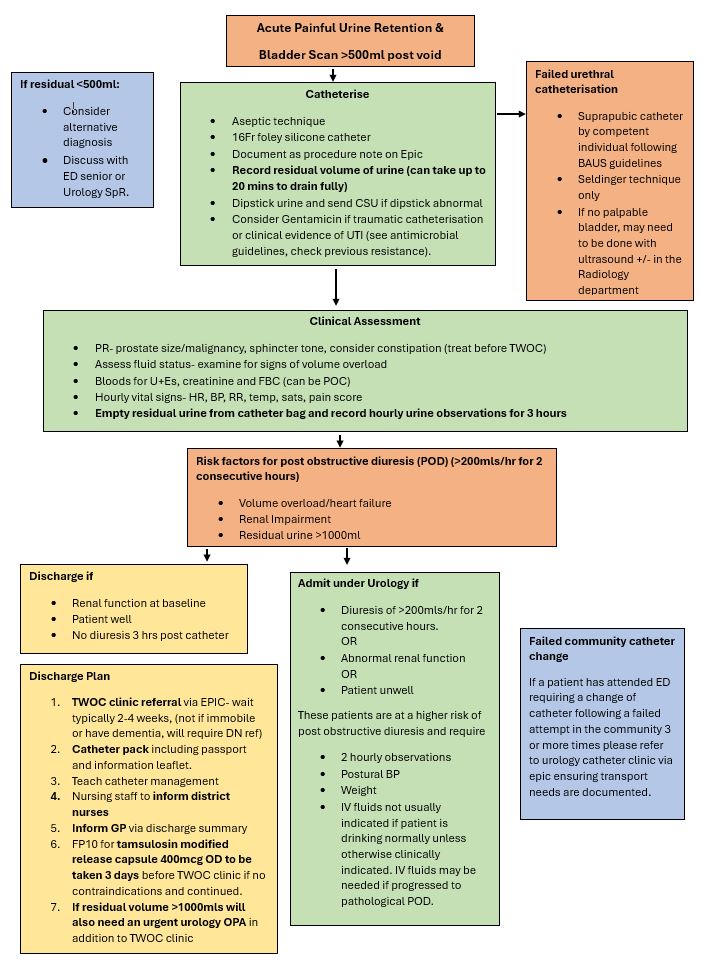
Acute Urinary Retention

Key Points

  • This is a cross-site guideline for the initial management of painful, acute urinary retention in the emergency department (ED) and wards.

  • Post-obstructive diuresis (POD) is a polyuric response (more than 200mL of urine per hour for 2 consecutive hours or more than 3 L in 24 hours) initiated by the kidneys after the relief of a substantial bladder outlet obstruction.

  • A small proportion of patients with POD will go on to develop pathological POD, which can be life-threatening.

Version:2
Date Issued:15/07/2025
Review Date:01/07/2028
Key words:Urinary, retention

This is a controlled document. If you are using a printed copy, check it against the guidelines site to ensure you are using the latest edition. Print copies must be destroyed after use.

Abbreviations

AURAcute urinary retention
POCPoint of care
PODPost-obstructive diuresis

Background

  • Post-obstructive diuresis (POD) is a polyuric response (more than 200mL of urine per hour for 2 consecutive hours or more than 3 L in 24 hours) initiated by the kidneys after the relief of a substantial bladder outlet obstruction.

  • POD is part of a normal physiological process of eliminating excess volume and solutes that have accumulated during the obstruction and is usually self-limiting.

  • This may become pathological POD, when loss of water and salt continues after homeostasis / euvolaemic state is reached, resulting in dehydration, electrolyte imbalances and death if not adequately treated.

  • Although it is not always possible to predict which patients will progress to pathological POD, risk factors include renal insufficiency, heart failure (or evidence of volume overload), dizziness, and central nervous system depression.

  • Most patients do not require intravenous fluids and excessive fluid replacement may perpetuate and prolong the diuresis. Therefore, IV fluids are reserved for patients with a postural drop in blood pressure, haemodynamic instability, those with diuresis leading to electrolyte disturbance or patients not taking oral fluids.

  • Urgent ultrasound of kidneys-ureters-bladder (KUB) is occasionally indicated, at the request of urologists. However, routine out-patient US KUB is rarely indicated as any hydroureter/hydronephrosis will most likely resolve by the time imaging is undertaken.

Management of Painful Acute Urinary Retention (AUR)