Key Point
- This is a Trust wide document for the management of paracetamol overdose which should be used in conjunction with accessing Toxbase for up-to-date guidance as this is regularly revised. www.toxbase.org
Please continue to use this guideline but be aware that it is in review. (13/12/2024)
This is a controlled document. If you are using a printed copy, check it against the guidelines site to ensure you are using the latest edition.
Print copies must be destroyed after use.
Introduction
This is a Trust wide document for the management of paracetamol overdose which should be used in conjunction with accessing Toxbase for up-to-date guidance, as this is regularly revised.
Management requiring treatment with n-acetylcysteine (NAC) should follow the ‘modified 12-hour regimen’, which is the same dose (300mg/kg) as the traditional ‘21-hour regimen’ but is associated with fewer anaphylactoid reactions and may also reduce time to being medically fit.
Regular 4 hourly observations should occur for all patients on NAC but cardiac/ECG monitoring or observation in a ‘high dependency unit’ environment is not required.
Paracetamol overdose
Check on Toxbase if patient meets criteria for treatment.
- Login to Toxbase – www.toxbase.org and follow the steps shown in the screenshots below.
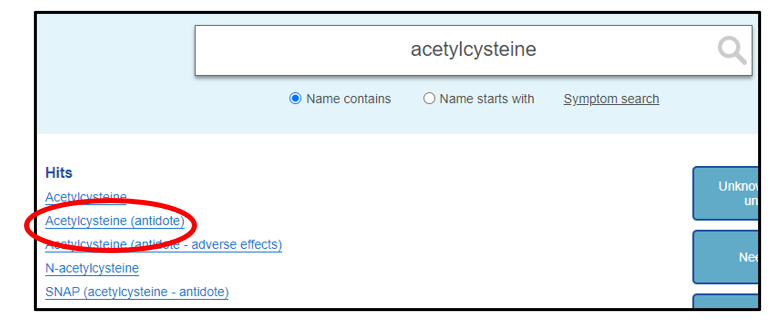
If meets criteria – search as below and click on ‘Acetylcysteine (antidote)’
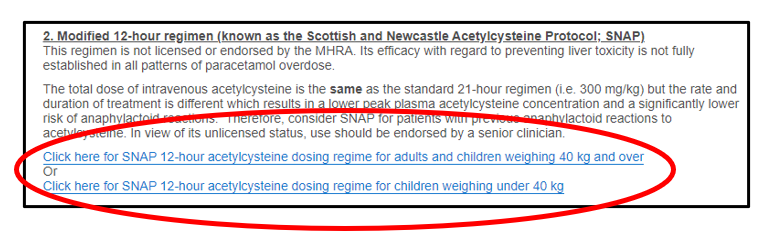
Select ‘SNAP 12-hour acetylcysteine dosing regimen’ corresponding to weight (<40kg or 40kg and over).
Follow management as per infusion tables.
Ending treatment
Note: bloods can be taken up to 1.5 hours before the end of treatment.
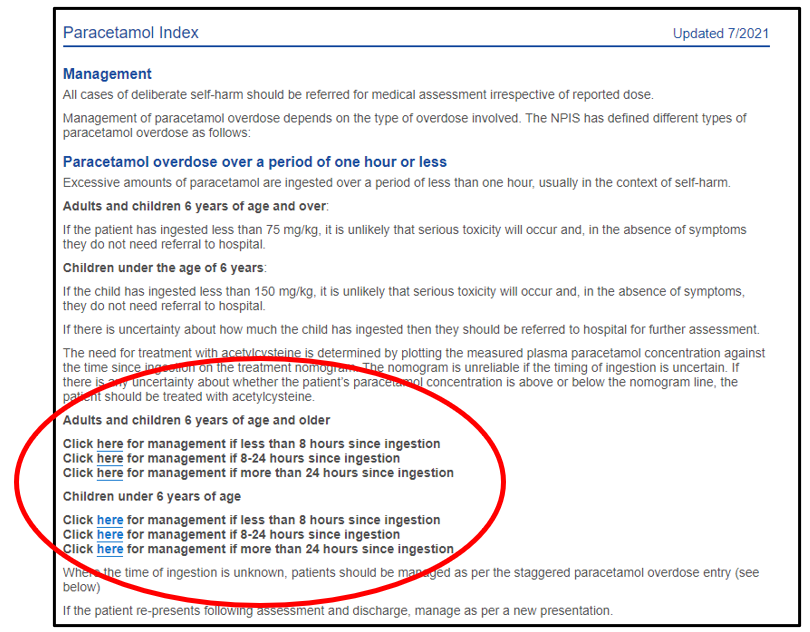
Toxbase search ‘Paracetamol’ when blood results are available
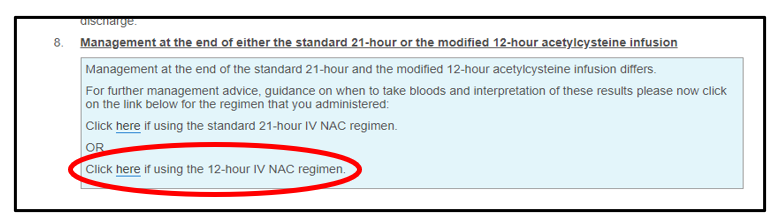
Select ‘12-hour IV NAC regimen’
Follow recommendations for continuation or cessation of treatment based on blood results and patient condition.
Some patients may require a 3rd or 4th bag of NAC or discussion with Toxbase directly.