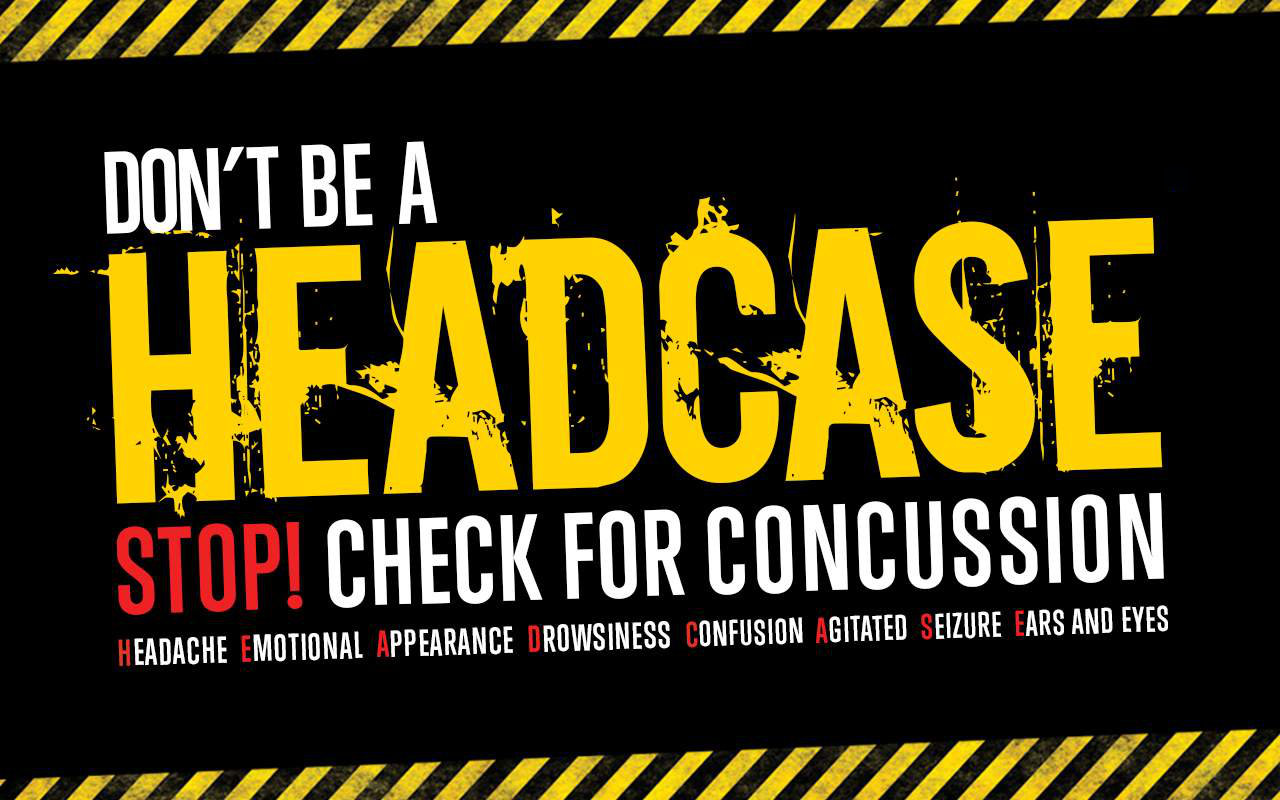
Concussion Sustained in Sport
Key Points
- These guidelines are not intended to replace the current guidelines for head injuries as outlined by NICE, including their criteria for CT of the head in adults and children.
- Please always assess the patient you are seeing against the NICE guideline [currently CG176]: ‘Head injury: assessment and early management’
- These guidelines are based around patients that have sustained their head injury from a sporting activity (football, rugby, etc) but they can be extrapolated to any patient as needed.
Concussion Facts
-
Concussion is a brain injury
-
All concussions are serious
-
Concussion can occur without loss of consciousness
-
Return to sport (play / training) on the day of the concussion or suspected concussion is forbidden
-
Concussion can be fatal (see below)
-
Most players with concussion recover with physical and mental rest
-
Second Impact Syndrome
Second impact syndrome is a rare but fatal condition where a second concussion occurs before the first concussion has properly healed.
The brain loses its ability to auto-regulate its intracranial and cerebral perfusion pressures, leading to cerebral oedema and potential tentorial or uncal herniation.
Second impact syndrome can result from mild concussion that occurs from days to weeks following the initial concussion.
It is now recognised that the first impact may not have been witnessed, especially in children of school age and therefore many sporting bodies advocate that the first ‘on field’ impact is treated as if it is the child’s second event and the child removed from play.
Recognition of concussion
From an ED point of view, many of the symptoms and signs of true concussion will also be those of significant head injury that would necessitate a CT scan but with a normal result following imaging.
Other symptoms that people may present with over the following days or weeks include:
-
Tinnitus
-
Unexplained abdominal pains
-
Poor concentration
-
Fluctuating / inappropriate emotions and/or irritability
-
Drop in academic performance
Treatment
Rest is the cornerstone of treatment - this involves both cognitive (including school work, homework, reading, television and video games) and physical rest (especially sporting activities, possibly unrelated to their initial presentation).
The initial period of rest must be for a minimum of 24 hours and thereafter based on the patient’s symptoms.
The patient must not be left alone for the first 24 hours, advised not to consume alcohol or drive until symptom free or at least 24 hours (whichever is the longer).
Return to sport
Adults
Physical rest must be for minimum of 1 week ; the first day should be complete physical and cognitive rest (see above) followed by relative rest (activity that doesn’t induce or aggravate symptoms) for the rest of the week.
Reintroduction of cognitive activities can happen after the first 24 hours of complete rest as long as the activities do not cause aggravation of symptoms.
Children (18 and under)
Physical rest should be for a minimum of 2 weeks; otherwise, the advice is the same as for adults.
It is reasonable that children may miss a day or two of school / study but extended absence is uncommon.
Graduated return to play
Once the period of rest has been completed, both adults and children should be encouraged to reintroduce their sporting activities gradually with a stepwise increase in their activities:
-
Light aerobic exercises
-
Sport specific exercises
-
Non-contact drills
-
Full contact practice
-
(and finally) Full return to play
Each of these steps should be undertaken over a minimum of 24 hours and if the symptoms recur at any time than the patient should seek further medical advice.
Outlook
The majority of concussions (80-90%) resolve in a short (7-10 day) period. This may be longer in children and adolescents where a more conservative approach may be taken – it is during this recovery time that the brain is more vulnerable to a second injury, either causing prolonged symptoms, or the risk of Second impact syndrome.
Full version control record
| Version: | 1.0 |
|---|---|
| Guidelines Leads: | Dr Paul Redman, Consultant in Emergency Medicine |
| Lead Director / Chief of Service: | Dr Nick Payne, CoS for Emergency Medicine |
| Library check completed: | N/A |
| Ratified at: | Emergency Medicine Clinical Governance, 15 June 2022 |
| Date Issued: | 15 June 2022 |
| Review Date: | June 2027 |
| Pharmaceutical dosing advice and formulary compliance checked by: | N/A |
| Key words: | Concussion, sport |
This guideline has been registered with the trust. However, clinical guidelines are guidelines only. The interpretation and application of clinical guidelines will remain the responsibility of the individual clinician. If in doubt contact a senior colleague or expert. Caution is advised when using guidelines after the review date. This guideline is for use in Frimley Health Trust hospitals only. Any use outside this location will not be supported by the Trust and will be at the risk of the individual using it.
Version Control Sheet
| Version | Date | Guideline Lead(s) | Status | Comment |
|---|---|---|---|---|
| 1.0 | May 2022 | Dr P Redman | Final | Adapted from FPH guideline for Trust-wide use. |