-
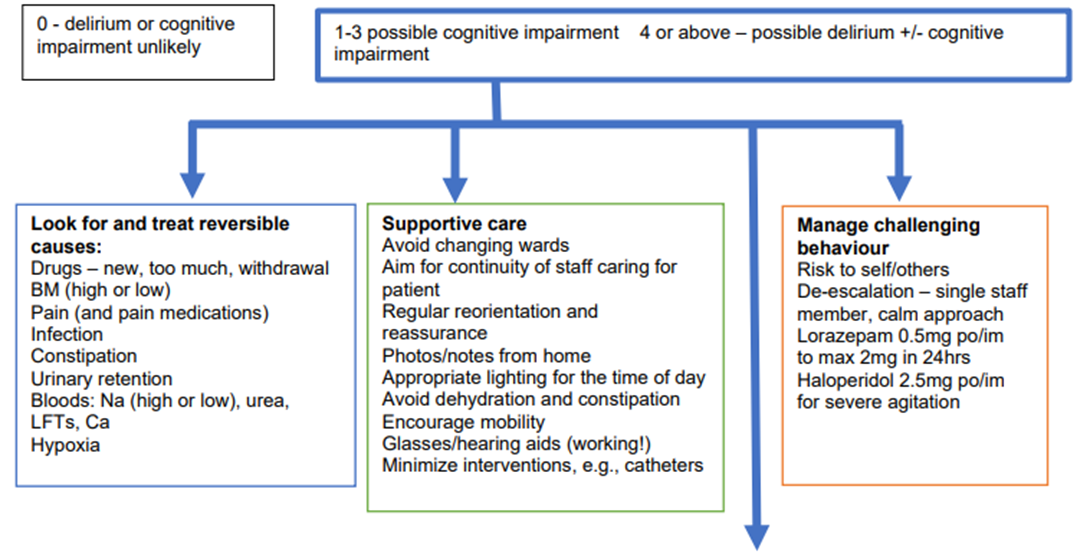
when psychosocial interventions/de-escalation techniques are not effective and there is significant risk to self/others
-
in order to carry out essential investigations or treatment
-
to prevent patient endangering themselves or others
-
to relieve distress in a highly agitated or hallucinating patient
-
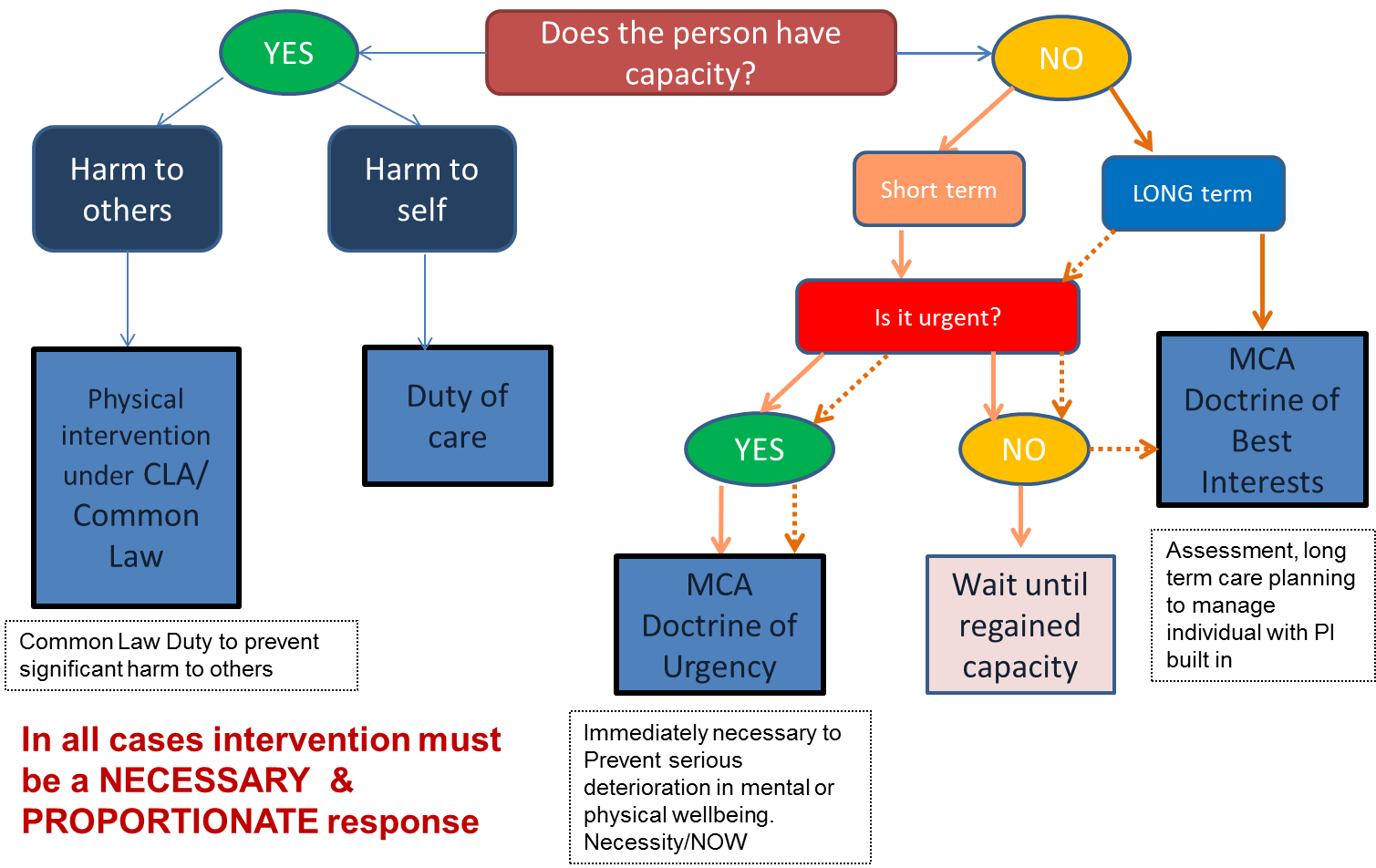
Consider legal implications
It is preferable to use one drug only, starting at the lowest possible dose and increasing in increments if necessary after an interval of two hours.
All medication should be reviewed every 24 hours.
The preferred drug is Lorazepam 500 micrograms to 1mg. This should be given orally or if necessary, IM. It can be given up to every two hours to a usual maximum dosage of 2mg [Orally or IM] in 24 hours, depending on the severity of distress, severity of the psychotic symptoms, weight and sex.
One to one care of the patient is often required and should be provided while the dose of medication is titrated upward in a controlled and safe manner.
If there is no response to lorazepam, the SABP guidelines should be followed
Do not use haloperidol in patients with Parkinson’s disease, Lewy Body Dementia or ECG QTc >500ms and seek specialist advice
Taken from Surrey and Border’s Partnership Rapid Tranquilisation policy: Policy Ref No: SABP/Risk/Procedure 27 Date for review July 2022 – FPH ONLY
https://www.sabp.nhs.uk/aboutus/policies/clinical/ClinicalRapidTranq
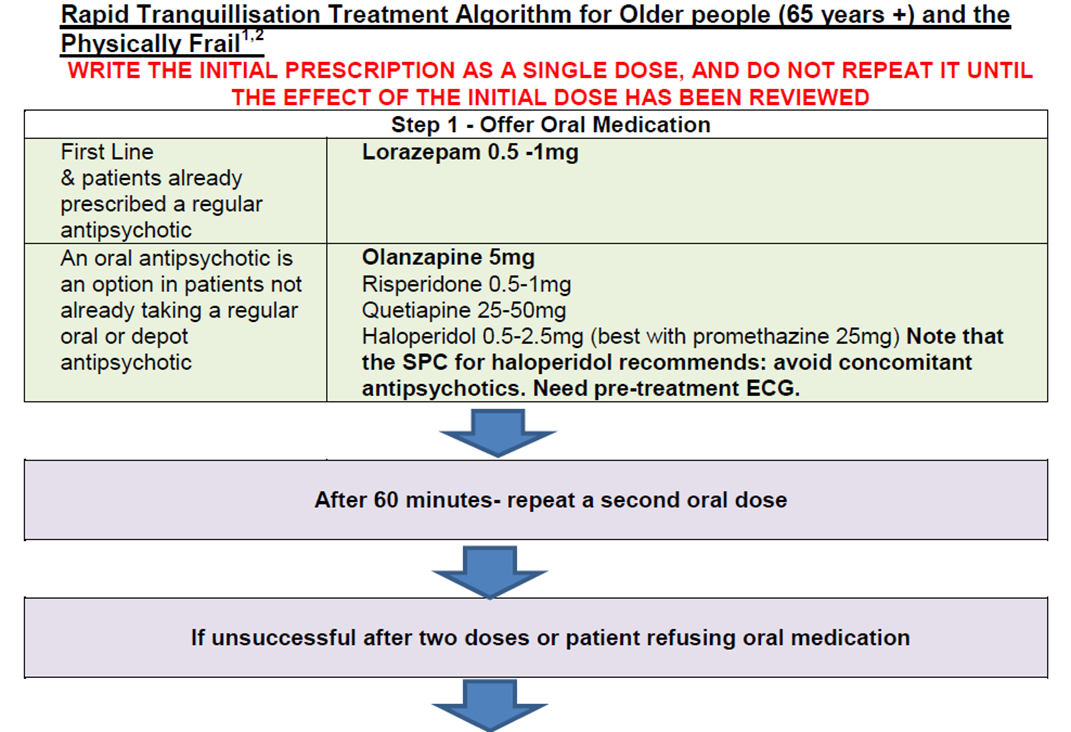
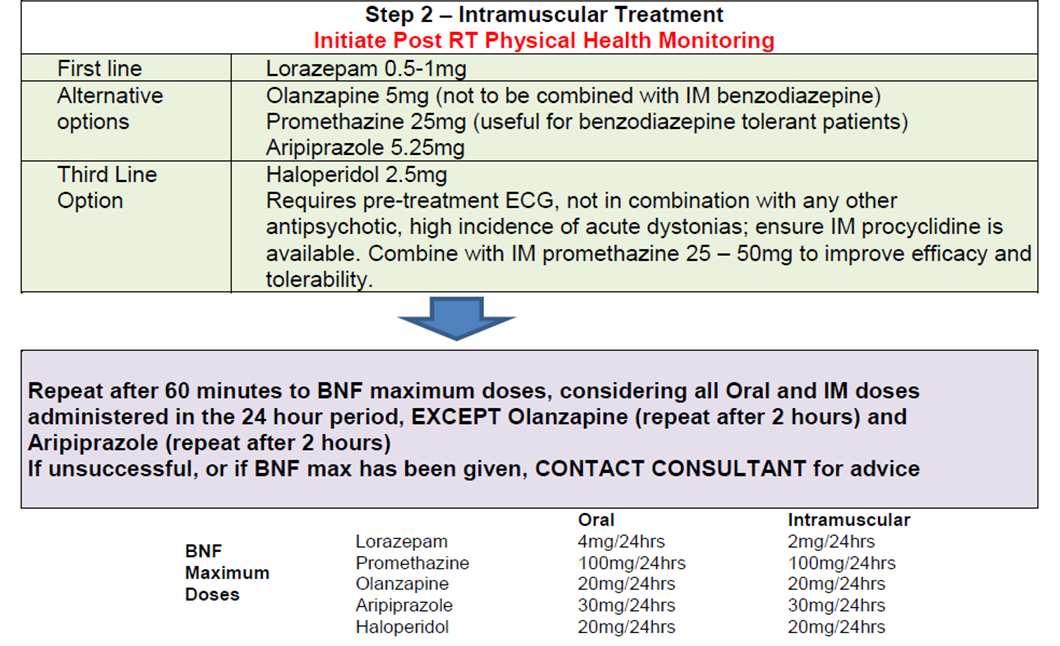
Observations And News Should Be Done Every 10 Mins for 1 Hour After Sedation, Then Every 30 Minutes Until Ambulatory
These patients often have frailty and may deteriorate quickly. They have a low threshold for sedative treatment.