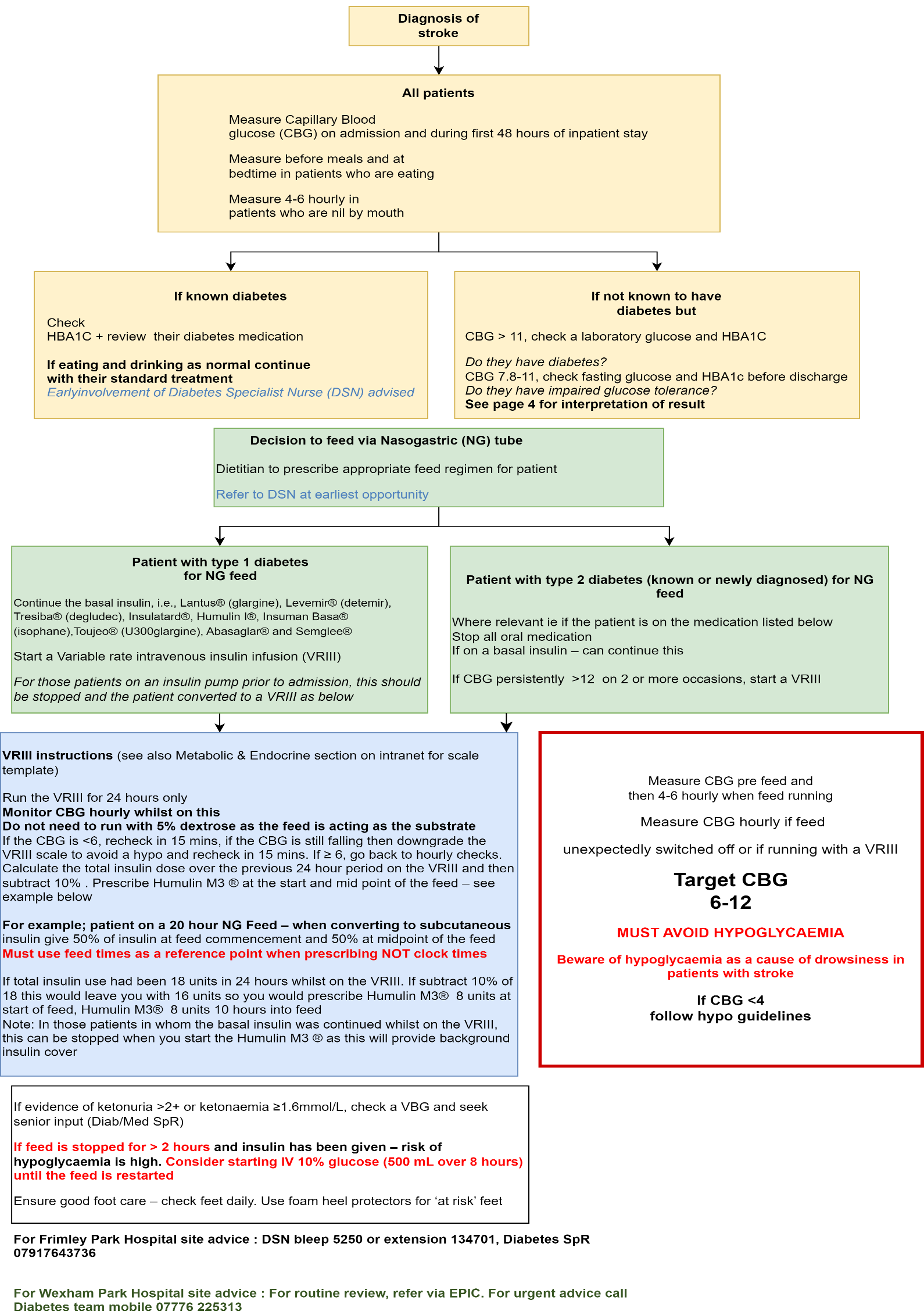
1. Blood glucose targets
• Fasting/Pre-feed 5-8mmol/l
• Feeding 6-12 mmol/l
• If CBG< 4mmol/l or persistently>12mmol/l on 2 consecutive occasions or evidence of ketonuria 2+ or ketonaemia >1.5 mmol/L then inform the DSN/Diab SpR or on-call medical team. If ketones are raised, do an urgent VBG to exclude DKA
2. Frequency of bedside glucose monitoring
-
If Continuous feed – measure CBG pre-feed and then 4-6 hourly
-
If intermittent feed – measure CBG pre feed, 4-6 hourly during feed and 2-hours post feed
-
If bolus only feed – monitor CBG pre-feed, 2-hours post feed and 4-6 hourly during prolonged intervals between feeds
Monitor CBG hourly if receiving VRIII
Beware of risk of hypoglycaemia during fasted periods between feeds
Beware of hypoglycaemia as a cause of drowsiness in patients with stroke
3. Timing of insulin administration
If using pre-mixed insulin e.g. Humulin M3
-
First dose at time of feed commencement – this is listed as ‘prefeed’ on EPIC frequency section
-
Second dose at midpoint of the feed – this is listed as ‘midway through feed’ on EPIC frequency section
-
50% of the required insulin can be administered with each dose
If using a basal bolus regimen (basal and rapid acting analogue insulin)
-
Basal insulin should be given at feed commencement
-
Bolus doses of rapid acting analogue insulin may be administered at the start and mid-point of the feed or at the start and 6 hourly during the feed – you can use the pencil icon in the bottom right hand corner of the prescription box in EPIC to adjust the timing of the insulin
As the feed rate or volume increases, the subcutaneous insulin dose will need to be titrated appropriately – please ask the DSN or Diab SpR for help with this.
4. Actions to undertake if feed is stopped
-
Whatever the reason for stopping the feed it is necessary to remember that insulin already administered will continue to drive the blood glucose down. The patient should thus be monitored for signs of hypoglycaemia and the CBG measured hourly, and more frequently (up to every 15 minutes) if symptoms or signs of hypoglycaemia are present.
-
If the feed is stopped at an unplanned time and subcutaneous insulin is due, delay but do not omit the insulin dose – it is advised that the insulin dose should be given when the feed is recommenced.
5. Advice on interpretation of the HBA1C result
Known Diabetes
Refer to DSN if HBA1C is > 58 mmol/mol for optimisation of control
Not previously known to have diabetes
If fasting glucose is > 6.1mmol/L but < 7mmol/L or HBA1C is between 42-47 mmol/mol– this suggests ‘non-diabetic hyperglycaemia’
Please calculate their BMI – advise on weight reduction measures, e.g., healthy eating and regular exercise if applicable
Please ask the GP to refer to the NDPP (National Diabetes Prevention Program) on discharge and arrange for annual check of HBA1C on the Discharge letter
If fasting glucose is >7 mmol/l or HBA1C is 48 mmol/mol or above – this suggests diabetes
Please refer to the DSN for basic education and arrange for dietetic input pre discharge
Please refer for follow up in a GP led diabetic clinic unless advised otherwise by the diabetes team