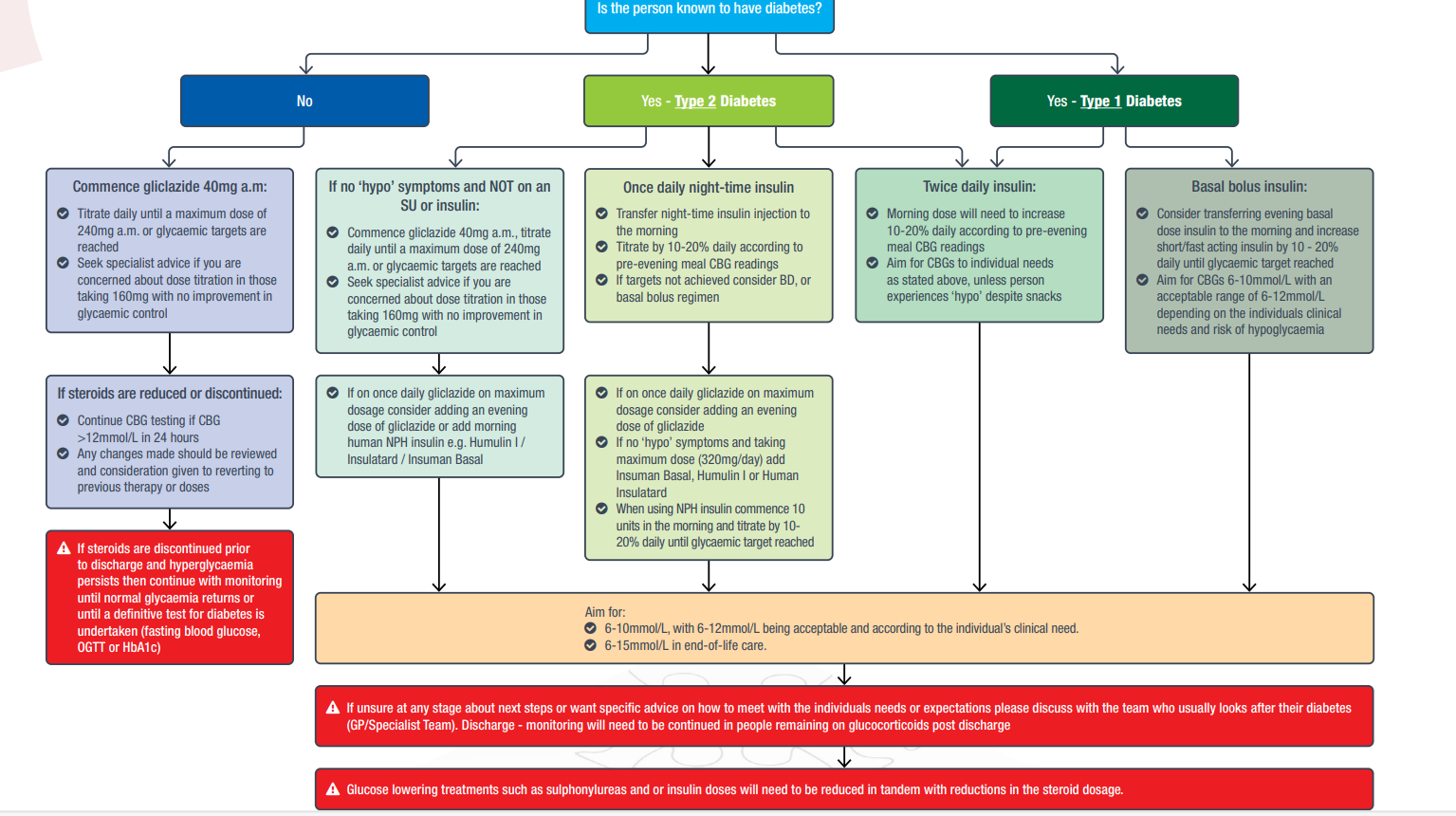
When an inpatient is discharged from hospital on steroid therapy, a clear management plan of hyperglycaemia or potential hyperglycaemia should be in place. The management plan should be communicated to the GP or community DSNs in the discharge letter. Similarly, the risk of hypoglycaemia and the appropriate de-escalation of therapy when steroid doses are reduced or withdrawn should be included in the management plan.
-
If glucocorticoid therapy is stopped prior to discharge and CBG <12: discontinue monitoring CBG
-
If glucocorticoid therapy is reduced or discontinued12 and enter treatment algorithm if necessary.
-
Hypoglycaemia education and appropriate de -escalation should be taught and documented
-
If hyperglycaemia persists (CBG>12mmol/l) after discontinuing glucocorticoid: continue monitoring until CBG returns to normal range (4-10 mmol/L) or further test such as fasting glucose/OGTT or HbA1C is performed. Please discuss with diabetes team whether treatment initiated during hospital needs to be continued prior to discharge.
4.1 Education
Individuals commenced on steroids as an inpatient and discharged after a short stay, with the intention of continuing high dose steroids, should receive standard education.
including:
-
Diabetes management
-
Lifestyle advice
-
Risks associated with hyperglycaemia and hypoglycaemia
-
Glucose monitoring and the need to test once daily in the late afternoon or evening
-
If a reading is more than 12.0mmol/L, then testing should be increased to four times daily
-
If two consecutive readings in 48 hours exceed 12.0mmol/L, refer to the treatment algorithm
4.2 Post hospital discharge
-
If the steroid dose remains above 5mg prednisolone or equivalent, for a protracted period, and the patient is insulin treated then the glucose should be checked at least, once daily and prior to driving
-
If the steroid dose is being titrated upwards, then test at least once daily
-
If a reading exceeds 12.0mmol/L increase testing to four times daily, including post prandially
-
If two readings exceed 12.0mmol/L in a 24-hour period, then follow the treatment algorithm
-
As the steroid dose decreases, the treatment of hyperglycaemia will similarly need to be titrated down e.g., a weekly 5mg reduction of prednisolone from 20mg may require a 20-25% reduction in insulin dose, or a 40mg reduction in gliclazide. Please see duration of action when consider dose reductions. Table 2.1
4.3 Discharge and follow up for patient with diabetes
If steroid is discontinued and CBG remains within normal range: consider reverting back to normal treatment and monitor CBGs.
If steroid is discontinued and CBG remains elevated: continue treatment and monitoring. When CBG begins to decrease, consider reverting back to normal treatment, and discontinue recently introduced treatment on glucocorticoid therapy. Please refer to GP or community diabetes team for further assessment and follow up.
If steroid is reduced and CBG remains within normal range: consider reverting back to normal treatment and discontinue additional treatment initiated whilst on glucocorticoid therapy.
If steroid is reduced and CBG remains elevated: continue monitoring and treatment. When CBG begins to decrease, consider reverting back to normal treatment, and discontinue recently introduced treatment on glucocorticoid therapy. Please refer to GP or community diabetes team for further assessment and follow up.
Patients who are at increased risk of hyperglycaemia and commenced on glucocorticoid therapy upon discharge or remain on therapy for a longer period, should be educated how to check CBG and use glucometer.
Patients who had hyperglycaemia due to glucocorticoid therapy should be screened for diabetes following cessation of glucocorticoid. It should be fasting glucose or oral glucose tolerance test at least 6 weeks after cessation of therapy or 3 months after if HbA1C is used for screening.