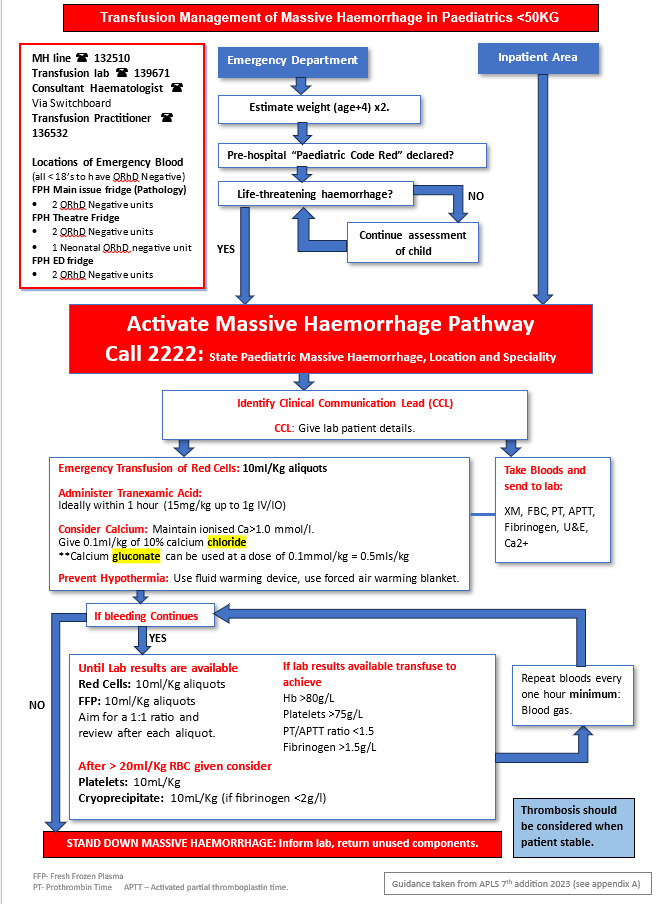
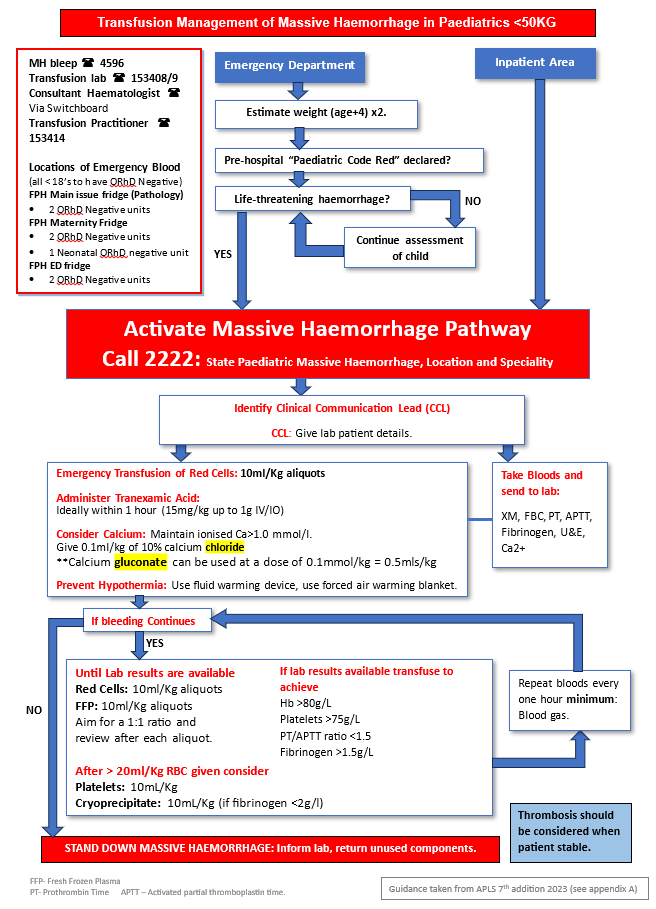
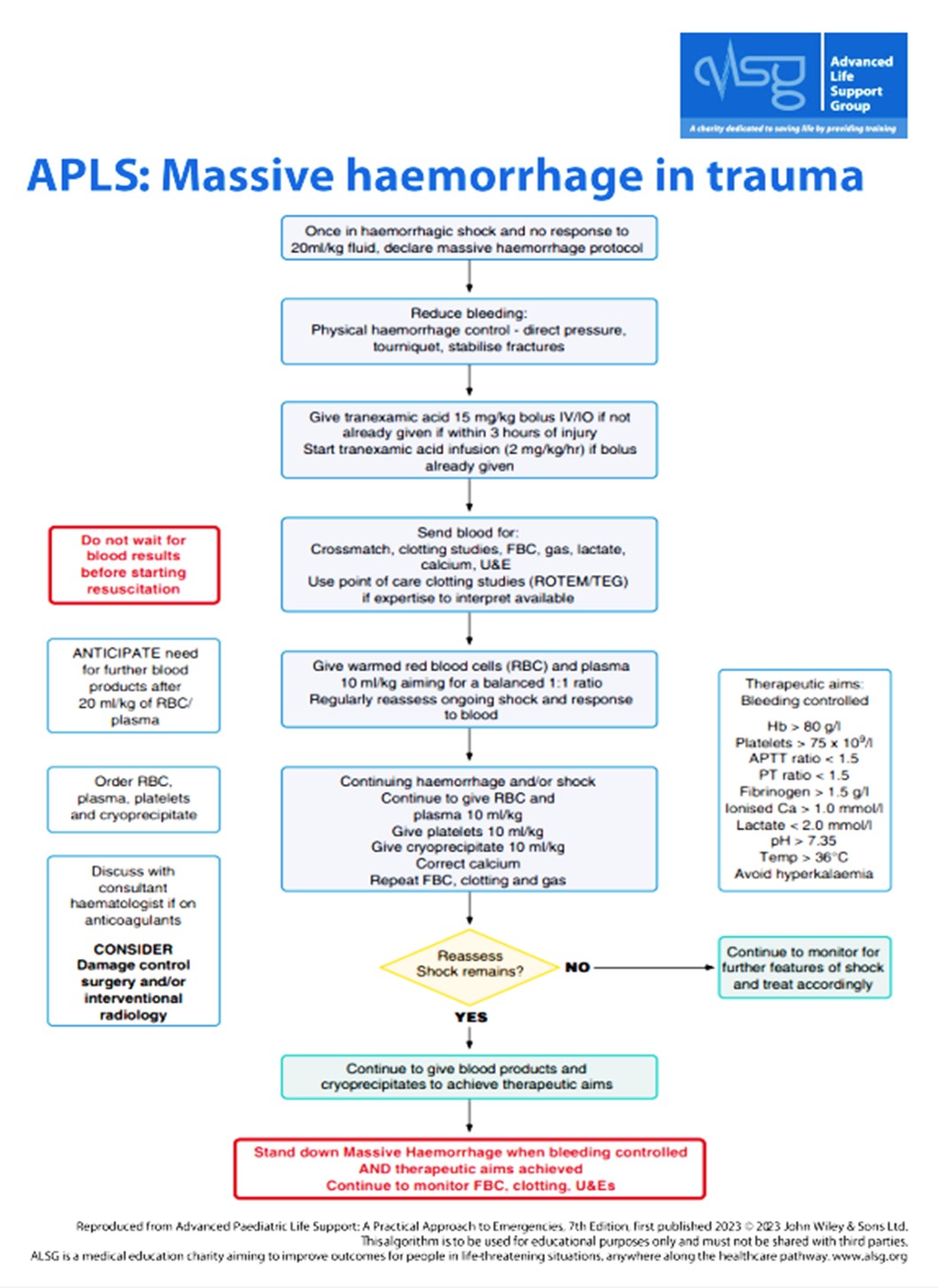
-
Team leader
-
Clinical Communication Lead (CCL) role
-
Sample taker / documenter
-
Transporter of products/samples
Roles
Team Leader role
Who: Senior Doctor/Nurse Consultant with relevant authority, expertise and experience
Role: (the role indicated here is broadly defined only, as it is outside of the remit of the Transfusion Team)
-
Lead, manage, and coordinate all patient requirements
-
Communicate with CCL to ensure s/he aware of transfusion needs
-
Ensure other relevant staff/teams are present/communicated with
-
Alert relevant clinical areas (ICU/Theatre etc)
Clinical Communication Lead (CCL) Role
One of the most significant factors for ensuring blood components/products are ready as soon as possible is effective, timely, communication with Transfusion Laboratory. The language you use is pivotal to how your requests will be interpreted, i.e., if you ask for ‘cross matched blood’ this is generally not immediately available; if you ask for the blood components required and state how quickly you need it the Transfusion Laboratory staff will advise you of the options and how long each option takes.
Who: Senior registered professional, who can fully understand and communicate the clinical situation, requirements and progress.
Role: Critical role in communicating patient’s transfusion needs to Transfusion Laboratory
-
Ring the Transfusion Laboratory asap
-
Tell them ‘I am the communication lead for the massive haemorrhage on location’
-
Give them patient identity & clinical details
-
Give them your details and contact numbers/bleeps
-
Inform them of any emergency O red cell units taken
Inform transfusion laboratory when further components are required. Maintain frequent/regular contact with transfusion laboratory re blood being ready / blood results
-
Liaise with Team Leader re transfusion requirements
-
Send staff to collect blood components
-
Ensure sample taker is aware of samples required and samples taken meet all criteria*****
-
Liaise with Consultant Haematologist if expert advice required
-
If patient moves / bleeding resolves / patient dies tell the Blood Transfusion Laboratory
-
Hand role over if patient moves / as appropriate
Unknown patients
Minimum identity requirements as per Trust identification policy (Best practice set out by NHS Improvement ‘Safer temporary identification criteria for unknown or unidentified patients’):
-
Temporary number - prefix a randomly generated seven-digit number with the relevant standard NHS Trust code where possible.
-
Gender – If gender cannot be identified default to female to ensure those of child-bearing age are given Rh D and K-negative red cells.
-
Approximate age - 1 January plus estimated year of birth should be used.
*It is acknowledged that obtaining samples in massive haemorrhage situations can be very difficult. A lack of sample(s) should never delay provision of blood in a life-threatening massive haemorrhage as emergency red cell units are available in several locations (see Table G 6.1). However, fully serologically matched blood components are the ideal, so the Transfusion Laboratory will ask for a sample and will notify the clinical area of the requirement for a second group check if applicable. Please communicate clearly with the Blood Transfusion Laboratory if samples are not possible at this stage.
Sample Taker/Documenter
Who: Registered professional: e.g., Nurse / Midwife / ODP / FY1/2
This role encompasses ensuring that the samples sent are of sufficient quality to enable swift and accurate processing. This is a significant factor in ensuring blood components are ready as soon as possible; specifically ensuring the identification details are consistent and correct. It is recommended that if there is doubt about spellings of names/exact dates of birth then the patient should be treated as ‘unknown’ as traumatized relatives may not give consistent dates/spellings which can lead to sample rejection. Transfusion samples that are labelled incorrectly will NOT be used, as it is not legal to do so. If it is impossible to obtain a sample the Blood Transfusion Laboratory will supply emergency O red cells.
Role:
-
Ensure urgent transfusion samples taken as per policy: positive patient ID / label at bedside
-
Minimum ID requirements
-
A unique number: NHS / hospital / A+E / Major incident / Military
-
First name and surname
-
Date of birth
-
Signature of person taking blood
-
Date and time blood taken
-
UNKNOWN patients: unique number (avoid temporary numbers where possible) and gender
-
Ensure CCL has told the Blood Transfusion Laboratory that samples are on the way
-
Send samples to the Blood Transfusion Laboratory urgently
-
Document blood components being used – drug chart / traceability tags / notes
Haemorrhage Transporter (including collection of blood components)
Who: Available trained and competent personnel; can be a porter
Role:
-
Take samples to the Blood Transfusion Laboratory urgently
-
Collect blood components as requested as per policy
-
Check ID of patient / product details on blood component / blood label / patient ID document
-
Document removal of blood component from blood fridge
-
Return unused blood components/products to the Blood Transfusion Laboratory
Blood Transfusion Laboratory Role
The BMS receiving the call from the CCL will
-
Undertake the role of Blood Transfusion Laboratory Communication Lead (LCL) or allocate it to a more appropriate BMS; this includes communicating effectively with the CCL to ensure the most appropriate blood components / products are issued as quickly as possible.
-
Document the details on the Massive Haemorrhage communication sheet
-
Alert senior colleague OR out of hours consider whether need to call second on call in
-
Prioritise workload
-
Issue blood components as per protocol or request; (Section G 8)
-
Full details of the Blood Transfusion Laboratory response are outlined in ‘Guideline for the management of massive blood transfusion SOP’ (laboratory SOP quality management system Ipassport).
Transfusion Practitioner (TP) Role
The TP role is to improve practice through the:
-
Collation of audit information regarding adherence to the protocol
-
Provision of training in massive haemorrhage protocol
-
Responding to any incident reports as a result of massive haemorrhage
-
Where possible, and if required, the TP will visit the Blood Transfusion Laboratory and the clinical area during the MH to enhance communication and ensure protocol is working effectively