Provision
The anaesthetist remains ultimately responsible for the care of the patient and thus must be happy to work within the delegated supervision model described. If they are not, standard practice should resume
-
The block must be appropriately tested and proven to be effective
-
The surgeon must receive a specific handover, including dose limits on any additional local anaesthetic administration (this information will be visible to all team members on the theatre ‘white board’)
-
The surgeon must be content to start surgery in the absence of the anaesthetist and be ready to inject additional local anaesthetic (LA), if required
-
An anaesthetist must be immediately available for at least the first 15 minutes after block administration
-
The anaesthetist must have a competent assistant (as defined below for the supervision of patients in theatre) in the block area, sufficient to maintain the safety of other patients attended, should the anaesthetist be called back to theatre
-
The responsible anaesthetist cannot be involved in a task which cannot be safely left to attend to the patient in theatre, if the need arises
-
The patient must be conscious and communicating effectively when responsibility is handed over to anyone other than an anaesthetist. If sedation or analgesia is required in the operating theatre, then an anaesthetist must return to administer this and must be present until the patient is again conscious and communicating effectively
-
The anaesthetist must be immediately contactable (verbal communication), remain within the theatre suite and able to return to theatre to attend the patient within 2 minutes
-
The anaesthetist must make appropriate arrangements to perform the WHO checklist (time out) and to rapidly treat unexpected surgical or tourniquet pain.
Delegated Responsibility
The anaesthetist may delegate responsibility to an appropriately trained healthcare worker (another doctor, an ODP, anaesthetic associate or an anaesthetic/PACU nurse) for supervision of the patient in theatre.
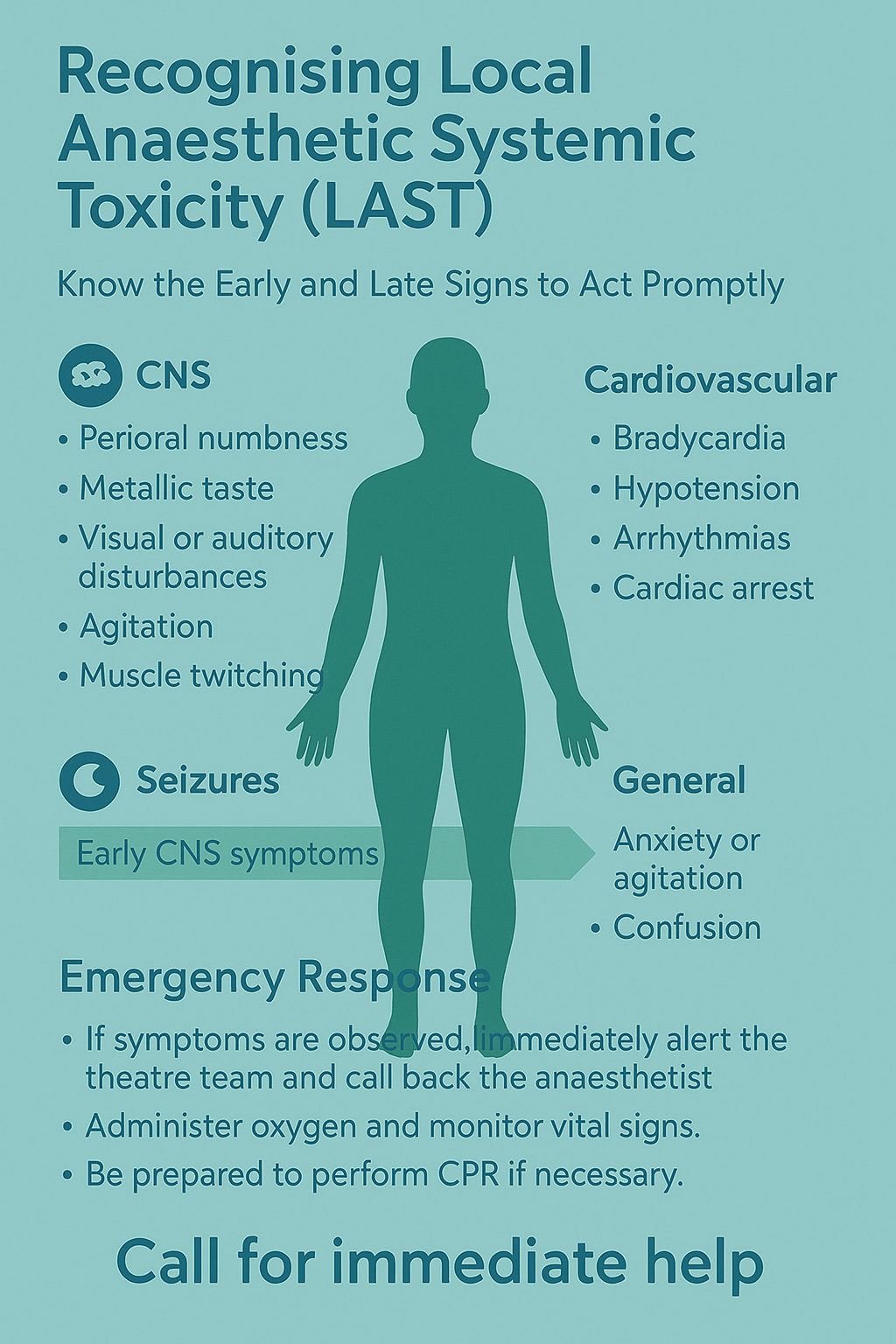
The healthcare worker must be able to recognise the signs and symptoms of LA toxicity (see appendix 1 for poster which could be displayed in theatre to remind everyone of these symptoms).
Sedation
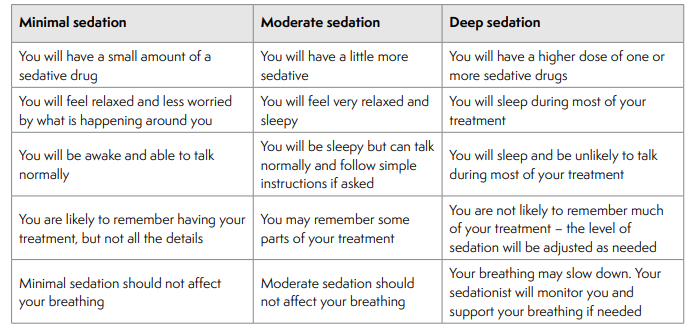
If sedation is administered during the block, the patient must be conscious and communicating effectively when responsibility is handed over (minimal or moderate sedation, see appendix 2 for definitions).
If sedation is provided by a continuous infusion, delegated supervision is no longer appropriate, and an anaesthetist should be continuously present (deep sedation, see appendix 2 for definitions)
Aftercare
Patients who receive no sedation during their procedure may be transferred directly back to the ward and do not need to be recovered in PACU.
Patients who receive minimal sedation e.g. for block insertion and have fully recovered from the effects of sedation by the end of the procedure may also be transferred directly to the ward following assessment by the responsible anaesthetist.
Nursing staff should be familiar with monitoring patients who have had a block and be aware of possible side effects to the block or any adverse effects (e.g., local anaesthetic toxicity). They should be aware who to escalate their concerns to in a timely manner.
Written advice on post procedural care should be provided for day case patients including contact numbers if there are any concerns post-discharge