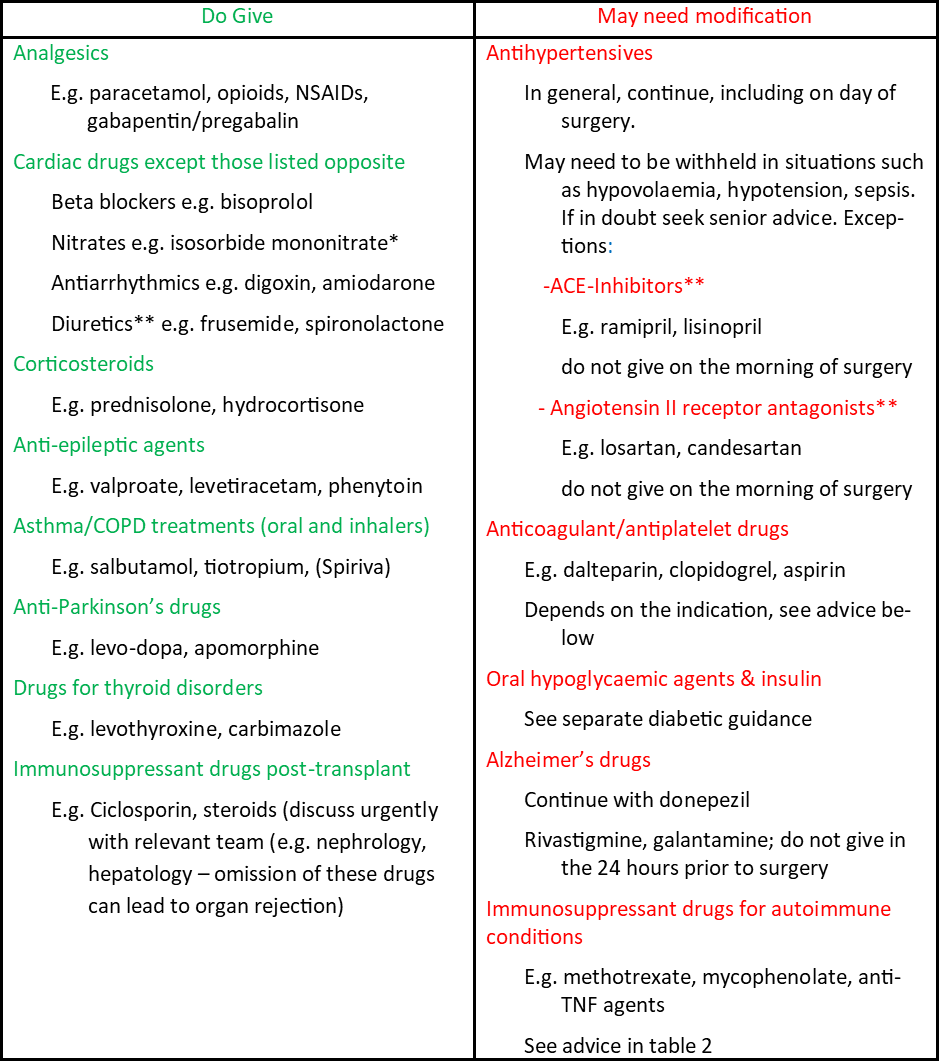
| Analgesics should be given (including paracetamol, NSAIDs, opioids, via any route) | Patient experiences avoidable pain |
Anticoagulants (also see separate perioperative guidance).
Prophylactic anticoagulation e.g., dalteparin 5000 units od should not be given after 20.00 the night before surgery.
Patients with acute thromboembolic events must continue with anticoagulation.
If in doubt seek senior advice | Unable to perform regional anaesthesia if patients have received anticoagulation in the preceding 12 hours
Progression of thrombus and risk of serious embolic episode (stroke/PE) |
| Antiepileptic agents should be given | Loss of seizure control |
| Antihypertensives*/** (except ACE inhibitors and Angiotensin II receptor antagonists) should be given | Complications of acute hypertension |
| Antimicrobials (including antibiotics, antifungals, antivirals and antimalarials) should be given | Potential worsening of systemic infection and deterioration of condition |
| Anti-Parkinsonian agents | Loss of symptom control |
Antiplatelets
Antiplatelet agents should be continued if PCI performed for ACS within the past year, unless discussed with a cardiologist.
Clopidogrel can be discontinued for a short period if PCI with DES has been performed electively for angina and >3 months previously. However, Aspirin should be continued.
If in doubt, discuss with relevant cardiologist. | Increased risk of poor outcomes following MI
Risk of acute stent thrombosis in patients following angioplasty |
| Antiretrovirals should be given | Potential for deterioration of viral disease |
| Benzodiazepines and parenteral vitamins for the management of acute alcohol withdrawal syndromes should be given | Severe and potentially irreversible withdrawal symptoms |
| Beta-blockers should be given | May cause tachyarrhythmias |
| Bronchodilators should be given | Deterioration in clinical condition |
| Calcium resonium, glucose/insulin should be given | Emergency treatment of symptomatic hyperkalaemia |
| Corticosteroids should be given | Treatment failure in acute conditions.
Risk of Addisonian crisis in steroid dependency |
| Enteral/parenteral electrolyte replacement (including potassium, calcium, magnesium, phosphate) for the urgent treatment of symptomatic deficiencies should be given | Deterioration in clinical condition |
| Glucose/glucagon should be given | Failure to treat symptomatic hypoglycaemia (medical emergency) with risk of patient harm |
| Glucose infusions in normoglycaemic patients receiving intravenous insulin infusions should be given | Risk of hypoglycaemia |
Immunosuppressants drugs for transplant patients must be given
Inform relevant team of patient admission and seek further advice. | Risk of transplant rejection due to sub-therapeutic levels |
| Immunosuppressant drugs for autoimmune conditions | Discuss all cases urgently with the initiating team in order to make the decision regarding continued prescription. There will a balance of disease control vs sepsis risk.
(Note that methotrexate excretion will be delayed by renal impairment and it is potentiated by several common antibiotics) |
| Insulin (but see Trust intranet “Guideline for the management of adults with diabetes undergoing surgery and elective procedures”) | Poor glycaemic control and potential for symptomatic hyperglycaemia |
| Naloxone should be given | Failure to treat opioid toxicity (medical emergency) with risk of patient harm |
| Oral hypoglycaemic agents (but see Trust intranet “Guideline for the management of adults with diabetes undergoing surgery and elective procedures”) | Poor glycaemic control and potential for symptomatic hyperglycaemia |
| Oxygen should be given | Increased risk of harm from prolonged hypoxia |
| Parenteral bisphosphonates in the treatment of severe symptomatic hypercalcaemia should be given | Severe metabolic consequences |
| Resuscitation drugs and reversal agents including plasma expanders should be given | Failure to treat medical emergencies with risk of patient harm |