This is a controlled document. If you are using a printed copy, check it against the version on the intranet to ensure you are using the latest edition.
1.0 Introduction
1.1 The incidence of failed intubation in the obstetric population is at least 1 in 300.1 Confidential enquiries into maternal death reports, have highlighted that the effective management of failed tracheal intubation, this is a core anaesthetic skill that should be rehearsed and assessed regularly.2 The NAP4 Project3 found that poor airway assessment and poor planning contributed to poor outcomes. Multiple repeat attempts at intubation can deteriorate into a “can’t intubate can’t ventilate” situation.3
1.2 Frimley Health NHS Foundation Trust is committed to the provision of a service that is fair, accessible and meets the needs of all individuals.
2.0 Scope and purpose of the Guideline
2.1 To educate staff regarding the management of an anticipated and unanticipated difficult intubation in the obstetric population.
3.0 The Guideline
3.1 Preoperative Assessment
An airway assessment should always be performed prior to a caesarean section under general anaesthesia. (This can be done in seconds.)
-
Mouth opening
-
Mallampati view
-
Jaw slide
-
Neck movement
-
BMI
-
Evidence or possibility of laryngeal swelling (severe pre-eclampsia or URTI)
-
History of previous difficult intubation
-
Large protruding incisors
If you predict a difficult airway, seek senior help as early as possible. General anaesthesia should be avoided, if possible.
3.2 Preparation of Equipment
Thiopental / propofol and suxamethonium / rocuronium should be drawn up and available at all times in the obstetric theatres. Pre-filled syringes may be available. If rocuronium is being used sugammadex should be available.
The following should be immediately available:
A selection of laryngoscopes:
-
Macintosh blades (3 and 4)
-
Two working short handles
-
McCoy Laryngoscopes (size 3 and 4 blades)
-
Video-laryngoscope (at least one type)
-
Oropharyngeal airways
-
Laryngeal mask airways, including Proseal/Supreme
-
Bougies
-
Malleable stylet
-
Magill forceps
-
Cricothyroidotomy kit
-
Nasal cannula and oxygen tubing
-
Monitoring equipment including capnography (see AAGBI guidelines – Standards of monitoring during anaesthesia and recovery 2015)
You must have a skilled assistant
3.3 Recommended equipment for the management of unanticipated difficult intubation
-
Tracheal tubes – range of reinforced tubes, microlaryngeal tubes sizes 5.0 and 6.0 mm, LMA-Fastrach™ tracheal tubes
-
Supraglottic airway devices (SAD) to include cLMA, and a second-generation SAD (eg LMA Proseal™, LMA Supreme™ or I-gel®) - sizes 3, 4 and 5
-
LMA cuff pressure manometer
-
Fibreoptic scope, camera and monitor
-
Aintree® intubating catheter
Surgical cricothyroidotomy equipment for the ‘can’t intubate can’t oxygenate’ situation:
-
Scalpel with No. 10 blade
-
Bougie
-
Size 6.0 endotracheal tube
-
Forceps or tracheal dilator
Equipment for awake fibreoptic intubation:
-
Equipment to deliver topical atomised local anaesthetic to the upper airway such as the Mucosal Atomization Device (MAD®) or Mackenzie technique set
-
Berman airway
-
Epidural catheter
-
Local anaesthetic spray for topical anaesthesia (e.g. lidocaine hydrochloride 40mg/ml (4%) for laryngotracheal anaesthesia)
-
Vasoconstrictors for the nose – phenylephrine/ lidocaine (Co-phenylcaine®) or Xylometazoline
3.4 Preparation of the Patient
-
Remember antacid prophylaxis
-
Positioning
-
Table height appropriate
-
Neck flexed; head extended
-
Remove knotted scarves, undo braided hair
-
“Ramped” position for obese patients (use Oxford pillow)
-
Pre-oxygenate adequately: aim for SpO2 > 90% (3 minutes full pre-oxygenation)
-
Rapid sequence induction
- Use adequate dose of induction agents (e.g. thiopental (3-5mg/kg) and suxamethonium (1-2mg/kg) or rocuronium (0.9mg/kg))
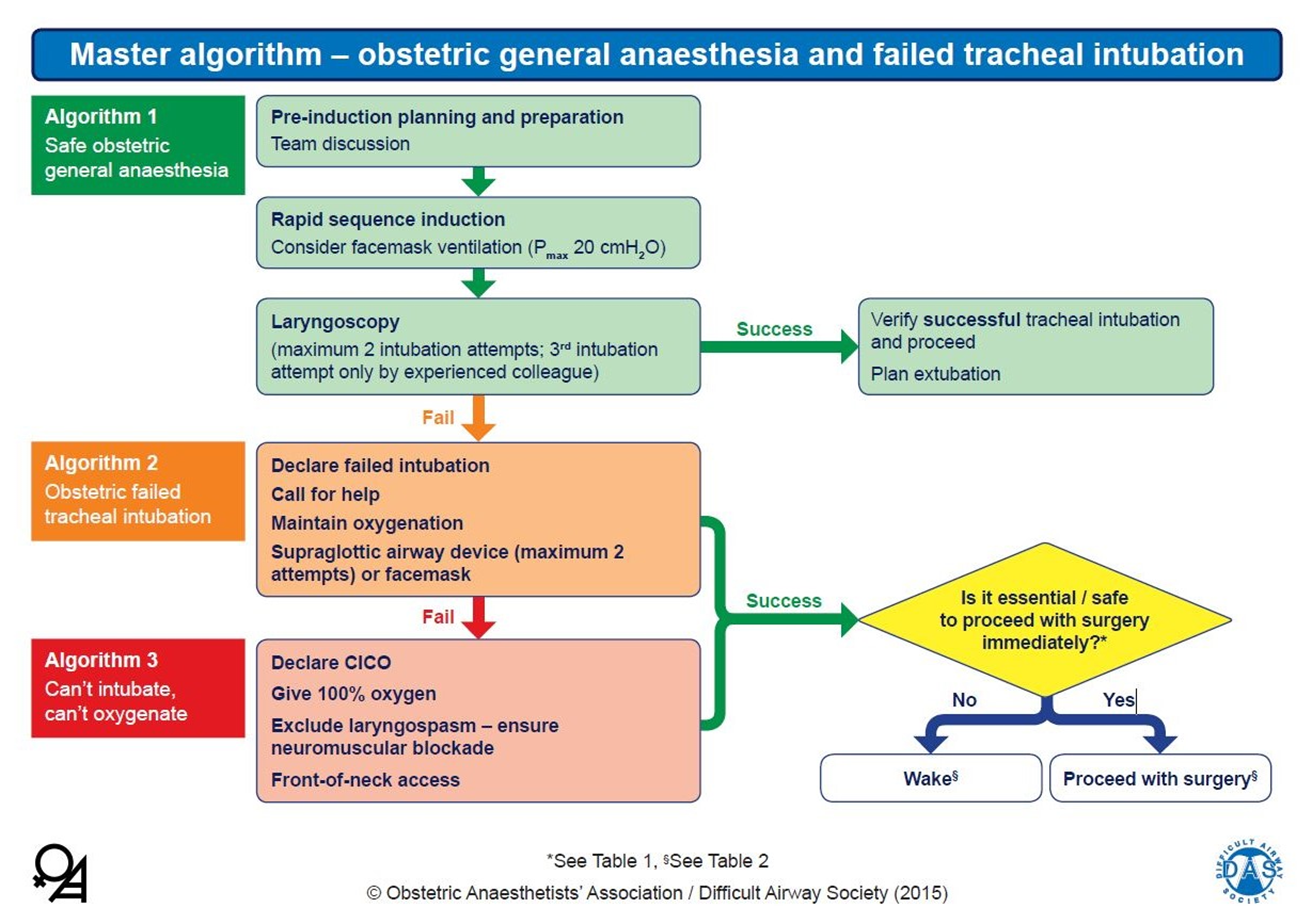
3.5 Failed Intubation (see the attached algorithm)
-
If you can’t intubate but can see the epiglottis, try using a bougie and/or the McCoy blade
-
Oxygenation is the priority (taking preference over fetal concerns and the risk of aspiration)
-
Call for help (Call bleep 2222 and state “Anaesthetic Emergency” and your location)
-
Do not persist with attempts to intubate – maximum 3 attempts
-
Do not give another dose of suxamethonium
-
Try to ventilate with an oropharyngeal airway: if necessary, use 2 hands to hold the mask and apply jaw thrust, with an assistant squeezing the bag
-
If ventilation is not possible, reduce or release the cricoid pressure
-
If this is unsuccessful, insert a laryngeal mask. (A Proseal/ LMA Supreme may offer increased safety but should only be used if you already have experience with its use)
-
If you still can’t ventilate, marked deoxygenation is developing, and the patient is not waking up, you must proceed to cricothyroidotomy (see appendix)
-
Once oxygenation is established and stable, the safest decision is to wake the patient. A senior anaesthetist can then provide anaesthesia with a regional technique or awake fibre-optic intubation
-
If anaesthesia has to proceed (e.g., the mother has to be resuscitated), continue with the existing successful method, adding in a volatile anaesthetic agent and reapply cricoid pressure if possible
3.6 Extubation
If the patient was difficult to intubate, take extreme care at extubation. Call for senior help before waking her up. Wait for protective reflexes to return before extubating. This should be done in the left lateral or sitting position.
3.7 Follow up
Make adequate notes in the anaesthetic record and patient notes and ensure that the consultant obstetrician and consultant anaesthetist responsible for the patient have been informed. After recovery, inform the women of the failed intubation and the consequences for future anaesthesia. An “airway alert” letter (see DAS guidelines) should be given to the patient and a copy sent to the GP.
4.0 Raising Awareness / Implementation / Training
4.1 This guideline will be highlighted at the departmental anaesthetic meeting and the Labour Ward Forum meetings (FH and WP).
5.0 Monitoring Compliance of Guideline
5.1 Cases of failed intubation at caesarean section will be reviewed by the risk management team when risk issues are identified
5.2 This Guideline has been subject to an Equality Impact assessment
7.0 Appendix Algorithm 1: Obstetric General Anaesthesia and Failed Tracheal Intubation
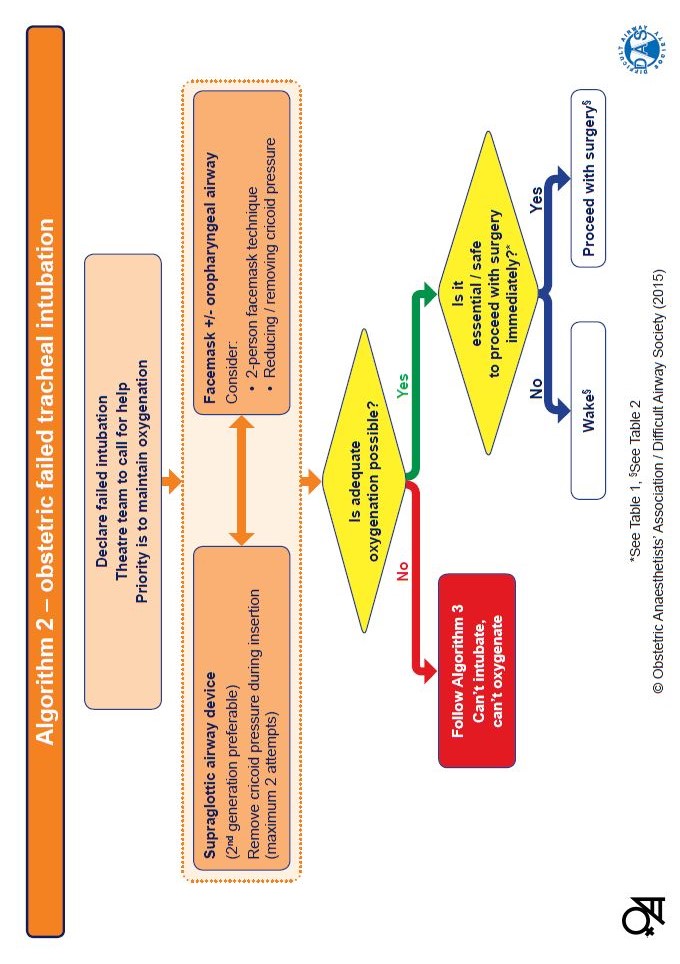
8.0 Appendix Algorithm 2: Obstetric Failed Tracheal Intubation
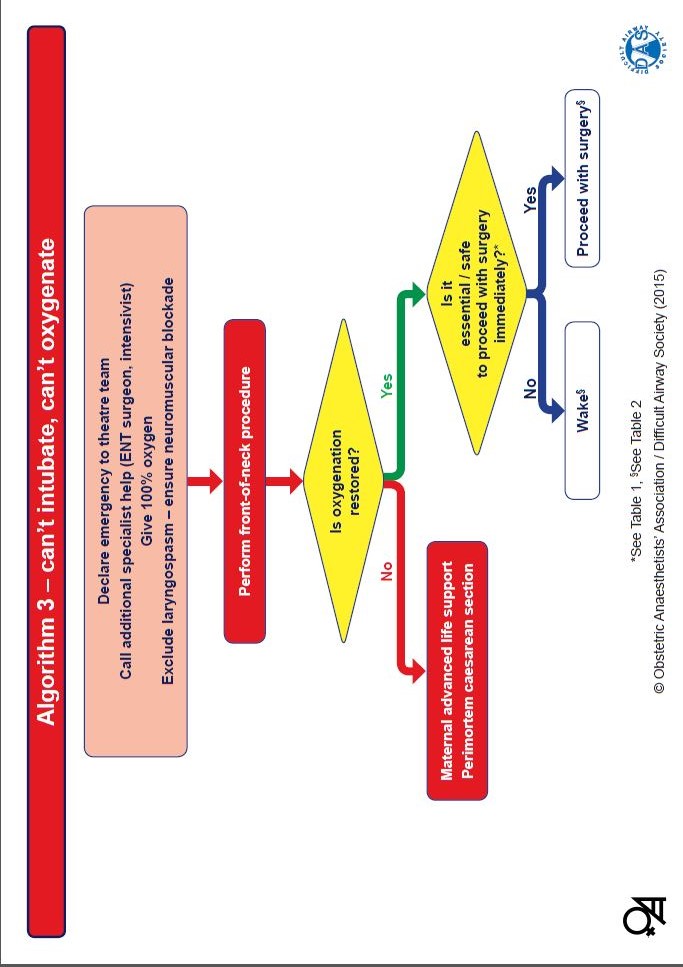
9.0 Appendix Algorithm 3: Can’t Intubate, Can’t Oxygenate
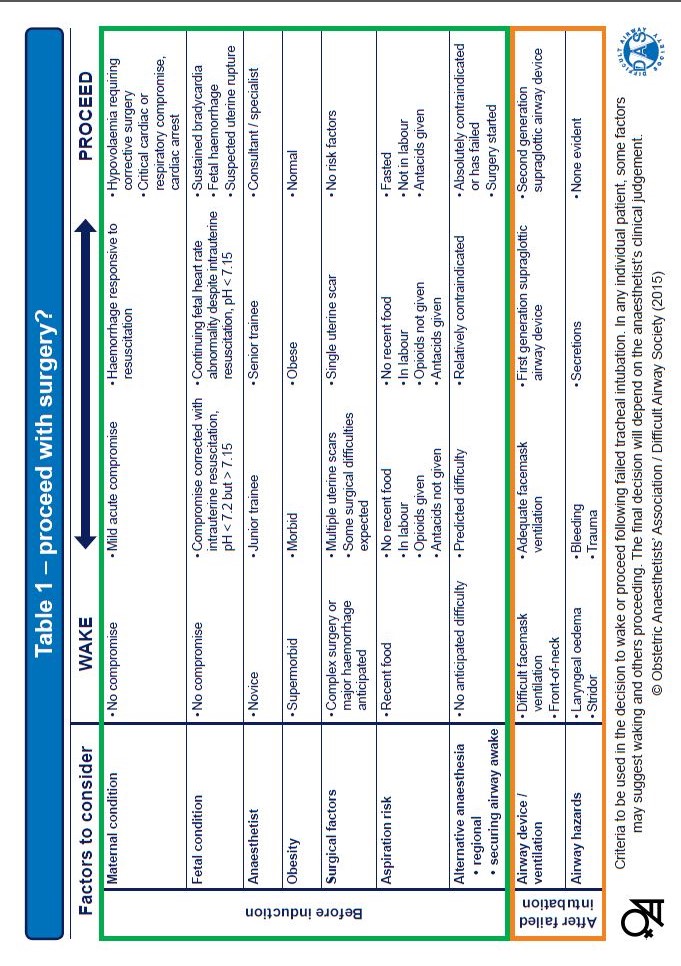
10.0 Appendix 4: Table 1 - Proceed with Surgery
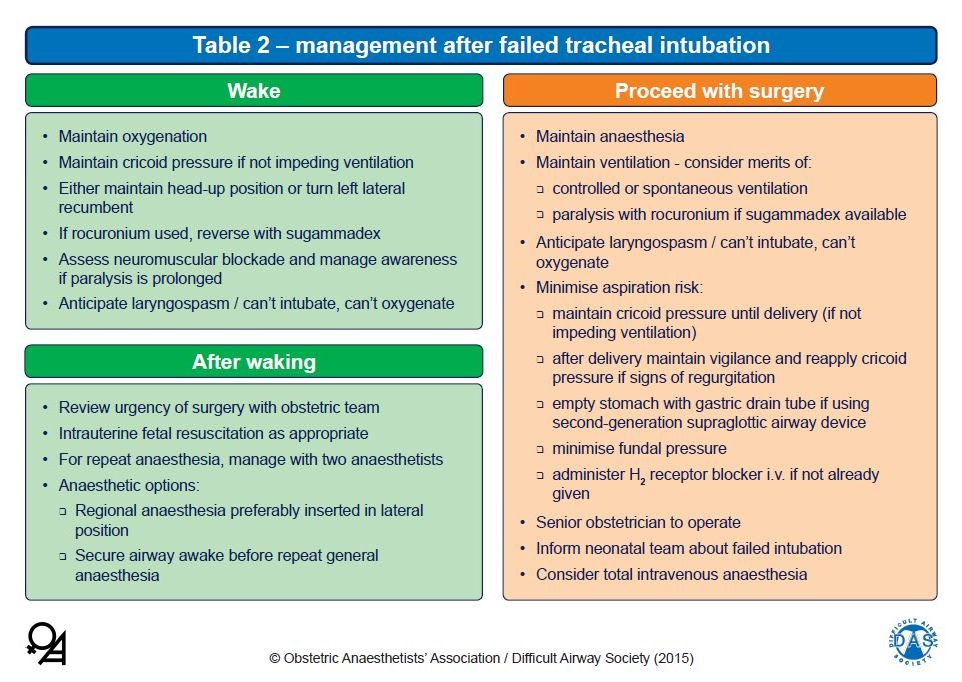
11.0 Appendix 5: Table 2 – Management After Failed Tracheal Intubation
12.0 Appendix 6 Surgical Cricothyroidotomy
Equipment
Scalpel – short and rounded
Artery Forceps
Bougie
Small (e.g. 6 or 7mm) cuffed tracheal or tracheostomy tube
Step Technique
-
Identify cricothyroid membrane - Stab incision through skin and membrane.
-
Enlarge incision with artery forceps either side of the blade.
-
Remove blade leaving artery forceps in place, insert bougie caudally
-
Railroad ETT over bougie and inflate cuff
Ventilate with low-pressure source.
Verify tube position and pulmonary ventilation
Full version control record
This guideline has been registered with the trust. However, clinical guidelines are guidelines only. The interpretation and application of clinical guidelines will remain the responsibility of the individual clinician. If in doubt contact a senior colleague or expert. Caution is advised when using guidelines after the review date. This guideline is for use in Frimley Health Trust hospitals only. Any use outside this location will not be supported by the Trust and will be at the risk of the individual using it.
Version Control Sheet