Coagulation Disorders and Regional Anaesthesia in Pregnancy

Key Points

  • Coagulation disorders in pregnancy can affect whether or not the mother is able to have a regional anaesthetic technique during labour and delivery

  • It is impossible to be didactic and the relative risks of a regional or general anaesthetic technique need to be assessed for each individual based on coagulation tests and judgement involving senior anaesthetic staff

  • This guideline is aimed at anaesthetic and midwifery staff to guide them as to whether regional anaesthesia will be possible in a given patient and how to manage patients with a coagulopathy whether idiopathic, pathological or iatrogenic.

Version:3
Date Issued:02/07/2025
Review Date:01/07/2028
Key words:Coagulation disorder, pregnancy, regional anaesthesia, obstetrics

This is a controlled document. If you are using a printed copy, check it against the guidelines site to ensure you are using the latest edition. Printed copies must be destroyed after use.

Abbreviations

LMWHLow Molecular Weight Heparin
ROTEMRotation Thromboelastometry
SLESystemic Lupus Erythematosus
VTEVenous Thromboembolism

Coagulation Disorders

1.1 Platelets

  • Mild gestational thrombocytopenia is common with platelets rarely <80 x 109/L.

  • It is not necessary to check the intra-partum platelet count - a recent 28/40 antenatal FBC with a platelet count >150 x 109/L is sufficient - unless you suspect the platelet count is low or falling (e.g. pre-eclampsia, sepsis, stillbirth)1.

  • A platelet count between 75 - 100 x 109/L is safe in a healthy woman, providing the clotting screen is normal. However, in pre-eclampsia the platelet function can be disturbed, even if the count is relatively normal. A coagulation screen and a repeat platelet count should be performed in women with pre-eclampsia within six hours of a request for an epidural. If the platelet count is 75-100 x 109/L and the coagulation screen is normal, it is acceptable to insert an epidural catheter, (4).

  • If the platelet count is between 50 - 75 x 109/L, neuraxial anaesthesia should only be sited by an experienced obstetric anaesthetist, depending on individual risk assessment (there may be very good reasons for avoiding GA). The woman must be carefully monitored for any signs of a developing epidural haematoma (e.g. paraplegia, sensory loss, bladder/bowel dysfunction, severe back pain)2.

  • A platelet count below 50 x 109/L is an absolute contraindication to neuraxial anaesthesia.

  • The above criteria should also apply to epidural removal

1.2 Haematological disorders

  • Von Willebrand’s, severe SLE disease and other clotting disorders (e.g. Factor V Leiden, protein C or S deficiency) are relatively common co-morbidities in

pregnant women. These patients will usually be under joint care with a haematology team, they will have been seen in the high-risk obstetric anaesthetic clinic and a plan for delivery should be in the notes.

1.3 Low Molecular Weight Heparin (LMWH)

  • All women should have a documented venous thromboembolism (VTE) risk assessment performed in early pregnancy and repeated if necessary.

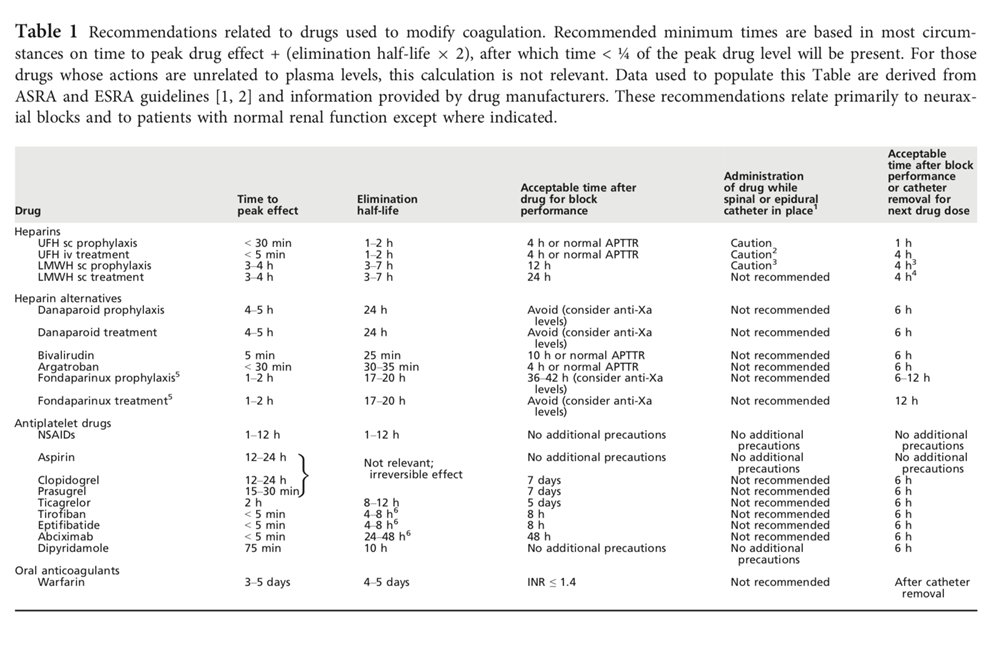
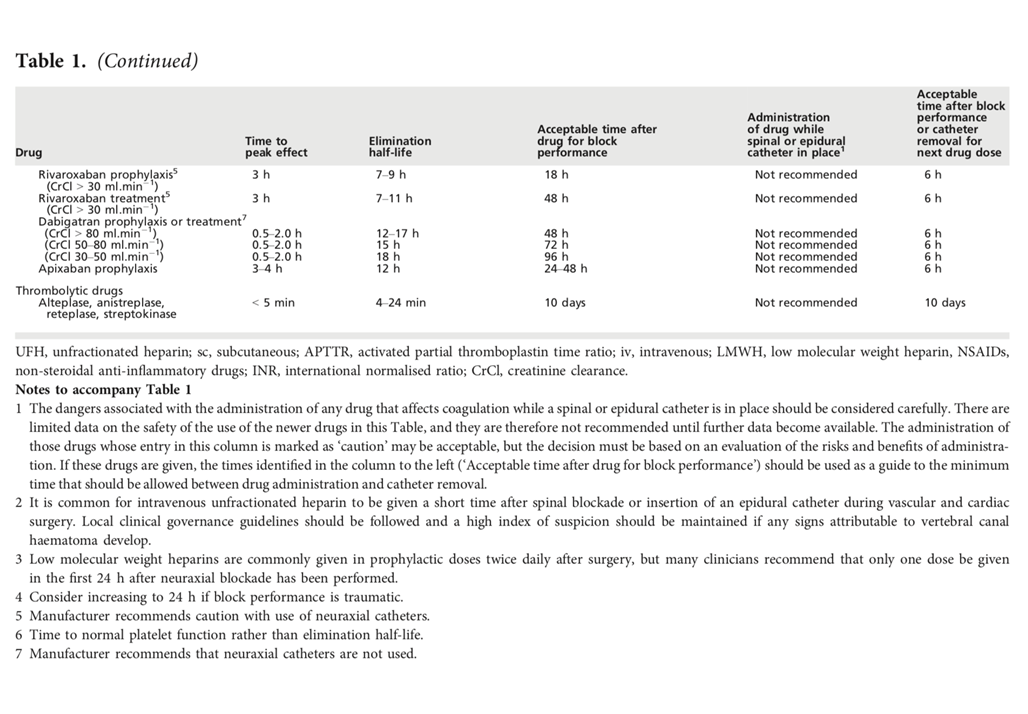
  • LMWH should be considered for antenatal women at high risk of VTE (e.g. thrombophilia, antiphospholipid syndrome, SLE), and these women should be managed in a joint obstetric/haematology clinic (FPH) with a management plan in the notes. Those women on prophylactic LMWH will be under the care of a consultant obstetrician. Both unfractionated heparin and LMWH are safe in pregnancy as they do not cross the placenta. The risk of epidural haematoma in this group is unknown but very rare. A routine clotting screen will not pick up LMWH activity. Monitoring the anti-Xa level is not recommended, as it is not predictive of bleeding risk. Published guidelines give recommendations on timing of neuraxial anaesthesia or analgesia in these women3. (see appendix)

  • Prophylactic dose LMWH: Epidural insertion / removal – wait for at least 12 hours after last prophylactic LMWH dose. Wait at least 4 hours after catheter insertion or removal before giving the next prophylactic dose of LMWH.

  • Therapeutic dose LMWH: Wait at least 24 hours before inserting or removing an epidural catheter. Wait at least 4 hours after catheter insertion or removal before giving the next dose of LMWH

  • Dose adjustment is advised where creatinine clearance is <30ml/min for enoxaparin and <20ml/min for tinzaparin/dalteparin

1.4 Unfractionated heparin

  • Wait 4 hours after stopping heparin before inserting or removing an epidural catheter. After insertion, heparin can be restarted after one hour.

1.5 Thromboelastometry

  • Thromboelastometry via the ROTEM at FPH may help decision making about whether to proceeding with neuraxial block in certain patients. The ROTEM machine is situated in PACU and many of our ODPs can perform the test for you.